Long Island City's Skyline Reshapes Queens — and Its Housing Market
A decade of high-rise construction along the East River has transformed Long Island City from an industrial backwater into one of the city's most sought-after rental markets, creating spillover pressure on neighborhoods that once offered a genuine alternative to Manhattan pricing.
By Alex Moses · July 28, 2026 · 5 min read
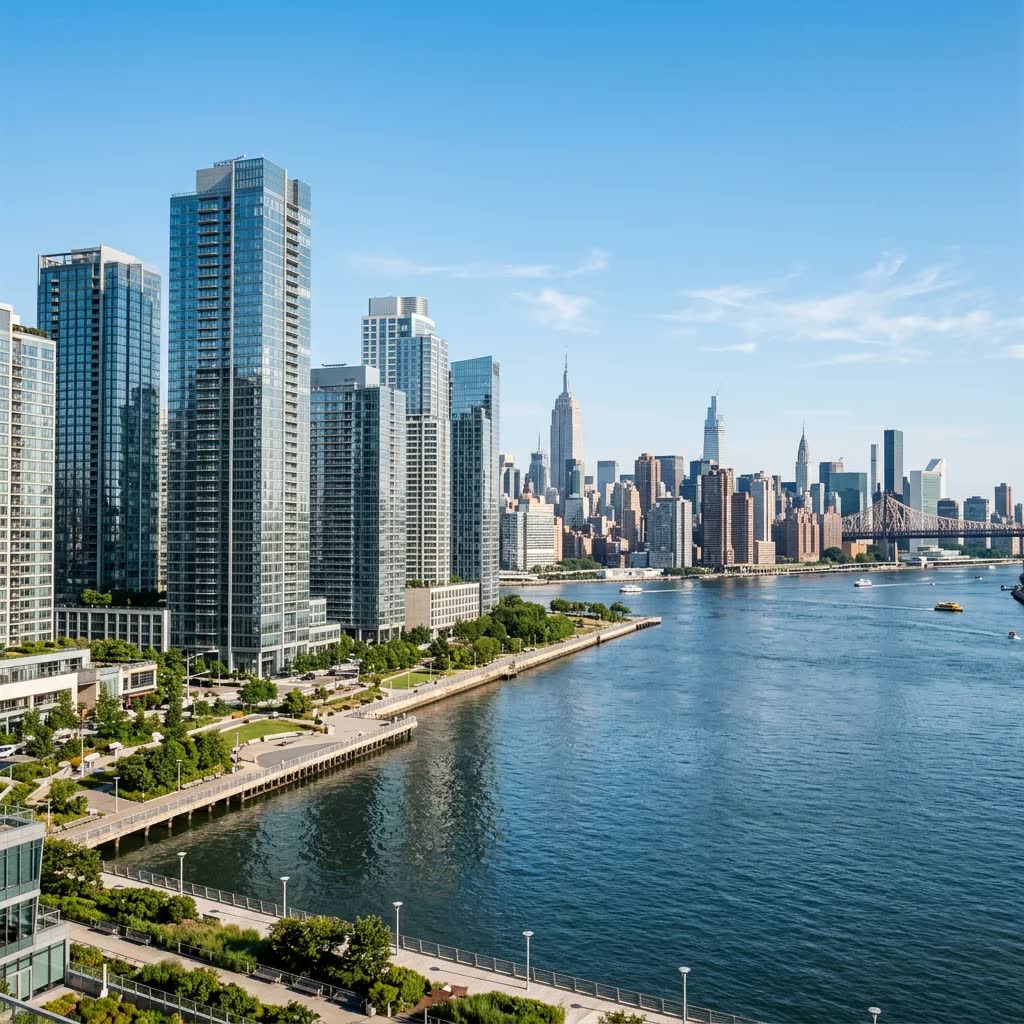
NEW YORK — Stand at the edge of Gantry Plaza State Park in Long Island City on a clear morning and the view back toward Manhattan is unobstructed and gleaming. The skyline on the Queens side of the river is not bad either. A decade of aggressive high-rise construction has produced a cluster of glass towers that would not look out of place on the west side of the Hudson, a transformation that has remade the real estate economics of a broad swath of northwestern Queens.
The Long Island City residential market, which was barely legible as a distinct rental district in 2015, now commands average monthly rents for a one-bedroom apartment that rival — and in some buildings exceed — those in parts of the Upper West Side and Downtown Brooklyn. The inventory of new luxury units with doormen, gyms, and river-view amenity floors is extensive. So is the competition for tenants, which has kept concessions common even as the broader city rental market has tightened.
The more significant story may be what Long Island City's growth has done to its neighbors. Astoria, Sunnyside, and Jackson Heights — neighborhoods that once attracted tenants specifically because they offered an affordable alternative to Manhattan-adjacent pricing — have seen rents and sale prices rise in ways that track closely with the buildout to the west. Brokers who work across northwestern Queens say buyers and renters priced out of Long Island City are systematically moving east, carrying purchasing power that has compressed the discount those neighborhoods once offered.
The commercial side of the market presents a more complicated picture. Retail vacancies in Long Island City's ground-floor spaces remain elevated, a reminder that residential density alone does not guarantee a thriving street life. Restaurants and services that followed the residential wave in the early 2020s have faced a challenging post-pandemic environment, and the absence of a large-scale office tenant — following Amazon's withdrawal from its planned HQ2 campus in 2019 — has left the neighborhood without the daytime employment base that typically sustains a vibrant commercial corridor. City planning officials say they are studying incentives to attract a mix of light industrial and creative office tenants to vacant ground-floor and podium spaces, an acknowledgment that the neighborhood's residential success has outrun its commercial maturity.