Long Island Lighthouses Host Intimate Chamber Music Nights
Historic lighthouses along Long Island Sound are opening for small classical recitals that blend heritage tourism with high‑quality programming.
By Evelyn Torres · January 16, 2026 · 4 min read
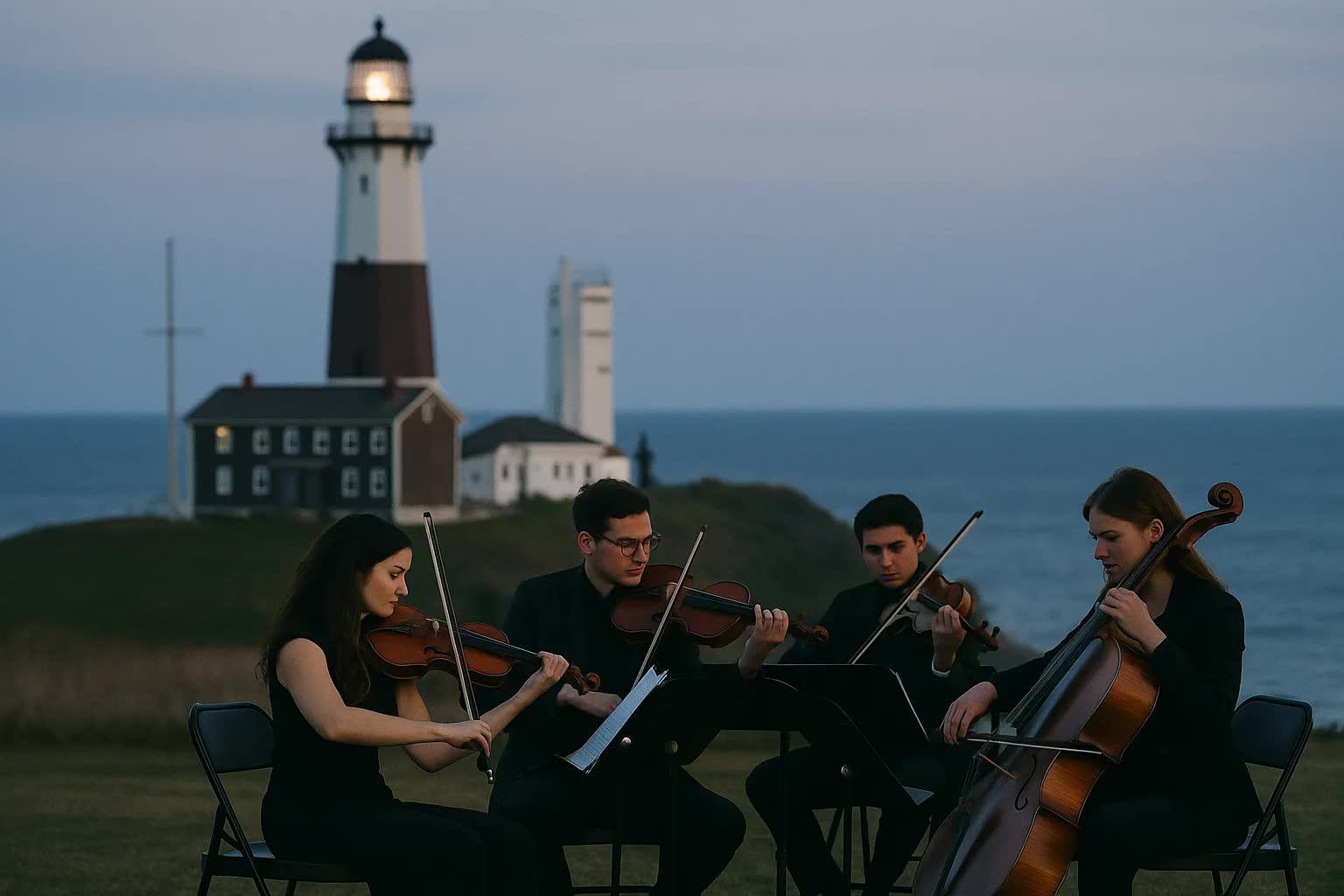
NEW YORK — For Manhattan listeners tired of the cavernous auditoriums at Lincoln Center or the predictable acoustics of Chelsea rehearsal halls, a small but growing circuit of chamber music evenings staged in historic Long Island Sound lighthouses offers a different kind of intimacy: pianists, string quartets and wind trios playing in lantern rooms and keeper’s quarters while New Yorkers travel by commuter rail, ferry and car from the Upper West Side, Tribeca and DUMBO for two-hour programs that feel equal parts concert and cultural pilgrimage.
The series, organized by Harborview Music Society, opened its first winter run last November and now stages monthly recitals at six coastal lights between Port Jefferson and Sands Point. Musicians perform without amplification on rugs and risers assembled in tight circles; audience members sit on folding chairs, buoys repurposed as stools or standing near windows that frame the Sound. Organizers say the goal is to marry high-quality chamber programming with heritage tourism, drawing listeners who want both musical nuance and the tactile history of maritime structures.
“We wanted to create nights where the music and the place felt inseparable,” said Alina Vargas, artistic director of Harborview Music Society. “There’s a kind of breathing room in a lighthouse — the way sound bounces off the glass and the plaster — that invites a different kind of listening than a typical concert hall. Our artists walk away energized by the clarity they hear, and our audience keeps telling us these are the best small-ensemble evenings they’ve had.”
The logistics are unusual: Harborview contracts with a local ferry operator, SoundLink Ferries, which runs a shuttle from East 34th Street and one from Pier 11 on weekend evenings. Attendees coming from Brooklyn neighborhoods like Williamsburg and Park Slope meet at Jay Street or Atlantic Terminal and take the LIRR or a direct shuttle. Organizers also arranged short coach pickups from the Port Washington branch at nearby stations for evening transfers. The modest scale — no more than 40 listeners per recital — has meant intimate exchanges between performers and audience members and a reliance on volunteer docents from local historical societies.
The numbers underline the scale and constraints. Harborview’s winter slate this season totals 12 recitals across six lighthouses, with capacities capped at 30 to 60 patrons depending on site; average ticket prices run between $45 and $95, with discounted $15 youth tickets for students. Ferry runs are scheduled to accommodate roughly 300 passengers per weekend across two routes, and Harborview reports about 1,200 attendees for the initial three-month run, of whom roughly 35 percent came from Manhattan neighborhoods including the Upper East Side, Greenwich Village and Tribeca, and 20 percent from Brooklyn.
“We pay very close attention to preservation rules and to the acoustical footprint of each site,” said Marcus Yeung, curator and a former keeper at one of the region’s restored towers, now serving as Harborview’s site manager. “You can’t drill into original timbers or run heavy lighting rigs; what we do instead — minimal staging, LED lantern-style lamps, soft drapery — actually accentuates the chamber sound. Musicians tell me they can hear each other in a way that’s rare, and the audience hears breath and phrase endings as if the space itself were part of the ensemble.”
Funding has been a patchwork of ticket revenue, small grants from the Long Island Heritage Fund and private donations from patrons based in Manhattan and Nassau County. Local historical societies and village governments have pitched in with volunteer staffing and utility credits, while a partnership with SoundLink Ferries reduces transit overhead. Harborview’s operations manager, Lena Ortiz, said the organization is applying for a mid-level state arts grant to underwrite an education arm that would bring elementary school students from Queens and the Bronx on daytime visits for scaled-down performances and lighthouse tours.
Musicians have adapted to the unusual performance conditions. Violinist Elena Morales, first violin of the Sutton Quartet and a resident of Fort Greene, said rehearsing in a lantern room informed new interpretive choices. “We slowed tempos in some slow movements to let the space bloom,” Morales said. “The phrasing changes when the light is on the water and the air carries sound differently. After a recital in Northport Light, the quartet wrote an encore piece inspired by the gulls — there’s real creative exchange happening here.” Audiences say the combination of maritime history, ferry travel and chamber repertoire produces a memorable night out that feels distinct from a conventional subscription concert.
Organizers are already planning next season with an eye toward expansion and greater outreach: a pilot recording series capturing lantern-room acoustics, additional accessible performances with limited mobility accommodations, and a contemporary-works commission to mark the project’s second year. Harborview is also in talks with a consortium of Queens schools about a daytime residency program that would pair Sound studies with lessons in music notation and maritime history. If permits and funding line up, the society hopes to add two more lighthouses to the circuit by summer, broadening both the tour’s geography and its audience.