Long Island Oyster Farmers Deploy Sensor Networks to Monitor Water Quality
Shellfish growers are using low-cost IoT sensors across the Sound to detect algal blooms and salinity swings that threaten harvests and local economies.
By Luisa Pereira · March 3, 2026 · 4 min read
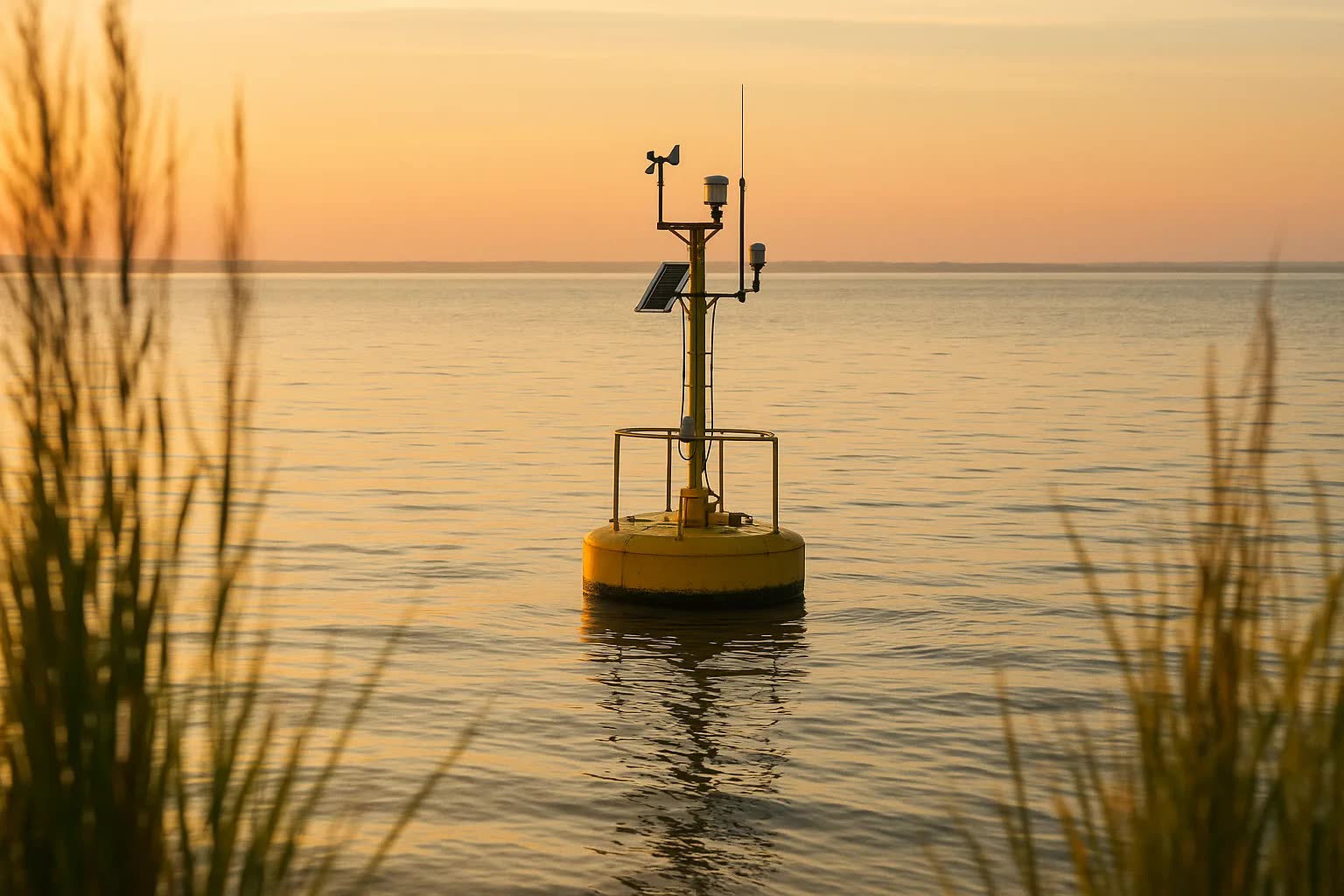
NEW YORK — At an oyster bar near the South Street Seaport, the day's half-shell selection arrives with more than a lemon wedge: a data tag indicating the last sensor reading off Oyster Bay. Chefs in Chelsea Market and buyers on Fulton Street are increasingly relying on real-time water-monitoring networks deployed by Long Island growers to know when shellfish are safe, and when they should be pulled from the racks before storms or algal blooms threaten the harvest and the city's seafood supply.
Facing more frequent harmful algal blooms and erratic salinity swings tied to heavier rainfall and warmer summers, shellfish growers around Long Island Sound have begun installing networks of low-cost Internet of Things sensors to keep a continuous eye on the conditions that determine oyster survival. Small cooperatives from Hempstead Harbor to Southold and startups such as Seaside IoT Labs have been working with farmers to place sensors on buoys, cages and moorings so growers and buyers in Brooklyn, Queens and Manhattan can get alerts on their phones.
The devices measure temperature, salinity, dissolved oxygen, turbidity and chlorophyll as a proxy for algal density; they communicate via a mix of cellular service and long-range, low-power radio protocols to centralized dashboards. The goal is not just more data but faster, targeted responses: moving racks to deeper water, flushing ponds, or accelerating harvest ahead of a forecasted event. "We used to accept losses as part of the season," said Maria Ortiz, executive director of the Hempstead Harbor Shellfish Cooperative. "Now, when the sensors flash red at 3 a.m., our crews know exactly what to do before an entire line is compromised."
For New York restaurateurs and fishmongers, that early warning matters. At East River Oyster Bar, seafood buyer Andre Park checks a live map of sensor readings before placing weekly orders that supply a string of neighborhood joints from Red Hook to the Lower East Side. "If salinity drops after a Nor'easter and the dashboard shows low oxygen in a bay near Montauk, I can reroute orders the same day," Park said. "It saves us from serving product that could be risky and saves the growers from a total loss when they can shift their harvest window."
Beyond protecting customers, the sensor networks are shifting how growers coordinate with regulators and scientists. Historically, shellfish closures required manual sampling and lab testing that could take days; the continuous streams from sensor arrays allow for more precise, site-level warnings and for state agencies to prioritize physical sampling where sensor anomalies arise. Local cooperatives say that has reduced the blanket closures that have previously shuttered entire bays and devastated small businesses on Long Island's north shore.
Since pilot programs launched in early 2024, growers and partners have installed 312 sensor nodes across 86 lease sites spanning roughly 120 nautical miles of coastline from Port Jefferson to Montauk; individual units cost about $175 to build and deploy, according to project coordinators. The networks push readings every five minutes with a median transmission latency of 4.7 minutes and battery life of 14 to 20 months, with solar-assisted nodes lasting longer; in trials, early-warning alerts cut emergency harvest losses by an estimated 38 percent on participating farms. The cooperative running costs are reported at about $1,200 per site annually, covering data service and maintenance.
The sensors are not a panacea. Biofouling, storm damage and harsh winter ice periodically disrupt measurements, and growers still need trained crews to inspect lines and move gear. Algorithms to reduce false positives have been essential; without them, slimy sensors covered by seaweed could trigger spurious algal alarms that force unnecessary harvests. Engineers say the mix of hardware and software must be tailored to the place — a buoy in Oyster Bay faces different fouling and turbidity patterns than a cage tethered in the deeper channels off Port Washington.
Institutional collaboration has helped bridge those gaps. Small grants from the Sound Harbor Trust and a research partnership with the Harborwatch Lab at Stonyport University helped subsidize early deployments and refine the alert thresholds. State shellfish biologists in Riverhead now receive automated anomaly reports, and several Manhattan fishmongers have agreed to show QR-coded provenance tags — linked to sensor dashboards — on oyster platters sold at the South Street Seaport and in eateries along the Brooklyn waterfront near Brooklyn Bridge Park.
The economics of scale are emerging as small growers see sensor networks as a lifeline rather than an optional upgrade. The Long Island shellfish sector — concentrated in a handful of bays and towns but feeding markets across New York City from Astoria to Coney Island — now speaks in terms of resilience: fewer surprise closures, better pricing certainty and more reliable supply chains for restaurants that depend on same-day delivery. Smaller leaseholders, who once could not afford expensive monitoring, benefit from cooperative purchasing and shared data that levels the playing field against larger industrial players.
Looking ahead, growers and technologists envision a predictive layer that blends sensor streams with weather forecasts and river-runoff models to warn of trouble days before it arrives, and dashboards that give restaurateurs and consumers clearer provenance and safety signals. Trials are already planned to test machine-learning models that predict bloom intensity 48 hours out and to expand coverage toward the eastern Sound; if the pilots scale, Long Island's oyster industry hopes to trade reactive crisis management for proactive stewardship that protects harvests, neighborhoods and the restaurants that line New York's waterfronts.