Long Island Shoreline Artists Turn Tidal Debris into Public Art
Coastal sculptors and community workshops are transforming washed-up materials into installations that comment on climate and local identity.
By Priyanka Rao · December 13, 2025 · 4 min read
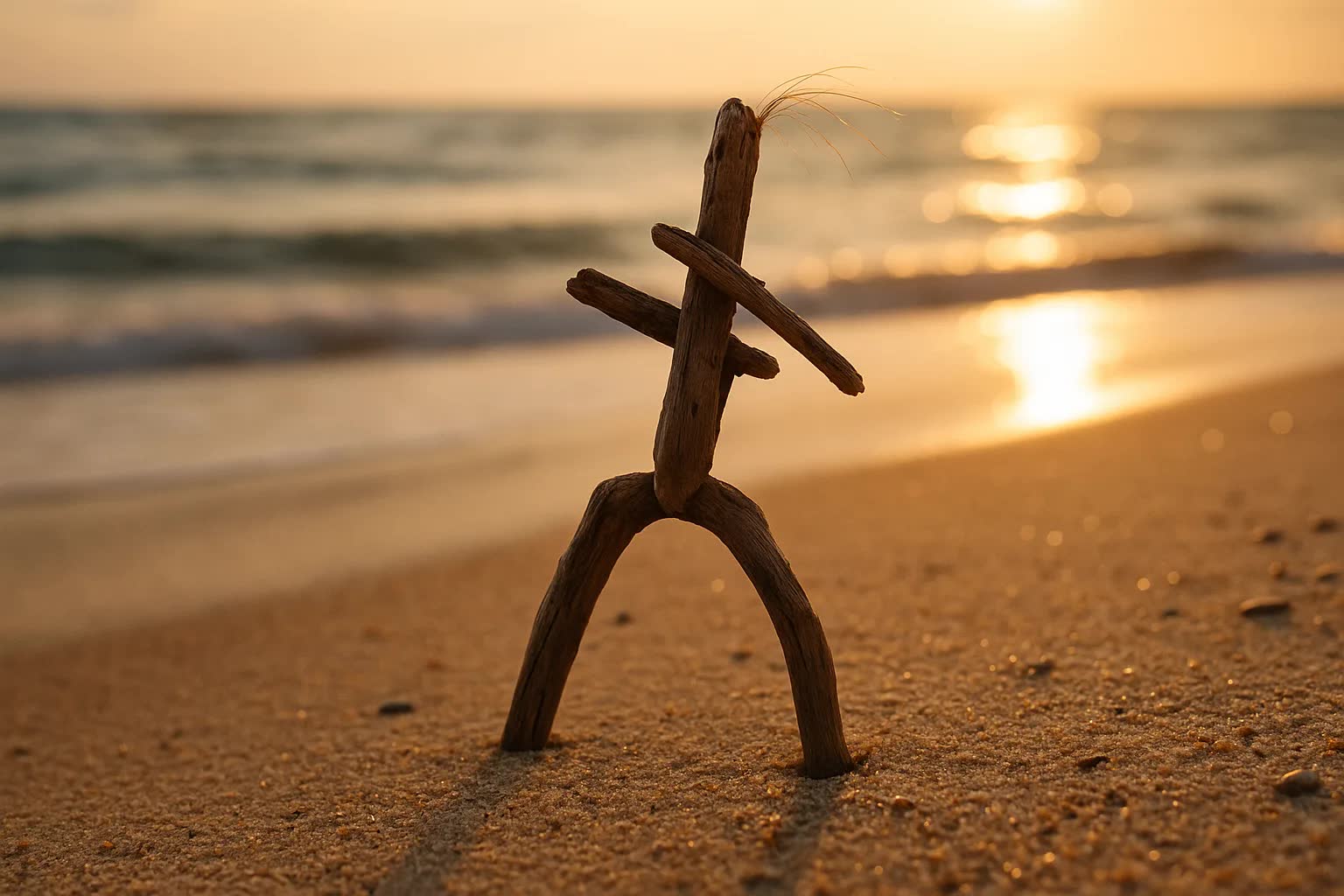
NEW YORK — On a blustery December morning, subway riders emerging from the A train at the Rockaway Park–Beach 116th Street stop are met not by another line of vendor carts but by a towering figure of braided fishing line and bleached driftwood: a public sculpture that began its life as a tangle of discarded nets and sunscreen bottles on a Long Island jetty. From Rockaway to Montauk, coastal artists and volunteer crews are collecting tidal debris and turning it into outdoor installations that double as commentaries on climate change and examinations of local identity, bringing a Long Island shoreline sensibility into the city’s public spaces.
The movement has coalesced around a handful of artist-run groups and community workshops, most notably the Shoreline Studio Collective, a loose confederation of sculptors based in Long Beach with satellite studios in Far Rockaway and Port Jefferson. They hold weekend beach cleanups, fabrication sessions in borrowed warehouses, and participatory ‘dockside assemblage’ classes for neighborhood schools and senior centers. What begins as a cleanup becomes a material library: nets become mesh skins, buoys are hollowed and painted, and small plastics are melted and fused into mosaics meant to be read both for beauty and for warning.
"We think of it as trash into testimony," said Marisol Vega, founder and creative director of Shoreline Studio Collective, standing inside a former boathouse on Neptune Boulevard where a half-dozen volunteers sanded plastic shards into filigree for a forthcoming mobile. "When you walk past a sculpture made of the exact stuff that once smothered our dune grass, you can’t look away. That’s how narratives about climate and labor and memory start to stick."
The numbers behind the projects are concrete enough to track. Since early 2022, the Shoreline Studio Collective reports it has removed roughly 14 tons of marine litter from bays and beaches across western and eastern Long Island, hosted 62 community workshops, and worked with more than 9,400 participants. Its installations, 22 to date, span an estimated 75 miles of shoreline from Jones Beach to the Hamptons and attract an estimated 23,000 viewers annually, according to figures compiled by the group and shared with NYDailyWatch.
One of the collective’s most visible pieces sits where the Rockaway boardwalk meets Beach 98th Street, a human-sized tide of sculpted plastic bottles and foam that curls like a breaker frozen in time. Locals call it the Blue Wave; tourists photograph it beside the lifeguard stand. The work was assembled in stages: a series of collection events, a public welding session on a low parcel of city-owned sand, and a final anchoring by volunteers who threaded galvanized cable through reclaimed fire escape stairs to give the piece weight against winter winds.
"These are not monuments to sentimentality," said Eliot Chen, senior coastal arts coordinator for Nassau County Parks, who has overseen permit reviews for several installations. "They’re interventions in how people experience their shoreline. When you see that Blue Wave under the overcast sky on a weekday, you think about who works those waters, who cleans them, and who pays when storms get worse. Art can change the calculus of public priorities."
The projects have not been without friction. Local officials and lifeguard unions sometimes balk at large, semi-permanent installations on publicly managed beaches, citing safety, maintenance and liability concerns. Conservationists warn that pieces must be fabricated and maintained to strict standards so they don’t themselves become sources of microplastic shedding. In response, several collectives have developed best-practice workshops in collaboration with university marine science programs and county maintenance crews, producing repair kits and signage that explain both the work and its upkeep.
Funding is a patchwork. Private donations, modest grants from regional arts councils, and revenue from small gallery sales in Greenpoint and Sag Harbor cover most materials and liability insurance. The Shoreline Studio Collective reports an annual operating budget of about $210,000, much of it earmarked for staff, heavy equipment rentals and educational outreach. Corporate sponsorship is sporadic, and when it appears it triggers a careful vetting process among collective members who seek partners that will not undermine the groups’ ecological messaging or community control.
Neighborhoods have responded with a mix of pride and new rituals. In Coney Island the tide-salvaged puppets created by a local artist collective are now part of an informal holiday parade that stops outside a bait-and-tackle shop on Mermaid Avenue. In Port Jefferson plastic-laced mosaics installed along the ferry terminal are used as backdrops for high school graduation photos. Workshops at the Seaglass Community Center in Far Rockaway enroll waiting lists of youth eager to translate seaside scavenging into carpentry and curation skills; one participant, a 16-year-old who declined to give a last name, said making art from debris “made me feel like the ocean’s problems were something I could actually touch and fix.”
Organizers say the work is only beginning. Plans are under way for a yearlong Shoreline Biennial launching in spring that will pair artists and scientists to map hotspots for plastic accumulation, and a pilot program with the Long Island Rail Road to sponsor pop-up displays at select stations serving coastal neighborhoods. "Our aim is to keep the conversation moving from spectacle to stewardship," Vega said. "We want these works to be living, to be sites where people donate time and not just take a photograph. If that means more permits and tougher engineering, we’ll do the work."