Long Island Town Sues to Block Offshore Wind Staging Port, Citing Economic Harm
Officials in a South Shore community say a planned staging facility would disrupt fisheries and waterfront businesses, launching a legal challenge.
By Amina El-Sayed · December 31, 2025 · 4 min read
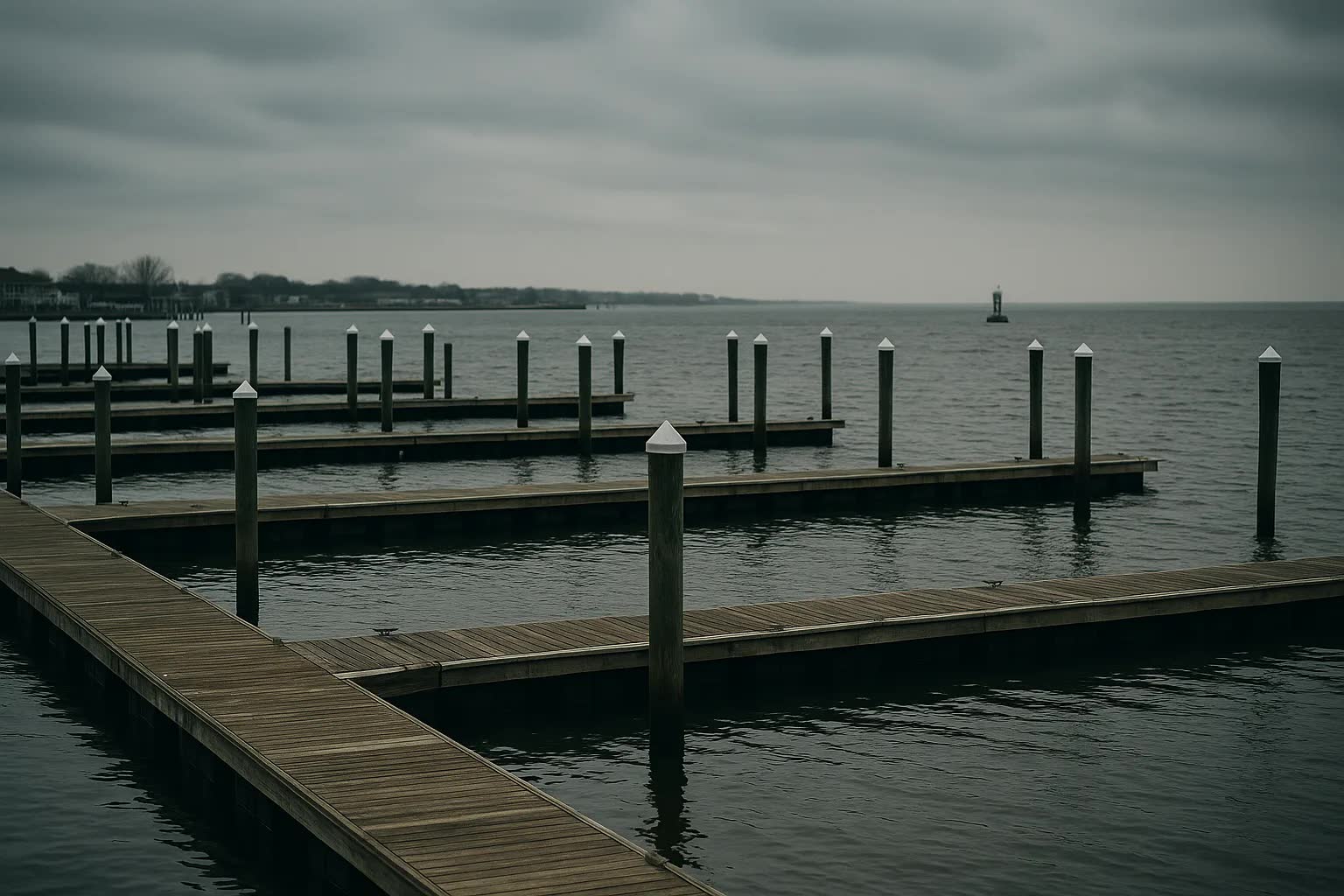
NEW YORK — A South Shore Long Island town on Wednesday filed suit to block plans for a major offshore wind staging port that developers say is essential to the state's climate goals, saying the facility would wreck commercial fishing, marinas and waterfront businesses that many New Yorkers rely on for fresh seafood and recreational boating from Red Hook to Far Rockaway.
The complaint, filed in the U.S. District Court for the Eastern District of New York by the town of Harborcliff and several local business owners, names the U.S. Army Corps of Engineers, the New York State Energy Development Authority and Atlantic Breeze Offshore Wind LLC as defendants and asks a judge to halt construction permits and demand a new environmental review.
Harborcliff officials argue the proposed Garnet Point Staging Terminal, a 60-acre industrialized port proposal on a reclaimed parcel near the mouth of South Oyster Bay, would bring heavy traffic, dredging and long-term disruption to fisheries that deliver catch to markets in Manhattan's Lower East Side and to restaurants in neighborhoods such as Chelsea and Williamsburg.
“We are not anti-wind,” Harborcliff Mayor Laura Calderon said in an interview on the town hall steps. “We asked for a siting process that respects working waterfronts and the livelihoods of our people. This proposal was pushed through without adequate study of the ripple effects that will reach from our boat slips to the fishmongers on Canal Street.”
Atlantic Breeze, the developer, has said the staging port is needed to assemble and stage giant turbine components that will be shipped to wind farms sited 12 to 18 miles off the South Shore — projects that company executives estimate will power nearly 800,000 homes across New York City and Long Island. In a statement, the company called Harborcliff's legal action “regrettable” and said it had designed mitigation to minimize impacts on fisheries, recreational boating and traffic.
Local fishermen and waterfront business owners described economic losses they say are already occurring as planning accelerated this year. “Our bay is not a parking lot for turbines,” said Captain Thomas Alvarez, president of the Harborcliff Fishermen's Cooperative. “When we lose access to our traditional routes and grounds because of staging and repeated dredging, we can't just move to a new spot — the catch disappears, the buyers disappear, and so do the jobs.”
The lawsuit includes specific economic claims and data: it alleges the terminal construction will lead to a 40 percent reduction in clamming and nearshore scallop harvests inside South Oyster Bay, cost the town's marina district roughly $12 million annually in lost revenue, and eliminate an estimated 250 permanent local jobs and 1,500 seasonal positions tied to seafood processing and tourism, while creating 300 temporary construction jobs at the terminal itself.
Environmental and planning experts are split on whether the legal challenge will succeed. Dr. Ellen Park, a coastal economist at Harborcliff State University who is not affiliated with the suit, said the scale of offshore wind build-out necessitates large staging sites but that siting decisions must be informed by fine-grained marine-use mapping and socioeconomic baselines. “You can decarbonize without decimating regional fisheries if you layer the analyses properly,” she said. “The question is whether the data used in permitting were sufficient.”
The controversy has drawn attention from civic groups in the city and outer borough neighborhoods where seafood is sold and served: restaurateurs on the Lower East Side and in Brighton Beach have signed letters expressing concern about supply-chain disruptions, while marine conservationists have urged more stringent seasonal restrictions to protect spawning areas near Fire Island and the Rockaways. Protesters gathered Saturday at a pier in Coney Island and more demonstrations are planned near the Brooklyn Navy Yard, where some turbine logistics will be coordinated.
Court lawyers for Harborcliff asked for a preliminary injunction and expedited discovery, saying they hope to have a hearing in early March 2026; Atlantic Breeze has indicated it will oppose a halt and argues that delays will increase project costs and threaten state decarbonization timetables. Regulators have said a supplemental environmental impact statement could be issued by mid-2026. Whatever the outcome, the case is likely to shape how New York balances offshore wind development with the economic life of inshore communities — a debate that will return to courtrooms and planning tables as project schedules and federal funding decisions unfold.