Long Island Wineries Are Repositioning as Year-Round Destinations for City Visitors
Tasting rooms are adding winter programming, seafood partnerships and shuttle services from Brooklyn to attract off-season daytrippers.
By Evelyn Torres · March 5, 2026 · 4 min read
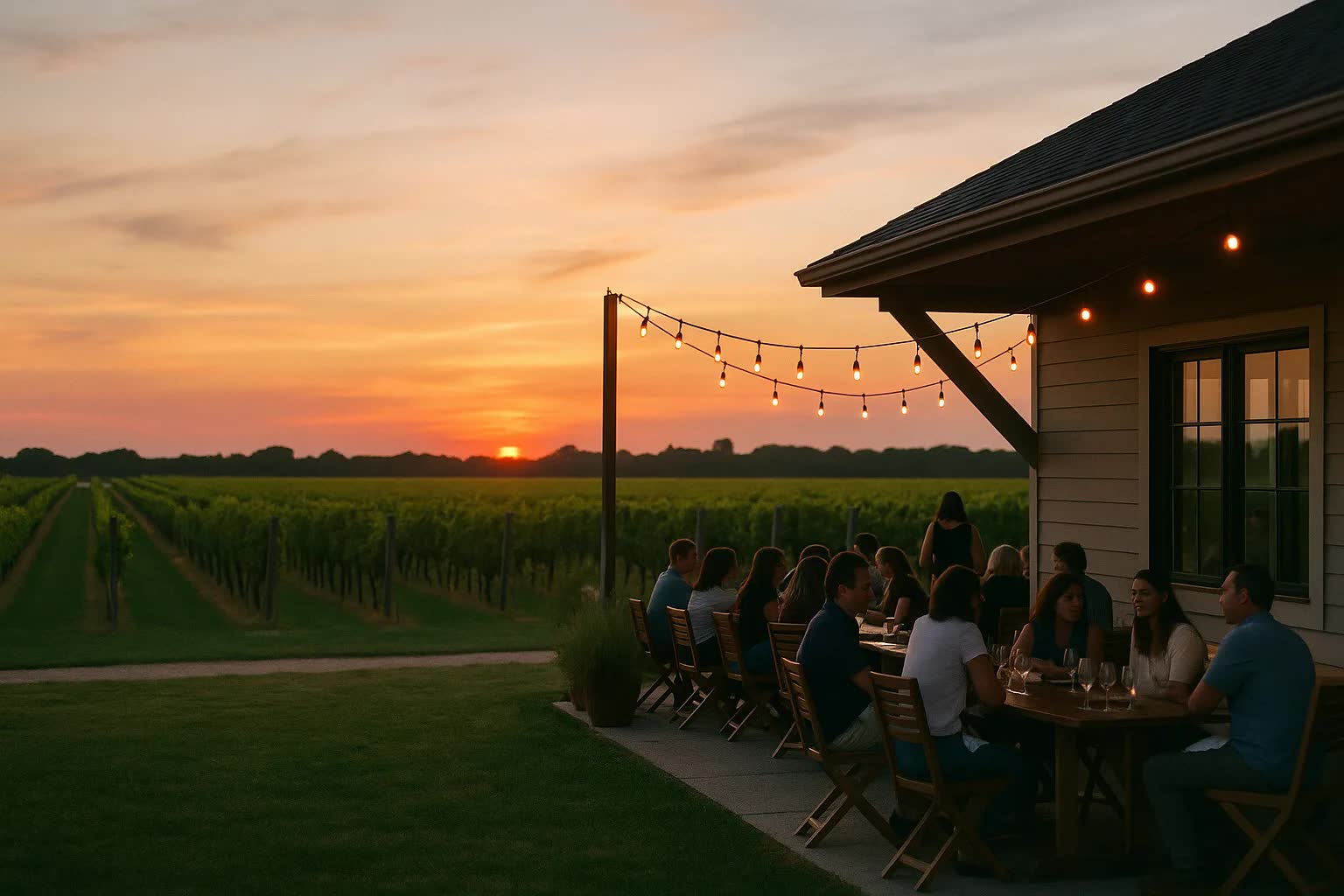
New Yorkers are increasingly trading subway warmth for cellar cool in midwinter as Long Island wineries hustle to become year-round destinations for city daytrippers, with pickup points that now start in Williamsburg, DUMBO and Atlantic Terminal. The shift is evident on weekend mornings when groups of friends from Park Slope and the Upper West Side board shuttle vans with crates of blankets, or when couples head east from Chelsea for sunset tastings that run long into the night. For the vineyards along the North Fork and South Fork, the move from a strictly seasonal leisure model to a winterized hospitality approach is both a response to fickle weather and a bet that urbanites will keep coming, even when the vines are bare.
Tasting rooms that once shuttered after October are adding heated porches, hearthside flights and off-season calendars that mirror small theaters and gastrohouses in the city. Many wineries are partnering with seafood purveyors and oyster farms to offer warm chowders, tray-served bivalve pairings and beer-and-wine collaborations that lean into Long Island’s maritime food culture. Hospitality directors say these new programs give visitors reasons to linger longer than a single tasting and to return on weekdays, a powerful change for businesses that previously depended on crowds during late spring and summer.
On the North Fork, from Cutchogue to Greenport, tasting rooms are booking film nights, winemaker Q and As, and small-plate dinners with chefs flown in from Brooklyn; on the South Fork, vineyards near Sagaponack are rolling out brie and band pairings, with live Americana sets that attract weekend traffic from Manhattan. Oyster farmers in Mattituck and Oyster Bay are using shared cold-storage facilities so wineries can serve bivalves safely through January and February. The result is a crossover of audiences: foodies who once drove to Red Hook for seafood are now adding vineyard stops, and wine club members from Midtown are planning winter-day itineraries that include the ferry ride across the Sound.
To bridge the city-to-country gap, new and upgraded shuttle services are central to the pitch. Companies such as Harbor Line Shuttle and the Brooklyn Vineyard Express now run pickups in Williamsburg at North 7th Street near Bedford Avenue, in DUMBO under the Manhattan Bridge, and from Atlantic Terminal; many also offer door-to-door service in Park Slope and Sunset Park. Scheduled departures between 9 a.m. and noon make daytrips feasible, while late-shuttle returns at 7:30 p.m. and 9:30 p.m. accommodate dinners and evening events. Some operators have also added heated luggage compartments and pop-up tasting lounges onboard to keep the experience premium.
Concrete numbers show the scale of the overhaul: a winter pilot program launched in 2024 involving 26 wineries on the North Fork reported a 38 percent increase in weekday visits from New York City residents compared with the prior winter. Shuttle ridership for the same cohort grew 52 percent year over year, with average van manifests now at 14 passengers per trip and shuttle operators running an average of 10 round trips on Saturdays. Hospitality managers report tasting-room revenue up 27 percent in January and February, and wine-club enrollments among Manhattan ZIP codes rising by roughly 18 percent during off-season months.
"We used to close three days a week in January," said Marina Delgado, director of guest services at Harbor Ridge Vineyards in Cutchogue. "Now those are our busiest days for intimate reservations and special programming. People from the Upper West Side want a fireplace and a story, not just a pour, so we've built evenings around winemaker talks and local seafood. The narrative matters as much as the wine." Delgado said the winery worked with a Red Hook shellfish smoker to develop a winter-smoke pairing that has become a signature booking for couples and small groups.
Ethan Morales, founder of Brooklyn Vineyard Express, described the logistical juggling of schedules and neighborhood pickup points as part business and part hospitality choreography. "We're not just a van service," Morales said. "We're an extension of the tasting room. Drivers are trained to tell people where to sit, how long events last and how to navigate the tasting menus in groups. Our data shows pickups in Williamsburg and DUMBO fill first, but we're adding more Park Slope slots because families there want safe, reliable round trips." He added that operators are coordinating with local bike-share docks and ferry timetables to smooth the last-mile connections.
The changes are rippling through related industries on both ends of the trip. Seafood houses in Red Hook and Chelsea Market are reporting that off-season collaborations with vineyards have boosted winter bookings, while artisans in Sag Harbor and Greenport are seeing more weekday foot traffic in their shops. Municipal leaders and tourism officials on Long Island say the extended season helps stabilize employment across tasting rooms, farms and short-term hospitality, reducing the usual boom-bust hiring cycle. Some landlords near vineyards report an uptick in long-term rental inquiries from hospitality staff seeking proximity to winter shifts.
Looking ahead, vineyard owners and shuttle operators say they are testing sustainability measures such as shared van passes, combined ferry-and-shuttle tickets and an experiment with electric shuttle vehicles that could run quieter and cheaper. There is also growing discussion of a formal off-season promotion that would align programming across the North and South forks to attract multi-day stays from Manhattan and Brooklyn cultural calendars. If the current momentum holds, Long Island’s wineries may soon be as familiar to winter-bound city crowds as ski resorts have long been, offering a softer, slower alternative on the horizon for New Yorkers seeking daylight and oysters instead of snow.