A Lower East Side Archive Races to Record the Voices of a Vanishing Block
Volunteers are recording oral histories from longtime residents of a rapidly changing tenement block before rising rents scatter the families who remember it.
By Dana Okafor · July 13, 2026 · 5 min read
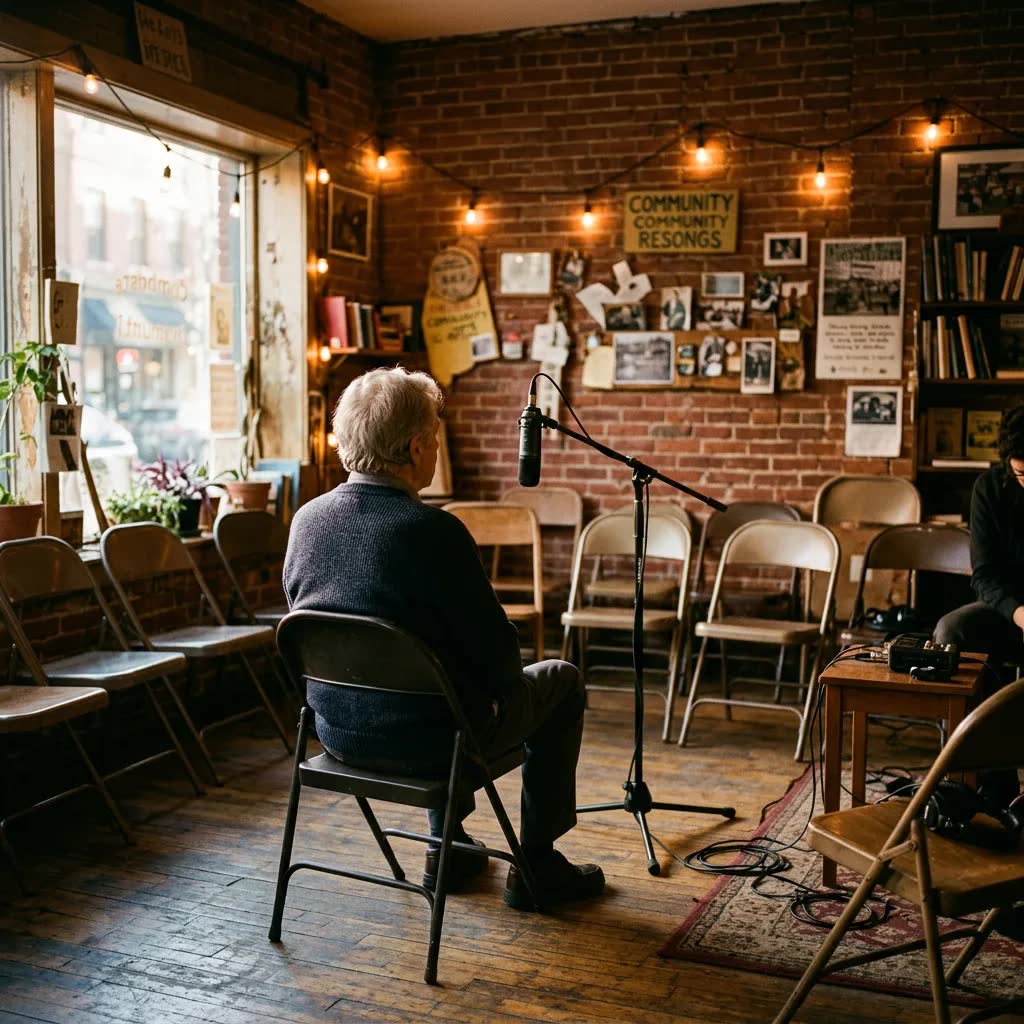
NEW YORK — In a cramped storefront on the Lower East Side, its walls lined with folding chairs and a single donated microphone, an eighty-one-year-old woman spent an afternoon last week describing the building she has lived in since she was a girl: the shared bathroom in the hallway, the pushcart vendors who once clogged the street, the fire escape where whole families slept through August heat waves. Her account is now part of a growing digital archive of oral histories that volunteers are assembling in a race against the neighborhood's accelerating change.
The project began, its organizers say, out of a simple fear: that the people who remember the block as it was are aging, moving, or being priced out, and that when they go, an entire layer of the neighborhood's memory disappears with them. Over the past year, a rotating group of volunteers — students, retirees, and a few professional archivists donating weekends — has recorded more than sixty interviews, each transcribed, tagged, and uploaded to a free public database.
"Buildings get landmarked, but people don't," said the project's lead organizer, a graduate student in public history who grew up two blocks away. "You can save the brick and still lose everything that made the brick matter. The stories are the part that leaves quietly, and nobody puts up a plaque for that." The archive, she said, is meant to preserve not grand historical events but the ordinary texture of tenement life — the smells, the arguments, the improvised solutions of families crammed into small rooms.
The interviews range widely in origin and era. One man recalled arriving as a child refugee in the 1970s and learning English from comic books traded in the building's courtyard. A woman described her mother's basement sewing operation, and the code of knocks neighbors used to warn one another of inspections. Several younger interviewees, by contrast, spoke about watching the block transform around them in real time, as decades-old shops gave way to boutiques and rents climbed beyond what their parents could have imagined.
The organizers have taken pains to make the archive genuinely public rather than academic, posting recordings in multiple languages and hosting listening sessions at the local senior center so that the people being documented can hear one another's accounts. Those sessions, participants say, have become their own kind of event, with elderly neighbors correcting and completing one another's memories, and occasionally discovering shared history they never knew they had.
With a small grant nearly exhausted, the project faces the same pressures as the block it documents. The organizers are seeking new funding to keep the storefront open through the winter and to train a second cohort of volunteer interviewers. "We're basically doing triage," the lead organizer said. "Every month somebody we meant to interview moves away or passes. So we just keep recording, and we hope the money catches up before the people run out."