City Grocery Program Expands to Brooklyn and Queens After Bronx Pilot
Citing strong first-month sales and lower prices on staples, the Mamdani administration will open six more publicly run markets across two boroughs this fall.
By Grace Ng · July 27, 2026 · 5 min read
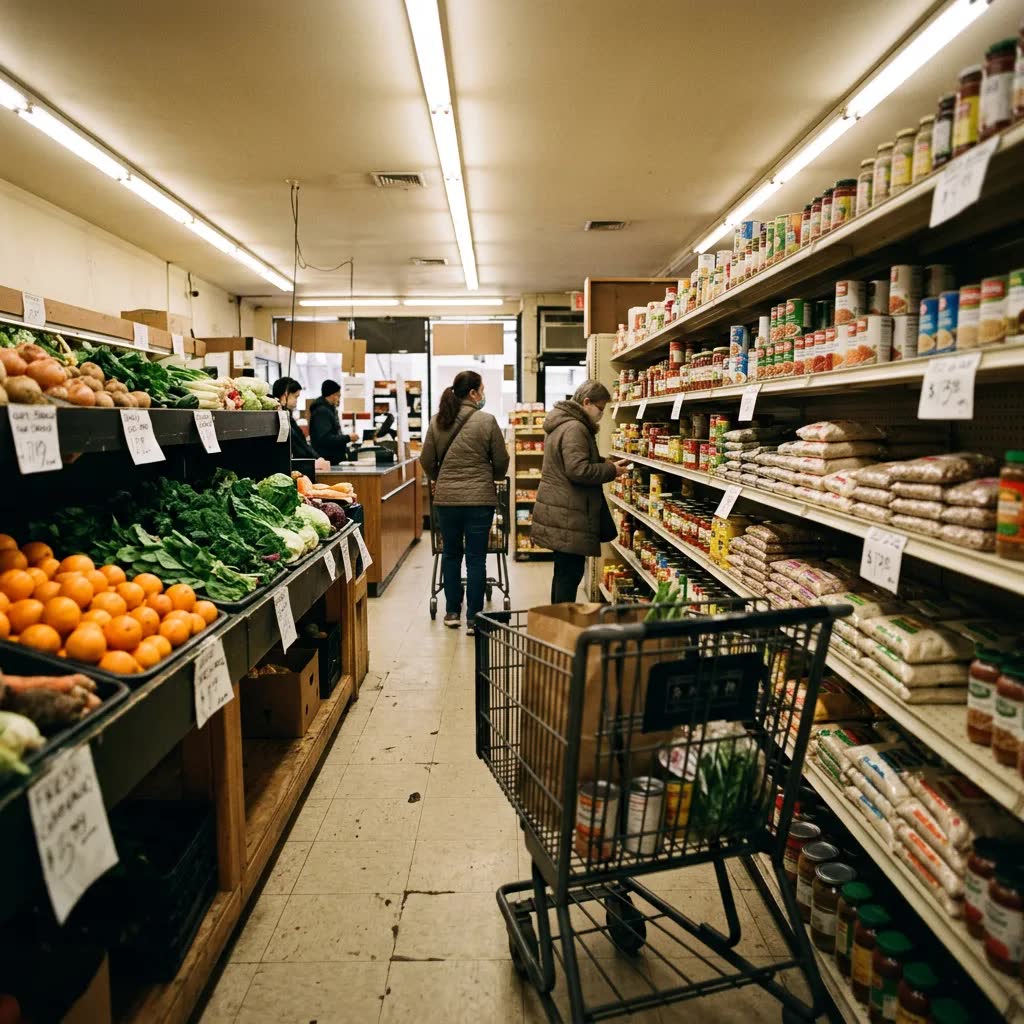
NEW YORK — Mayor Zohran Mamdani announced Monday that the city's experimental lower-price grocery program will expand to Brooklyn and Queens this fall, adding six municipally operated stores after what officials described as a stronger-than-expected first month at the pilot location in the Bronx. The mayor said the flagship store in Morrisania had served more than 38,000 unique shoppers since opening in June and had sold basic staples — rice, beans, eggs, produce, and canned goods — at prices the administration pegged at 18 to 24 percent below nearby private grocers.
"The critics said a city grocery store could never move a can of beans," Mamdani said at a news conference outside the Bronx store, holding up a receipt. "Well, we moved a lot of beans, and we did it without turning a profit off of a single family's dinner." The mayor said the new stores would open in Brownsville and East New York in Brooklyn and in Corona, Jamaica, and the Rockaways in Queens, with a sixth site to be confirmed after community input.
The publicly run markets operate at cost rather than for profit, purchasing through a centralized city procurement system that officials say lets the stores negotiate lower wholesale prices and pass the savings to shoppers. The Bronx pilot employs 41 workers, all city employees earning a starting wage of $22 an hour, and administration officials said the expansion would create roughly 240 additional jobs. Each store also hosts a weekly market where nearby community gardens and regional farms can sell directly to residents.
Independent grocers pushed back on the announcement, arguing that a city-subsidized competitor could undercut small businesses already operating on thin margins. "We can't buy at the prices the city can, and we still have to make payroll," the head of a neighborhood bodega association said, calling for the city to instead expand tax relief for private stores. Some economists cautioned that the pilot's early numbers reflected novelty traffic and steep launch discounts that may not hold as the program scales.
City officials countered that an internal review found no measurable drop in sales at the twelve private grocers within a half-mile of the Bronx store, and said the program is designed to fill gaps in neighborhoods with few full-service supermarkets rather than to displace existing ones. The administration also released data showing that fresh-produce purchases at the pilot store outpaced projections, which officials framed as evidence the model improves food access, not just prices.
The expansion still requires a mid-year budget modification expected to pass the City Council next month, where the program enjoys broad support among the mayor's allies. If approved, the new stores would begin opening in October and be fully operational by the end of the year. "This is about proving that public goods can be run well," Mamdani said. "A neighborhood shouldn't have to be lucky to have a decent place to buy groceries."