Mamdani's Free Bus Expansion Adds Six Routes as City Touts Early Ridership Gains
In a summer progress report, the administration said fare-free service on select lines has boosted ridership and cut boarding times, though questions linger over long-term funding.
By Grace Ng · July 20, 2026 · 5 min read
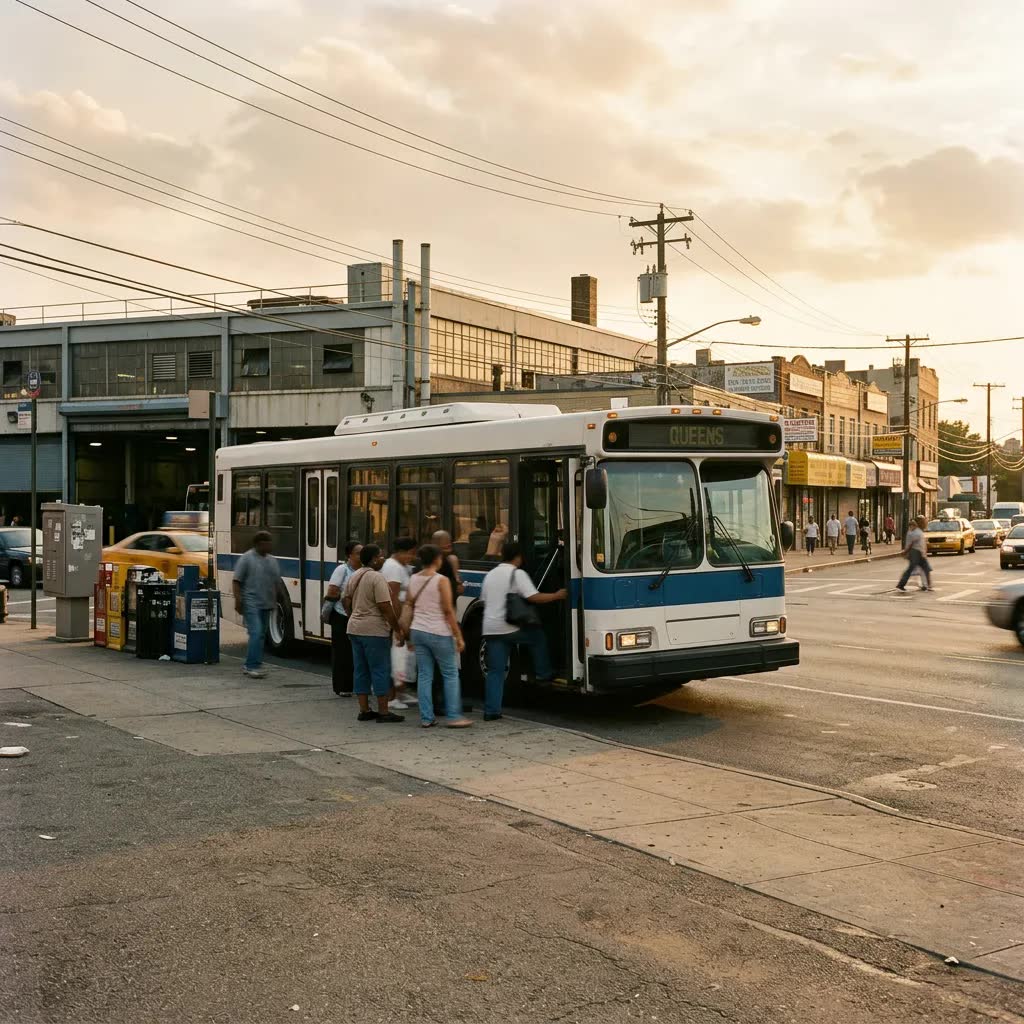
NEW YORK — Mayor Zohran Mamdani said Monday that the city's fare-free bus initiative will grow to include six additional routes across the Bronx, Brooklyn, and Queens by early September, building on a pilot that his administration credits with sharp ridership increases on the lines already covered. Speaking at a bus depot in Jamaica, Queens, Mamdani said preliminary data showed weekday ridership on the fare-free routes had climbed roughly 28 percent since the program launched earlier this year, with the steepest gains during midday and late-evening hours when service is often underused.
"When we stop making New Yorkers dig for change or tap a card just to get to work, to a clinic, or to see family, more people ride, and they ride faster," the mayor said. He pointed to city figures suggesting that eliminating fare payment had shaved an average of several seconds per stop off boarding times, translating into modestly quicker trips along the busiest corridors. The six new lines, chosen in coordination with transit planners, were selected in part because they connect neighborhoods with limited subway access to hospitals, community colleges, and major job centers.
The expansion is being funded through a combination of city dollars and a negotiated arrangement with the state's transit authority, which continues to operate the buses. Officials placed the annualized cost of the enlarged program at roughly $92 million, a figure that critics have seized on as evidence that the initiative may prove difficult to sustain, let alone extend citywide. Administration officials countered that the program has generated savings by reducing fare-collection disputes and speeding up service, and they argued that the social benefits justify the expense.
Riders interviewed in Jamaica on Monday offered warm reviews. A community college student named Priya said the free service had let her stop rationing trips at the end of the month, while a construction worker described the faster boarding as "the difference between making the shift start time and not." Not everyone was convinced. One commuter said she rarely rode the affected lines and questioned whether the money might be better spent on more frequent service or cleaner stations rather than on eliminating fares.
Transit advocates have generally cheered the effort while urging the administration to pair fare-free service with increased frequency, arguing that free but infrequent buses would blunt the policy's promise. Governor Kathy Hochul, whose administration oversees the transit authority, struck a measured tone in a statement, saying she was "encouraged by the early numbers" but wanted "a clear, honest accounting of who pays for this over the long haul." She stopped short of committing additional state funds beyond the current agreement.
Mamdani said the city would release a fuller evaluation of the program before the end of the year, including data on how the free routes have affected traffic, emissions, and overall transit trips. "This is not a stunt, and it is not permanent by accident," he said. "We are going to prove that a fare-free bus network can work at scale, one route at a time, and then we are going to make the case for the rest of the map." He declined to set a target date for a fully fare-free citywide bus system, calling that "the goal, not yet the plan."