Mamdani Signs Sweeping Childcare Affordability Package at City Hall
The mayor's first major legislative victory caps daycare costs for tens of thousands of working families and funds a new network of neighborhood childcare hubs.
By Aspen Young · July 13, 2026 · 5 min read
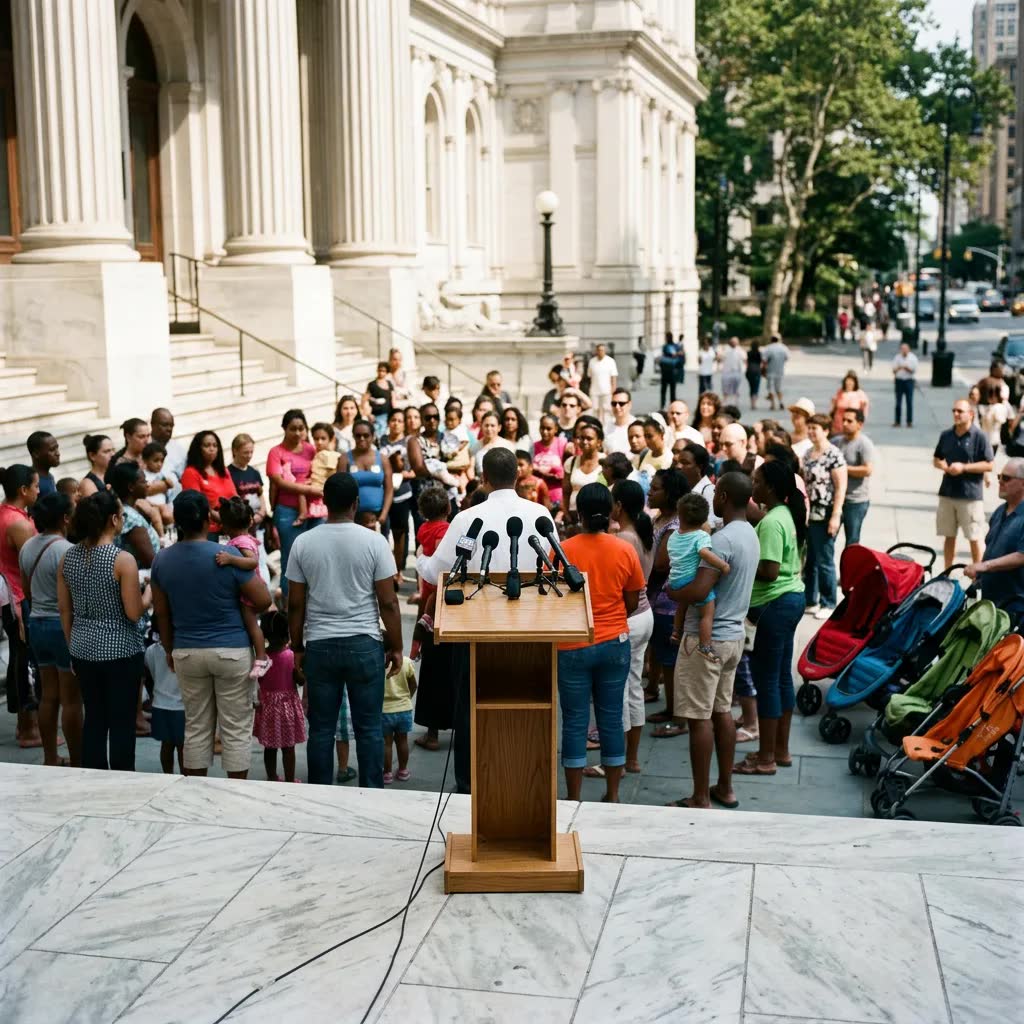
NEW YORK — Mayor Zohran Mamdani signed a $1.4 billion childcare affordability package into law Monday afternoon on the steps of City Hall, framing the measure as the cornerstone of an agenda he has described since the campaign as "an economy that works when you have a kid." The package caps out-of-pocket daycare costs at 7 percent of household income for families earning up to $180,000 a year, a threshold city officials say covers roughly two-thirds of households with children under five.
Under the new law, the city will phase in the caps over eighteen months, beginning with families of infants and toddlers, who face the steepest costs in the current market. Administration budget aides estimate that a typical Astoria family paying $2,200 a month for full-time infant care could see that bill fall to under $1,000 by the second year of the program. The measure also establishes a public reimbursement system that pays licensed providers directly, a design the mayor argued would prevent the kind of subsidy backlogs that plagued earlier city vouchers.
"For too long this city has treated childcare like a personal luxury instead of the public backbone it actually is," Mamdani said, flanked by parents and daycare workers. "Today we stop asking families to choose between a paycheck and raising their kids." The mayor thanked a coalition of union locals and parent-organizing groups he credited with keeping the bill alive through a contentious spring of budget negotiations.
The legislation additionally funds forty new neighborhood childcare hubs, each pairing extended-hours care with parenting classes and referrals to city services, to be built out first in parts of the Bronx, central Brooklyn, and southeast Queens that advocates call "childcare deserts." Roughly 4,000 new provider slots are projected in the first year. The bill also raises the minimum wage floor for city-contracted childcare workers to $24 an hour, a provision that drew emphatic praise from labor leaders present at the signing.
Not everyone welcomed the plan. Several members of the City Council's finance committee questioned whether the projected revenue — drawn from a mix of state matching funds and a reallocation of existing family-services budgets — could sustain the caps beyond the pilot period. "The intentions are good, but the math has a cliff in year three," one skeptical council member said in a statement, warning that families could face sudden cost spikes if funding lapses. Fiscal watchdogs echoed the concern, urging the administration to publish detailed cost projections.
Administration officials said an independent monitor would publish quarterly enrollment and cost data, and that the mayor intends to press Albany for a permanent state cost-share in next year's session. For now, parents at the signing described the measure in personal terms. One Jackson Heights mother of two, who works nights as a home health aide, said the caps would be "the difference between staying in the city or moving out." Enrollment for the first phase opens in September through the city's benefits portal.