Manhattan Centers for LGBTQ+ Seniors Are Rethinking Social Care
New arts and performance programs aim to tackle isolation and celebrate histories within aging queer communities downtown.
By Amina El-Sayed · April 27, 2026 · 4 min read
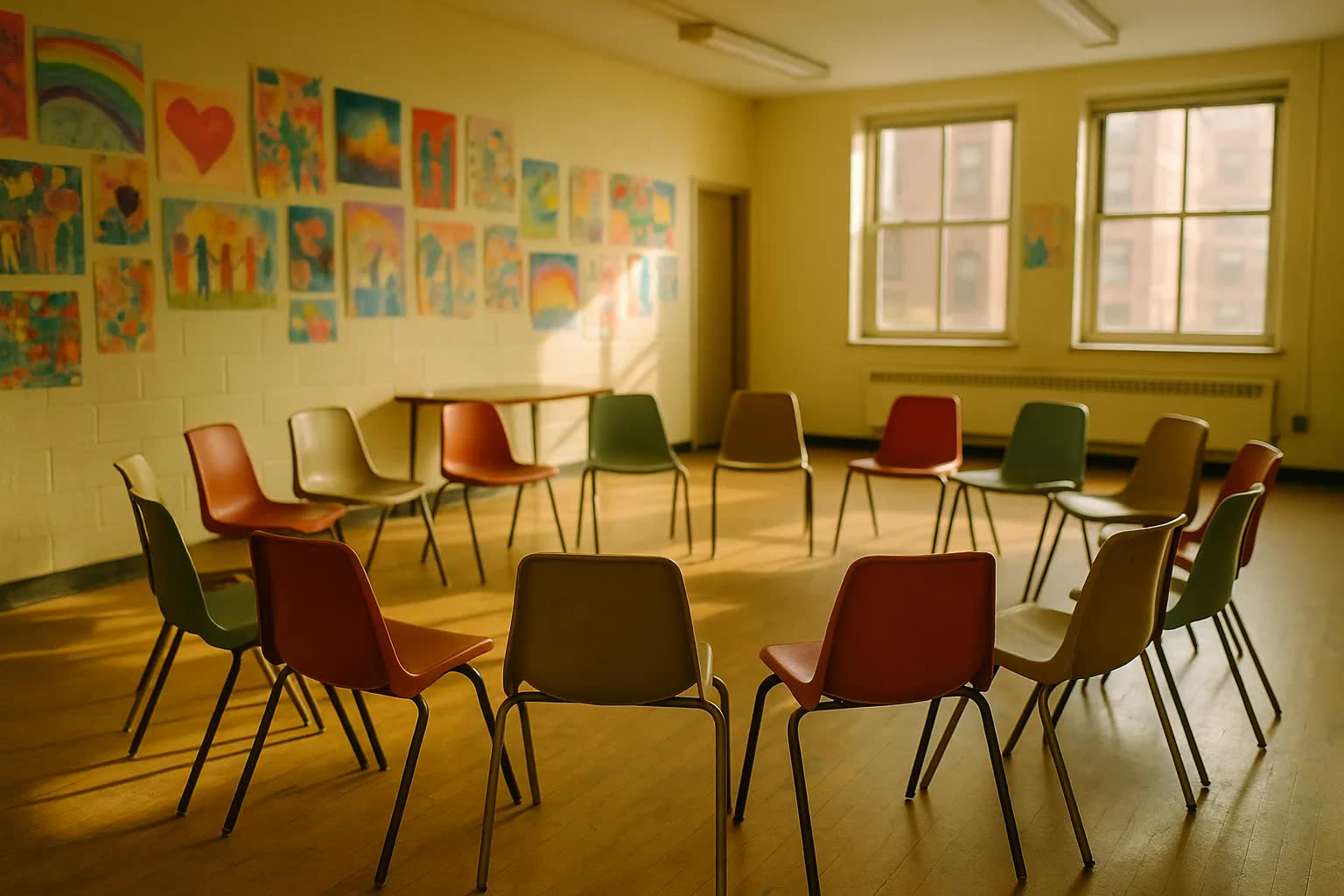
NEW YORK — On a rain-slick Tuesday morning, a cluster of men and women in bright scarves gathered at a community room off Christopher Street to rehearse a short play about coming out in the 1970s, a rehearsal that doubled as a form of medical and social care for the city's older queer residents. Across Manhattan, from a converted storefront in Chelsea to a basement studio near Tompkins Square Park, senior centers that long offered coffee and bingo are adding scripted scenes, choir sections, drag workshops and pop-up performances to fight isolation and to reframe care as cultural practice.
The movement is visible in a half-dozen neighborhood initiatives launched in the past two years, led by organizations like the Lavender Arts & Aging Initiative and the Village Elders Collective. Programs are clustering where older queer residents already live: the West Village, the Lower East Side and Hell's Kitchen. "We started with a karaoke night and realized people were telling their life stories in between songs," said Ramon DeLaCruz, program director at Lavender Arts & Aging Initiative. "Now we build those stories into performances that keep people connected and historically visible."
At the Village Elders Collective on Bleecker Street, Marjorie Chen, 78, adjusts a prop hat before joining a scene that intercuts scenes of Stonewall-era protest and neighborhood gossip. "I haven't had this much laugh-cry energy in years," said Chen, a retired school nurse and regular participant. "The performances make me feel seen as an older queer woman, and they brought my friend back from a months-long withdrawal. We are caring for one another through art, not just tea."
The push toward arts-based care is not small. A 2024 survey by the Manhattan Institute for Aging Research found an estimated 24,000 Manhattan residents aged 60 and older identify as LGBTQ+; 62 percent of respondents reported regular feelings of loneliness, and 48 percent said they had trouble getting to mainstream senior centers because programs felt heteronormative. City and private funders have directed roughly $3.2 million in grants since 2023 specifically to LGBTQ+ elder arts programming, supporting 18 weekly classes, five theater troupes and an average of 1,200 participant visits per month across Manhattan centers.
Advocates and specialists say the arts offer measurable benefits beyond socializing. "Creative work activates cognitive networks while providing meaning and social scaffolding," said Dr. Ingrid Massey, a gerontologist and consultant with the Manhattan Institute for Aging Research. "For LGBTQ seniors who may have experienced decades of stigma and loss, performance work increases mobility, reduces depressive symptoms and rebuilds trust — all central to aging well in place."
Logistics are a practical hurdle. Many older residents live in walk-up apartments in the East Village or in subsidized buildings near 14th Street and lack reliable transit options at night. Centers are responding with neighborhood-based microprogramming: short rehearsals in storefronts on Seventh Avenue, late-morning movement classes at a community church on Christopher Street and subsidized rides from local cab companies. Partnerships with neighborhood theaters and arts schools have opened rehearsal space at reduced rates — a rehearsal room donated by the Tompkins Square Playhouse and a music studio shared by a Chelsea conservatory, for example.
Funding remains fragile, and program leaders say staffing is an ongoing challenge. Most arts facilitators are paid stipends rather than full salaries, and the cost of training artists in trauma-informed, culturally competent elder care is high. "We need sustainable budgets to keep teaching artists and peer mentors," said Antonio Ruiz, director of the Village Elders Collective. "Grants help start programs, but to last we need recurring city funds and private donors who understand this is core social care, not optional enrichment."
Beyond classes and performances, programs are recording oral histories, building digital archives and staging public exhibitions that root younger queer activists in the city’s layered histories. A collaborative between Lavender Arts and the Lower East Side Archive opened a monthlong display on St. Mark's Place last fall that wove participants' monologues into a video installation. Intergenerational elements are also multiplying: local high school drama students partner with elders for mentorship, and college interns help catalog stories for a planned downtown queer-history trail.
Organizers say the next steps are evaluation and scale. Pilot projects track attendance, mobility gains and self-reported mood changes; several centers hope to present standardized outcomes to municipal funders by late 2026. Plans are underway to replicate downtown models uptown, with exploratory workshops set for Harlem and Washington Heights next season. "We want to prove that culture is care, not just for the West Village but for all of Manhattan," Ramon DeLaCruz said. "If these programs can keep people connected and out of emergency rooms, they should be treated as essential services."