AI Data-Center Boom Tests the Limits of the City's Power Grid
A wave of new computing facilities in the outer boroughs is driving up electricity demand faster than utilities expected, forcing hard questions about capacity.
By Mei Lin · July 8, 2026 · 6 min read
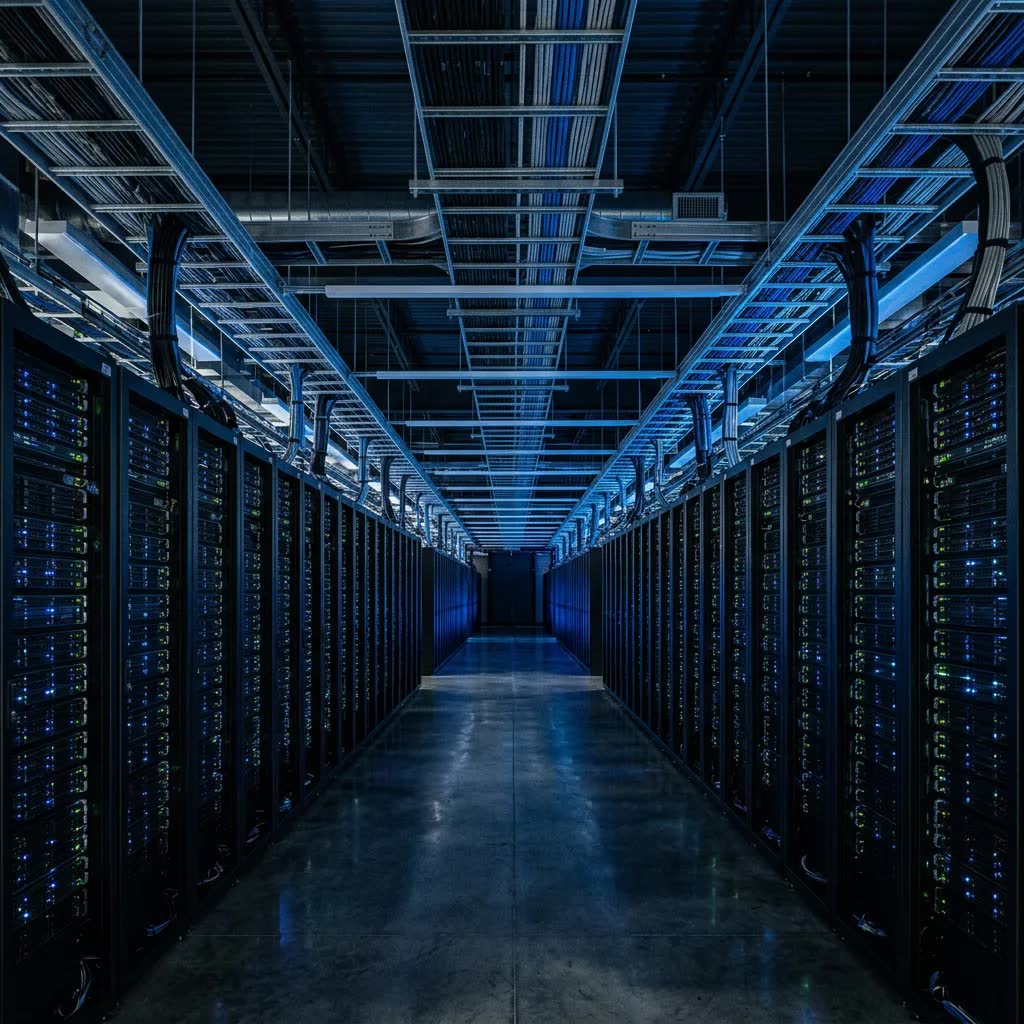
NEW YORK — The rush to build artificial-intelligence infrastructure has arrived in New York City, and with it a surge in electricity demand that utility planners say is testing the limits of a grid never designed for it. Over the past year, developers have filed plans for a cluster of new data centers in parts of Queens, Brooklyn, and the South Bronx, drawn by fiber connectivity, proximity to financial clients, and available industrial land. Each facility can draw as much power as a small neighborhood.
Utility officials describe the trend as a step-change rather than a gradual rise. A single large AI computing hall packed with power-hungry processors can require tens of megawatts of continuous supply, and several are being proposed within a few miles of one another. "We plan for demand growth in fractions of a percent," one grid-planning engineer said. "Now we're being asked to plan for entire substations' worth of new load in neighborhoods that were losing industrial power demand for decades."
The build-out has created an awkward tension for a city with ambitious clean-energy goals. Data centers run around the clock and demand extremely reliable power, which can push operators toward whatever supply is available rather than the cleanest. Environmental advocates worry the new load could slow the retirement of aging fossil-fuel peaker plants, several of which sit in the same low-income neighborhoods now being eyed for computing facilities. "We spent years fighting to close those plants," one advocate said. "This can't become the excuse to keep them running."
Developers counter that the facilities bring construction jobs, property-tax revenue, and long-term technical employment, and that many are pursuing power-purchase agreements tied to new renewable projects and battery storage. Some are exploring on-site fuel cells and waste-heat recovery to reduce their grid footprint. "The industry knows it has a reputation problem on energy," one developer said. "Nobody wants to be the villain who browned out a borough."
State and city energy regulators have begun drafting rules that would require large computing facilities to disclose projected consumption and, in some cases, contribute to grid upgrades before receiving interconnection approval. Officials are also weighing incentives for operators that locate near existing transmission capacity or that agree to curtail usage during peak demand. The goal, one regulator said, is to "capture the economic upside without letting a handful of buildings dictate the future of our energy system."
For now, the outcome hinges on projects still working their way through permitting, and utilities are racing to model just how much load could materialize by the end of the decade. Community boards in affected neighborhoods have begun holding hearings, where residents have voiced both interest in the jobs and unease about noise, heat, and the strain on local infrastructure. "We keep hearing this is the future," one Bronx resident said at a recent meeting. "We just want to make sure the future doesn't skip over us on its way in."