Manhattan Launches a New Pilot to Bring Composting Carts to Dense Residential Blocks
The Department of Sanitation and local co-ops are trialing curbside compost pickup in two Midtown neighborhoods to cut landfill waste.
By Hana Kim · January 24, 2026 · 4 min read
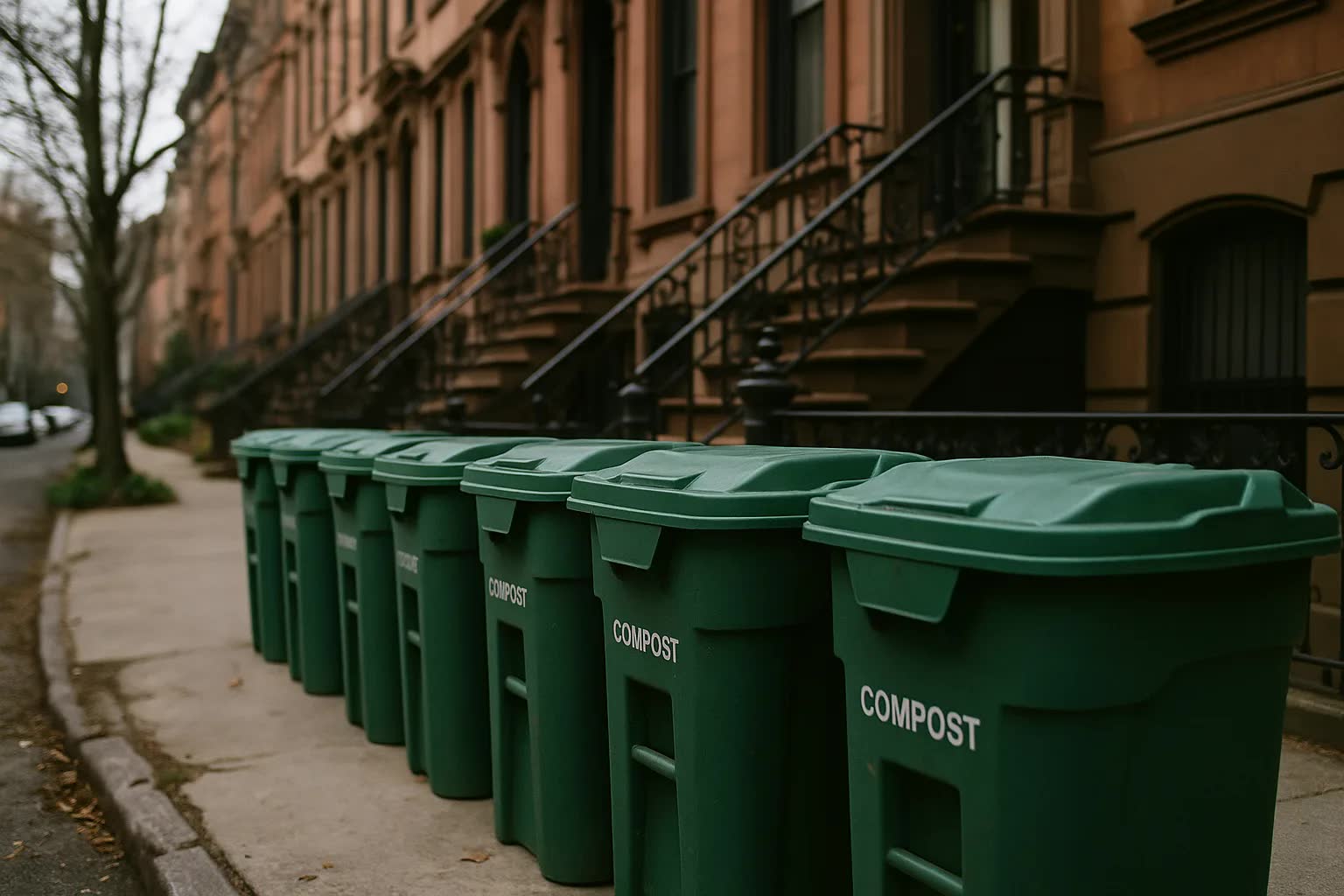
NEW YORK — Manhattan is testing a new approach to one of the city’s oldest waste headaches: how to keep organic scraps out of landfills in dense, high-rise neighborhoods where backyard composting is impossible and sidewalk space is at a premium. Beginning this spring, the Department of Sanitation is partnering with local housing co-ops and two neighborhood associations in Midtown to pilot curbside compost carts on select blocks in Hell’s Kitchen and Murray Hill, a move city officials say could cut trash destined for landfills and keep pungent food waste off cramped kitchen counters in thousands of apartments.
City officials and co-op leaders say the pilot, they hope, will answer pragmatic questions about how organics can be collected at the curb in neighborhoods dominated by large walk-ups and elevator buildings — where hauling a bag of banana peels to a distant compost drop-off is not realistic for many residents. The plan follows smaller-scale drop-off programs and composting for public parks, but it will be one of the first attempts in Manhattan to coordinate building-level participation with curbside logistics and centralized processing.
Under the pilot, which will run for 18 months beginning March 2, participating co-operatives will place 64-gallon wheeled compost carts on designated curbspace three mornings a week. Each enrolled apartment will receive a 2.5‑quart kitchen pail and a set of compostable bags to line it; building supers will get training on containing odors and pests. The co-ops involved — including the 42nd Green Cooperative in Hell’s Kitchen and the Parkside Cooperative on Lexington Avenue in Murray Hill — volunteered after neighborhood meetings and outreach in lobbies and tenant newsletters. "This is not about being trendy," said Maria Velasquez, president of the Midtown Co-op Council. "It’s about giving residents who live in small units a real, dependable alternative to throwing food waste into the regular trash."
DSNY and partners released an estimate for the pilot’s scope: 120 multi-family buildings representing roughly 9,400 residential units and about 18,200 residents across two Midtown sectors. The agencies project the program could divert approximately 1,800 tons of organics in its first 12 months — reducing landfill-bound trash in the pilot area by about 15% and lowering greenhouse gas emissions equivalent to taking an estimated 900 cars off the road for a year. Initial funding includes a $1.6 million allocation from the city and a $400,000 grant from the Green Manhattan Fund to cover carts, outreach materials and staffing for collection and contamination monitoring.
Operational challenges are front and center: building managers worry about the logistics of rolling carts to the curb three times a week without blocking morning deliveries or taxi access, and residents are concerned about odors during summer. "We’ve lived with overflowing trash rooms for years; we need systems that fit into how our buildings operate," said Jamila Owens, superintendent at Parkside Cooperative. "If the pickups are regular and the kitchen pails are effective, we’ll make it work. If not, it’ll end up in the same place as before."
Experts in urban sustainability say the pilot could yield lessons for rolling out organics collection across the city’s densely settled neighborhoods. "Curbside compost in Manhattan requires more coordination than in single-family neighborhoods, but the environmental upside is significant," said Dr. Aaron Feldman, urban sustainability director at the Manhattan Environmental Partnership. "If contamination is managed and collection frequency matches resident needs, you can see meaningful reductions in methane emissions and disposal costs over time."
Residents on participating blocks had mixed reactions during an outreach pop-up outside a deli on 9th Avenue near 42nd Street. Some, like a young parent who lives in a sixth-floor walk-up near Times Square, welcomed the convenience of a kitchen pail that doesn’t attract fruit flies. Others raised questions about building-specific fees, whether doormen would handle liners and how compost pickups would interact with holiday schedules. Store owners and bodega managers near Bryant Park said they would monitor whether the pilot reduces the amount of food waste they must discard each night, potentially lowering their pickup bills.
The collected organics will be transported by a contracted fleet to the North Shore Organics Processing Center, an industrial composting facility in Brooklyn that the city will lease time at during peak months. Workers there will screen material for contaminants, windrow or in-vessel process the organics, and produce finished compost for city parks and authorized community gardens. DSNY staff said contamination thresholds — primarily plastics and non-compostable food packaging — will be publicly reported monthly; neighborhoods that fail to meet set limits for two consecutive months could face temporary suspension and additional education efforts.
Cost and scalability are central to whether the pilot grows. The city’s $1.6 million pilot budget covers carts, outreach, a start-up stipend for co-ops and initial processing fees; participating buildings will not pay an upfront fee but could see adjustments on their maintenance budgets if they opt for extra liners or private hauling. City analysts estimate citywide curbside organics collection in dense Manhattan neighborhoods would require an annual operational investment of roughly $35 million but could reduce borough-wide disposal costs by 7 to 12 percent within five years if contamination remains low and participation climbs to 60 percent of eligible households.
If the pilot meets diversion and contamination benchmarks, DSNY officials said they will consider expanding the program to other central neighborhoods — Chelsea, the Garment District and parts of the Upper West Side have been named in internal planning documents — with a public progress report due in nine months. Advocates and co-op leaders said they will watch those metrics closely, believing the experiment could show how a city built on sidewalks and subway stairwells makes space for a less wasteful future. "This has to work for the people who live here," Velasquez said. "If it does, we’ll take it to the rest of Manhattan and make sure our streets and buildings stop being part of the problem."