Manhattan's Zero-Waste Shops Find Loyal Downtown Customers
Bulk refill stores and packaging-free grocers are tailoring hours and product mixes to appeal to small-household urban shoppers.
By Mateo Ruiz · March 7, 2026 · 4 min read
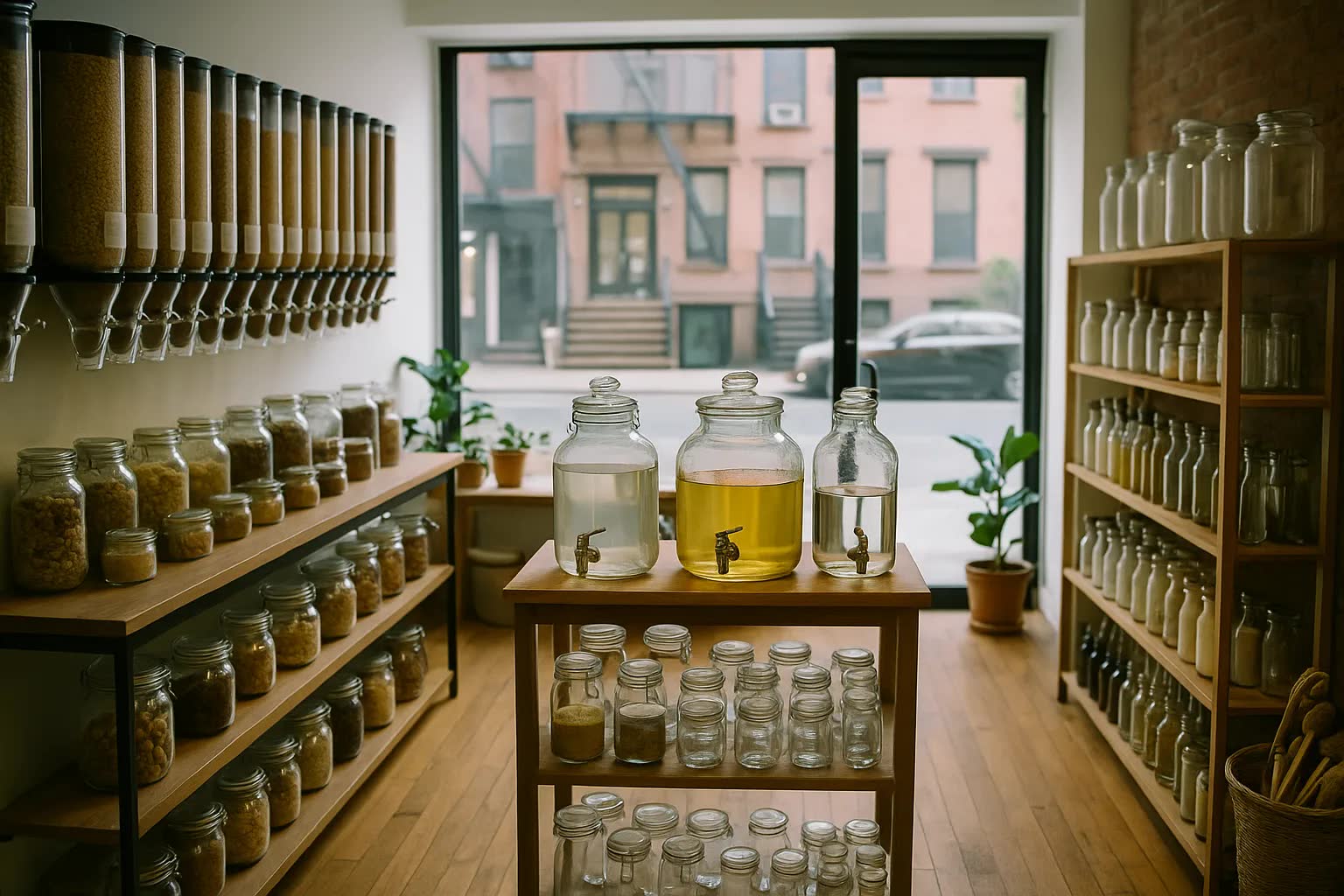
NEW YORK — March 7, 2026 — On a Thursday evening in late winter, commuters spilling off the L train at 14th Street can duck into a handful of small storefronts that look more like apothecaries than grocery stores and walk out with exactly the amount of pasta, coffee or dish soap they need without a single new plastic bottle. Across neighborhoods from the West Village and Chelsea to the Financial District and the Lower East Side, a network of zero-waste bulk refill shops and packaging-free grocers has quietly retooled hours, product sizes and merchandising to fit Manhattan's rise in single- and two-person households, turning what once felt like a niche lifestyle choice into a steady, downtown retail rhythm.
Shopkeepers say the shift has been less about preaching and more about convenience. Stores such as Refill Union Square, ZeroCart Chelsea and Bulk & Co. on East 9th Street now keep evening hours and stock smaller, pre-measured options alongside traditional bulk dispensers so workers can pop in after a dinner shift or bring a handful of reusable jars on the weekend. Many of the new entrants are renting compact spaces under 800 square feet, nailing down high foot-traffic corners near subway exits and meshing their offerings with nearby bodegas and cafes to extend reach without a sprawling footprint.
"We design our mixes for one- and two-person households because that's who lives in this part of the city now," said Ivy Morales, manager at Refill Union Square. "That means more single-cup coffee, 100-gram rice packs and sealed grab-and-go options that still cut down on packaging. If someone can grab what they need after work, they're more likely to do it again next week."
The market data backing that claim is tangible, according to a 2025 survey by the Manhattan Zero-Waste Alliance and sales figures shared by a consortium of local stores. Between 2023 and 2025 citywide foot traffic to refill shops in Manhattan rose by 37 percent, the number of dedicated packaging-free outlets increased from 14 to 28, and average transaction size for refill purchases settled at $18.40. The survey also found that 62 percent of customers who frequent these shops live alone or in two-person households, and small-format stores reported expanding evening hours by an average of four hours per week to capture post-commute demand.
Owners have had to experiment with product mix and services to make economics work on narrow city lots. Desmond Rhee, co-owner of ZeroCart Chelsea, said the shop introduced smaller weight increments and a line of sealed-to-go pouches after surveying regulars on Seventh Avenue. "We started offering 125-gram pouches and pre-measured meal kits because customers told us they'd rather spend $3 for exactly what they need than buy a 1-kilo bag they can't finish," Rhee said. "It reduces waste and it keeps them coming back more frequently."
Neighborhood differences are shaping what sells. In the East Village and Lower East Side, where students and artists often live in shared apartments, bulk spices, affordable grains and low-cost body-care refills are top sellers. Around Washington Square Park and Bleecker Street, small-batch coffee beans and single-serve baking supplies do well. In the Financial District and Battery Park, where many residents are young professionals in one-bedroom buildings, stores report demand for pre-portioned proteins, compostable takeout containers and compact household cleaners stacked for immediate use during a short work week.
But the operational realities are not trivial. Smaller package sizes mean more frequent deliveries, tighter inventory management and higher per-unit costs from wholesalers who still cater to larger commercial buyers. Rent remains a persistent pressure: several owners say the smallest storefronts under 500 square feet have higher sales per square foot but also less room for overflow and seasonality. Some shops have offset that by partnering with neighborhood restaurants for surplus ingredient swaps, offering membership subscriptions and adding late-night pick-up lockers that let customers collect prefilled jars without requiring extended staff hours.
"We rely on a mix of walk-in traffic and subscriptions now, which evens out demand and helps us forecast deliveries," said Asha Patel, a retail consultant who advises small grocers across Manhattan. "The stores that survive and grow are the ones who treat refill retail like hospitality — flexible hours, smart curation and lots of local partnerships. It's retail choreography more than bulk sales alone."
Shoppers say the convenience argument sways them, even when the upfront cost is similar to packaged goods. "I live in a studio in Greenwich Village and I can't store five-liter jugs, so I like that I can buy exactly 200 grams of oats or a single-use bar of soap without the plastic," said Mina Alvarez, a schoolteacher. "It feels good to reduce my waste, but I keep coming back because it saves me space and time, not just because it's sustainable."
Citywide officials and local business groups are watching the experiment closely, encouraging micro-depots and pilot programs that can bridge wholesale supply to small-format retailers without driving up costs. If the current momentum holds into 2027, owners and consultants say, Manhattan's zero-waste retail scene will likely grow not as a chain-dominated category but as a patchwork of neighborhood specialists, evening-friendly hours and modular supply partnerships that reflect how New Yorkers live in smaller homes and shop on tighter schedules. Expect more mobile refill pop-ups, locker pickup options and subscription-led inventory planning as the sector seeks scale without sacrificing the downtown convenience that made it relevant in the first place.