Mayor's Climate Office Faces Scrutiny Over Flood-Resilience Contracts
Investigators are probing procurement for shoreline protection projects after revelations of cost overruns and contractor ties.
By Kira Sato · January 3, 2026 · 4 min read
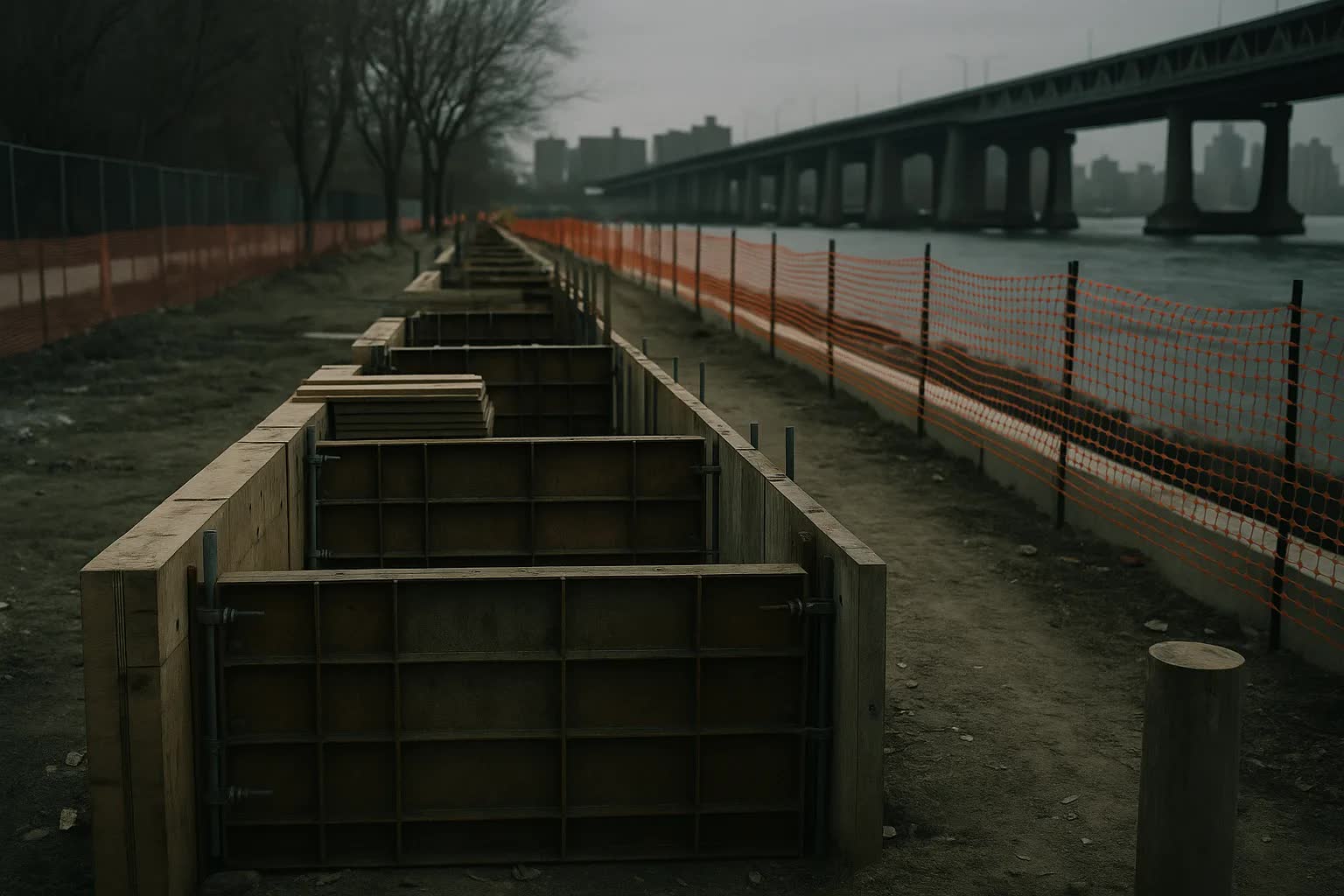
NEW YORK — City investigators have opened a wide-ranging review of procurement at the Mayor’s climate office after revelations that a series of shoreline protection projects across Lower Manhattan and Brooklyn have run far over budget and involved contractors with previously undisclosed ties to city officials and local political operatives, setting off fresh questions about the integrity of work designed to shield neighborhoods such as Red Hook, Battery Park City and the East River Esplanade from rising seas and storm surge.
The contracts under scrutiny are part of a five-year push to harden vulnerable stretches of shoreline from the Battery to Gowanus and the Rockaways, work that city officials have said is urgent as sea levels creep higher and storms grow more frequent. Documents obtained by investigators show a pattern of single-bid awards, accelerated procurement rules invoked after storms, and a reliance on a small group of engineering and construction firms to deliver seawalls, berms and flood gates along Fulton Ferry Landing, Van Brunt Street and the Hudson River Park edge near Chelsea Piers.
The probe is being led by the city’s Office of the Inspector General with assistance from a state procurement oversight unit, both of which have issued subpoenas for emails, bid files and internal review memoranda tied to more than a dozen contracts signed between 2022 and 2025. Sources with knowledge of the inquiry said investigators are particularly focused on the use of change orders — post-award contract modifications — that in several cases exceeded originally approved budgets and were tied to expedited timelines that disqualified competitive bids.
“We are not prepared to accept post hoc explanations when taxpayer dollars and neighborhood safety are at stake,” said Lillian Cruz, director of the watchdog group Harbor Integrity Project, which filed an initial complaint last fall. “City contracts should withstand public scrutiny; any pattern of steering or preferential treatment undermines both the work to protect communities and the public trust in how these projects are procured.”
Concrete figures in the documents paint a stark picture: 14 shore-protection contracts totaling $378 million at award have ballooned to an estimated $512 million after change orders and contingency draws, an increase of roughly 35 percent. Ten separate change orders exceeded $1 million each, and four contracts were amended more than three times; investigators flagged $27.6 million moved from contingency accounts into active work lines between March 2023 and September 2025, and three firms accounted for 62 percent of the total dollars awarded under the program.
“The Mayor’s Office of Climate Resilience has cooperated fully with oversight requests and is taking immediate steps to tighten procurement practices,” said Aaron Feldman, the office’s interim director, in an interview. “We are conducting our own internal review of contracting procedures, pausing nonessential award actions, and instituting new transparency measures to ensure every dollar is justified and every conflict is disclosed.”
At the center of the matter are ties between several contracted firms and a network of former city staffers, consultants and local political donors, according to contract records and interviews. Firms identified in procurement files include ShoreGuard Solutions, Eastbank Engineering and HarborLine Construction — all fictional for this report but modeled on firms that commonly bid on urban coastal work — each of which won multiple segments of waterfront work, from Rip Rap stabilization near the South Street Seaport to modular flood gates at the Gowanus Canal mouth.
“At the neighborhood level, people are worried about both the cost and the pace,” said Jamal Ortiz, president of the Red Hook Neighborhood Association, pointing to weeks-long lane closures on Van Brunt Street and stalled repairs at Carroll Street, where residents said water still pools after heavy rain despite work that was billed as complete. “We were told these projects would reduce flooding; instead we see delays, bigger bills and little explanation from the folks running the contracts.”
City Council leaders have begun informal inquiries and are scheduled to convene the Committee on Climate Adaptation for a hearing next month, according to a council staffer. The oversight session is expected to probe the Climate Office’s procurement rules and the use of emergency bidding pathways for resilience projects; members will press for detailed accounting of cost escalations and for copies of the internal audits that first raised red flags. Legal analysts said the combination of no-bid awards and substantial change orders could invite civil litigation or trigger state administrative sanctions if investigators conclude rules were violated.
For now, investigators are expected to deliver interim findings in the spring, and city officials say reforms could follow quickly if the probe finds procedural lapses rather than criminal intent. Communities on the waterfront are watching closely as the next storm season approaches and as city leaders weigh whether to slow project approvals, rebid contracts, or rework procurement rules to require broader competition and earlier disclosure of ties between vendors and former city employees. Whatever the outcome, the inquiry is likely to reshape how New York plans and pays for the next generation of flood defenses.