The Met Opens Its Most Ambitious Exhibition in a Decade, Celebrating the Full Arc of the Harlem Renaissance
Spanning five galleries and more than 300 works drawn from 60 institutions worldwide, 'Harlem Rising' traces the explosion of Black artistic, literary, and musical life that remade American culture between the wars.
By Ivy Liu · August 4, 2026 · 4 min read
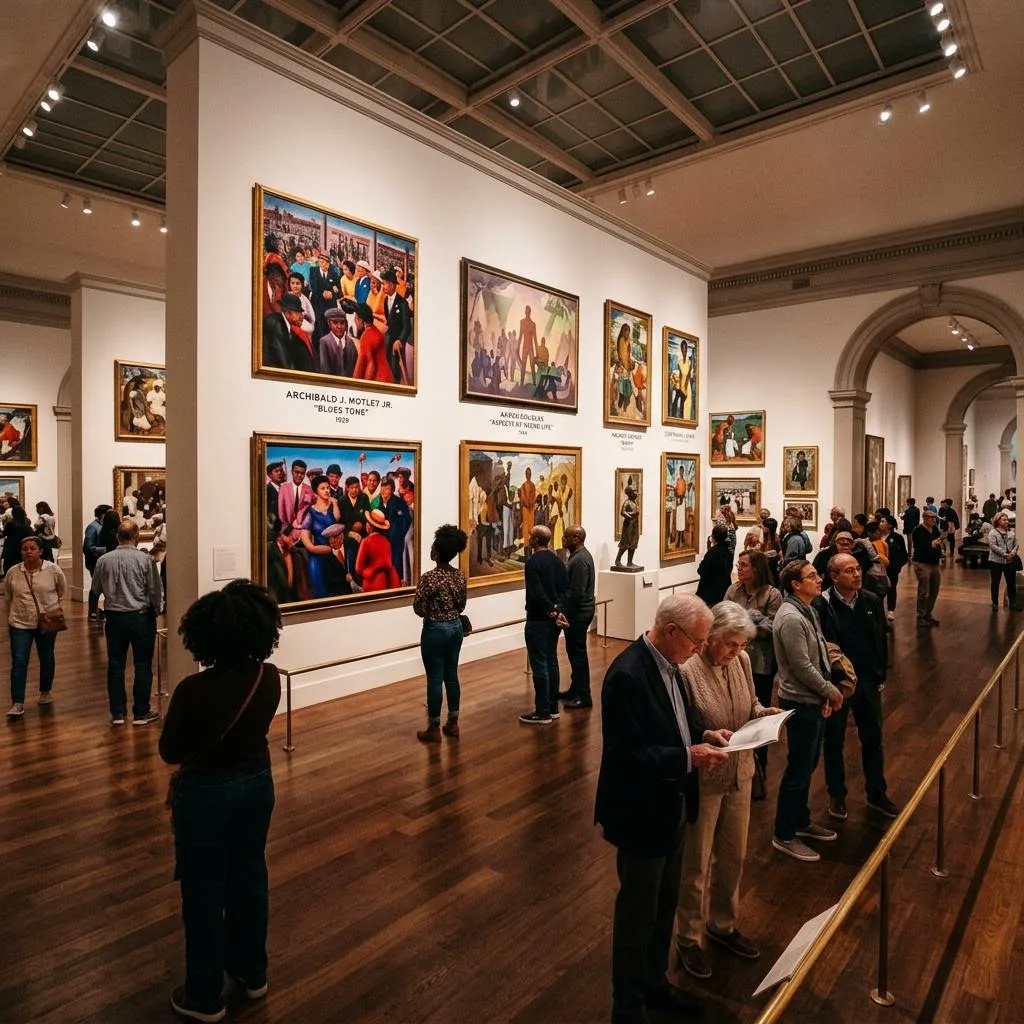
NEW YORK — The Metropolitan Museum of Art opens its fall season this week with 'Harlem Rising: Art and Identity in the New Negro Movement, 1919–1940,' the museum's most comprehensive survey of the Harlem Renaissance ever mounted. Spread across five interconnected galleries in the American Wing, the show brings together 312 works — paintings, sculptures, photographs, manuscripts, musical scores, and fashion — borrowed from 60 collections across the United States, Europe, and West Africa.
Rather than presenting the Harlem Renaissance as a bounded literary movement, the Met's curatorial team, led by Dr. Adrienne Childs, situates it as the first fully self-aware assertion of Black modernism: a cultural rupture that reoriented American art, music, literature, and fashion simultaneously. The show opens with Aaron Douglas's mural studies and closes with a room dedicated to Billie Holiday's recorded performances, establishing a span that resists any single discipline's claim to define the era.
Among the highlights: Jacob Lawrence's Migration Series is displayed in its entirety for only the fourth time in history, its 60 panels reunited from the Museum of Modern Art and the Phillips Collection in Washington. Archibald Motley's 'Nightlife' appears alongside a recreation of the Savoy Ballroom using archival photographs and spatial modeling. Augusta Savage's sculpture 'Lift Every Voice and Sing' is shown alongside 1939 World's Fair documentation revealing how the work was destroyed after the fair closed — a loss the Met describes as 'an act of institutional negligence.'
The Met has designed the exhibition with an unusually ambitious educational infrastructure. A 'living archive' digital station in each gallery connects objects on view to oral history recordings, contemporary scholarship, and digitized ephemera from the Schomburg Center for Research in Black Culture. Guided tours led by Harlem-based community historians run three times weekly. The museum is also offering free admission on Tuesdays through a partnership with the Ford Foundation.
'Harlem Rising' opens to the public Saturday and runs through February 15, 2027. A 480-page scholarly catalogue, edited by Dr. Childs and published by Yale University Press, accompanies the exhibition.