Metropolitan Opera’s Community Nights Bring Reduced-Price Performances to Outer Boroughs
A pilot offering streams and satellite screenings, paired with neighborhood workshops, seeks to broaden the Met’s suburban and outer-borough audiences.
By Kira Sato · April 15, 2026 · 4 min read
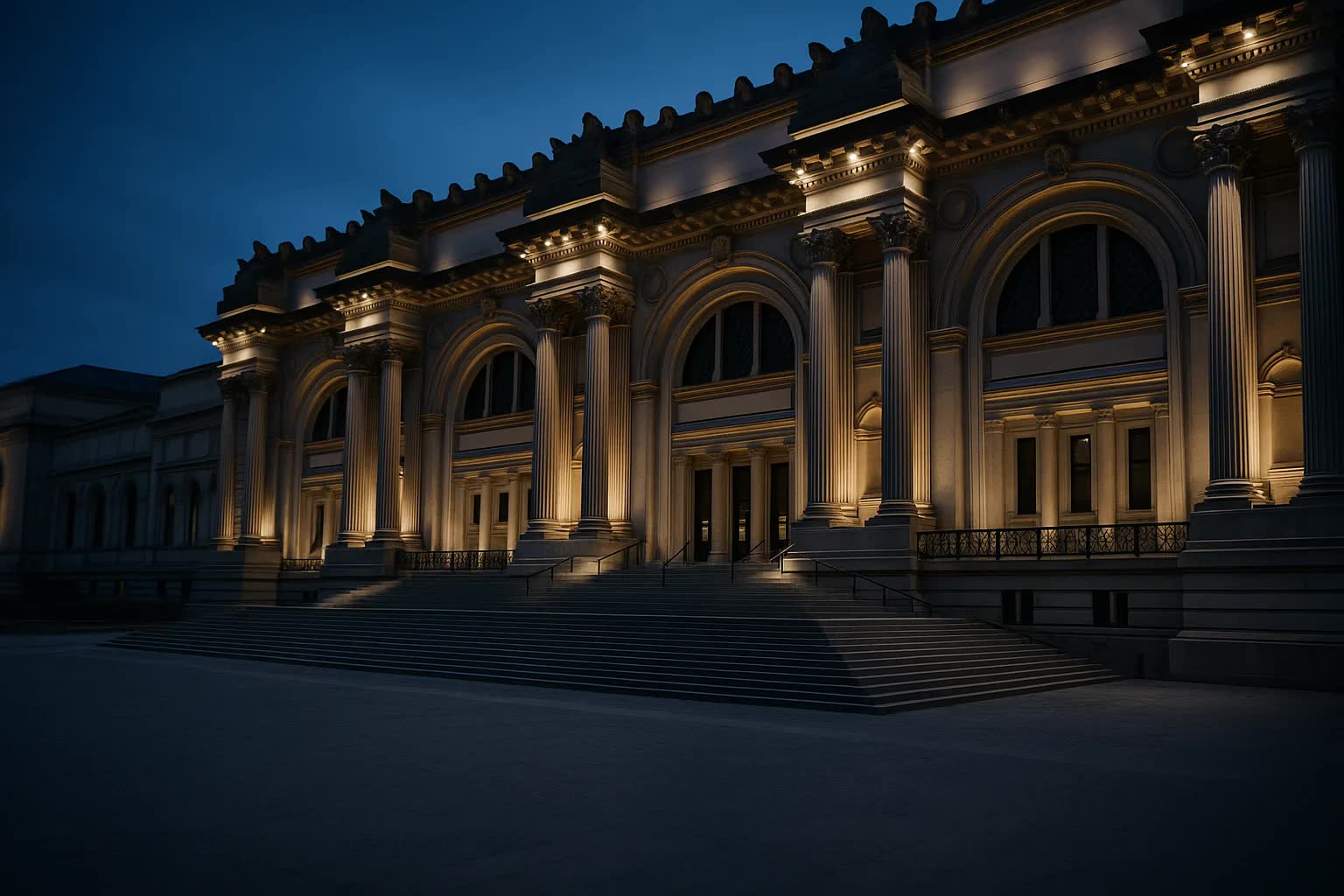
NEW YORK — The Metropolitan Opera on Wednesday announced a pilot program called Community Nights that will bring reduced-price screenings, live-streamed productions and on-site workshops to neighborhoods across the outer boroughs, a bid by the company to remake opera as a neighborhood art form rather than a Lincoln Center spectacle.
The initiative, which launches this spring, will pair high-definition satellite screenings of Met performances with neighborhood-based activities — pre-show talks, voice and movement workshops, surtitled translations and post-screening Q&A sessions — hosted at libraries, cultural centers and school auditoriums in Jackson Heights, Sunset Park, Fordham, St. George and the Rockaways, among other locations.
”We want to meet audiences where they are,” said Julian Price, director of community programs at the Metropolitan Opera. “Lincoln Center will always be our home, but opera has a new life when you put it on a church lawn in Sunset Park or in a high school auditorium on Fordham Road. The goal is to lower the economic and practical barriers that keep people from experiencing live opera.”
The pilot will run for 12 months and deliver 36 satellite screenings at 24 partner sites across all five boroughs, according to a Met briefing. Tickets for in-person screenings will be offered at a flat $12 price; workshops and some pre-show events will be free. The Met estimates the program will serve 8,600 in-person attendees and reach an additional 30,000 viewers via a complimentary online stream, with a preliminary budget of $1.5 million covering equipment, staffing and community grants and 18 institutional partners including public libraries, two Borough Presidents’ offices and several community-development organizations.
Local partners say the modest price point and neighborhood footing are essential. “For many of our neighbors, a $12 ticket and a short walk to the library are the difference between curiosity and discovery,” said Elena Marquez, executive director of the Queens Cultural Collective, which will host five screenings at the Jackson Heights Library on 37th Avenue. “We’ll also be providing Spanish, Mandarin and Bengali surtitles and family-friendly talkbacks so we can be sure these performances are culturally relevant.”
Even logistics, long a practical barrier to attendance, have been part of planning. “We’ve been coordinating with the transit agencies to make sure late-evening services align with screening schedules,” said a senior MTA planner who requested anonymity because the timetable adjustments are not yet finalized. “It’s small things — a later bus, a staffed mezzanine, clearer signage at stations like Fordham Road and St. George — that help lower the friction for people who might otherwise write it off as too complicated.”
Attendees and small-business owners along screening routes said they hope the program will spark new cultural habits. “I grew up two blocks from the screening site on Fordham Road and never thought I’d see the Met without coming to Manhattan,” said Darnell Ortiz, a high school music teacher who attended a preview screening. “Families came with kids. There were seniors. Afterwards, folks grabbed coffee at La Esquina del Sabor and talked about the singing. That spillover into local shops matters.”
The Met and its community partners are also confronting familiar criticisms about quality and inclusion. Some neighborhood organizers have pushed back on the notion of a one-size-fits-all program, urging the company to tailor surtitles, language supports and repertoire to local audiences. In response, the Met says each site will receive bespoke support: wireless headphone units for hearing access, ASL interpreters at selected screenings, and digital surtitles in multiple languages. Sunset Park organizers insisted on Cantonese and Spanish surtitles for the neighborhood’s mixed Chinese and Latinx audiences, and the Met agreed, officials said.
Technology partnerships have been central to the plan. The Met contracted North Harbor Media, a Brooklyn-based audiovisual firm, to deploy compact, fiber-backed projection rigs and battery-backed sound arrays that can be set up in school gyms and church courtyards with minimal infrastructure. “Our mobile kits can be struck and re-staged in under four hours,” said Rosa Chen, North Harbor’s technical director. “We’re using low-latency encoders and a redundant uplink so that a live Act III broadcast maintains sync and clarity even in venues that lack theater-grade cabling.”
The pilot will be formally evaluated after a year, with the Met promising to share attendance data, demographic reach and partner feedback with its board in December. If the early numbers and neighborhood responses hold, officials said, Community Nights could become a standing program and may expand next year to include suburban sites in Westchester and Nassau, or a permanent rotation of borough-based seasons that reconceive where and how opera is presented in the region.