Midtown Parking Garages Retrofit for EV Charging to Meet New Demand
Garage operators are upgrading electrical infrastructure and revising pricing as electric vehicles become common among commuters and visitors.
By Malik Johnson · December 1, 2025 · 4 min read
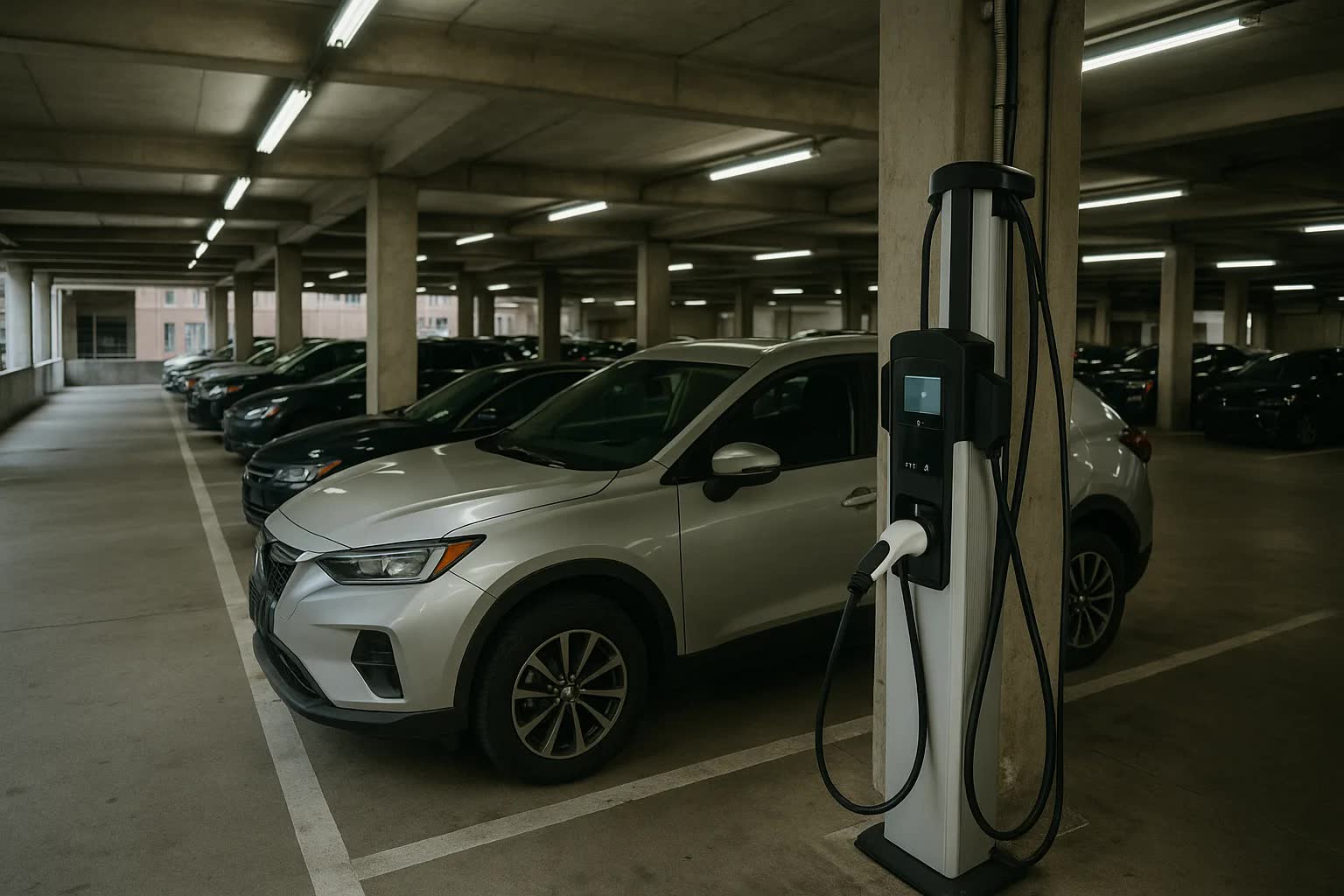
NEW YORK — Midtown Manhattan’s multilevel parking garages are racing to rewire themselves for the electric-vehicle era, converting car storage into a new kind of commodity as commuters and tourists push demand for charging stations near Grand Central, Bryant Park and the Port Authority hub at 42nd Street.
Garage operators from Hell’s Kitchen to Murray Hill say they are under pressure from customers and corporate tenants to install EV chargers, revamp electrical panels and rethink pricing models — even as city regulators and building owners sort out who pays for costly utility upgrades under narrow Manhattan footprints.
At Midtown Parkade on West 34th Street, which shares a block with the Javits Center’s satellite lots, the owner said retrofits were a business necessity after monthly EV passes went from virtually zero to nearly one-quarter of renewals in 18 months. "If we don't provide chargers, we're losing the downtown commuters and the convention traffic that used to park with us every day," said Elena Cruz, general manager of Midtown Parkade, who oversees a 650-space garage. "This is not a nice-to-have, it's a survival play for urban parking facilities."
Operators say the work is complicated. Many garages were built decades ago with limited electrical capacity, narrow ramps and concrete structures that make trenching and conduit runs expensive and time-consuming. Some are negotiating with private building owners or Con Edison for dedicated transformers and new service lines, while others are installing intermediate solutions such as load-sharing software and timed reservations to spread demand for existing power.
Gotham Parking Holdings, a private operator that runs 12 garages within a six-block radius of Times Square, has adopted a phased approach: install Level 2 chargers for daytime commuter parking and reserve a smaller share of spaces for DC fast chargers aimed at visitor turnover near tourist corridors. "The goal is to match charger type to customer behavior," said Marcus Bellamy, director of urban sustainability at Gotham Parking Holdings. "Commuters want reliable overnight and daytime charging; visitors need top-ups and fast fills. Both have very different price sensitivities."
The financial math is sharp. Operators estimate upfront retrofit costs at roughly $15,000 to $25,000 per Level 2 port — including labor, concrete work and network management — and $50,000 to $100,000 per DC fast charger when new transformers or service upgrades are required. Across Midtown, at least 48 garages have initiated work this year, adding an estimated 1,350 Level 2 ports and 120 DC fast chargers, with total private investment above $22 million; operators project a payback window of three to six years depending on utilization, pricing and demand growth.
Pricing strategy has become a battleground. Some garages are switching to time-of-day rates and subscription passes, with hourly EV parking surcharges of $4 to $8 above standard rates for Level 2 charging and premium fees for DC fast charging that can range from $20 to $35 for a 30-minute session. For fleet operators and ride-hailing companies that park in Midtown basements overnight, negotiated monthly fees that include charging are becoming common, and operators say these agreements stabilize revenue during off-peak hours.
Municipal officials and neighborhood groups are watching closely. A senior city parking planner who requested anonymity said the Department of Transportation is encouraging conversion projects but has limited capacity to subsidize retrofits. Local business improvement districts in the Garment District and Koreatown have surveyed merchants and found that customers increasingly expect curbside and garage charging options when deciding where to shop and dine, particularly near Herald Square and Fifth Avenue storefronts.
The shift is also reshaping real estate deals. Building owners who lease garage space in the Midtown East corridor near Grand Central are requiring operators to guarantee certain EV services as part of lease renewals, and landlords are investing in microgrid infrastructure to service tenants and parking operations alike. "We used to compete on proximity to the theater district," said Daniel Hsu, a leasing director at Fifth & 45th Garage, "now it’s about power capacity, charger uptime and digital reservation systems. Tenants ask about charging availability in our leasing tours."
Looking ahead, the retrofit wave is likely to accelerate as New York’s clean-air goals and the growing market share of EVs converge in the densest parts of the city; industry executives predict a second round of investment focused on smart-grid integration and fleet charging hubs. Operators say the investments are expensive but inevitable, and those that get the infrastructure and pricing right could turn charging into a stable, even premium, revenue stream in Midtown’s ever-competitive parking market.