Midtown Supper Clubs Stage a Revival for Dinner‑Theater Audiences
Chefs and performers are partnering to reopen intimate supper clubs in retro Midtown ballrooms and hotel backrooms for cabaret and curated meals.
By Hannah Stein · April 2, 2026 · 4 min read
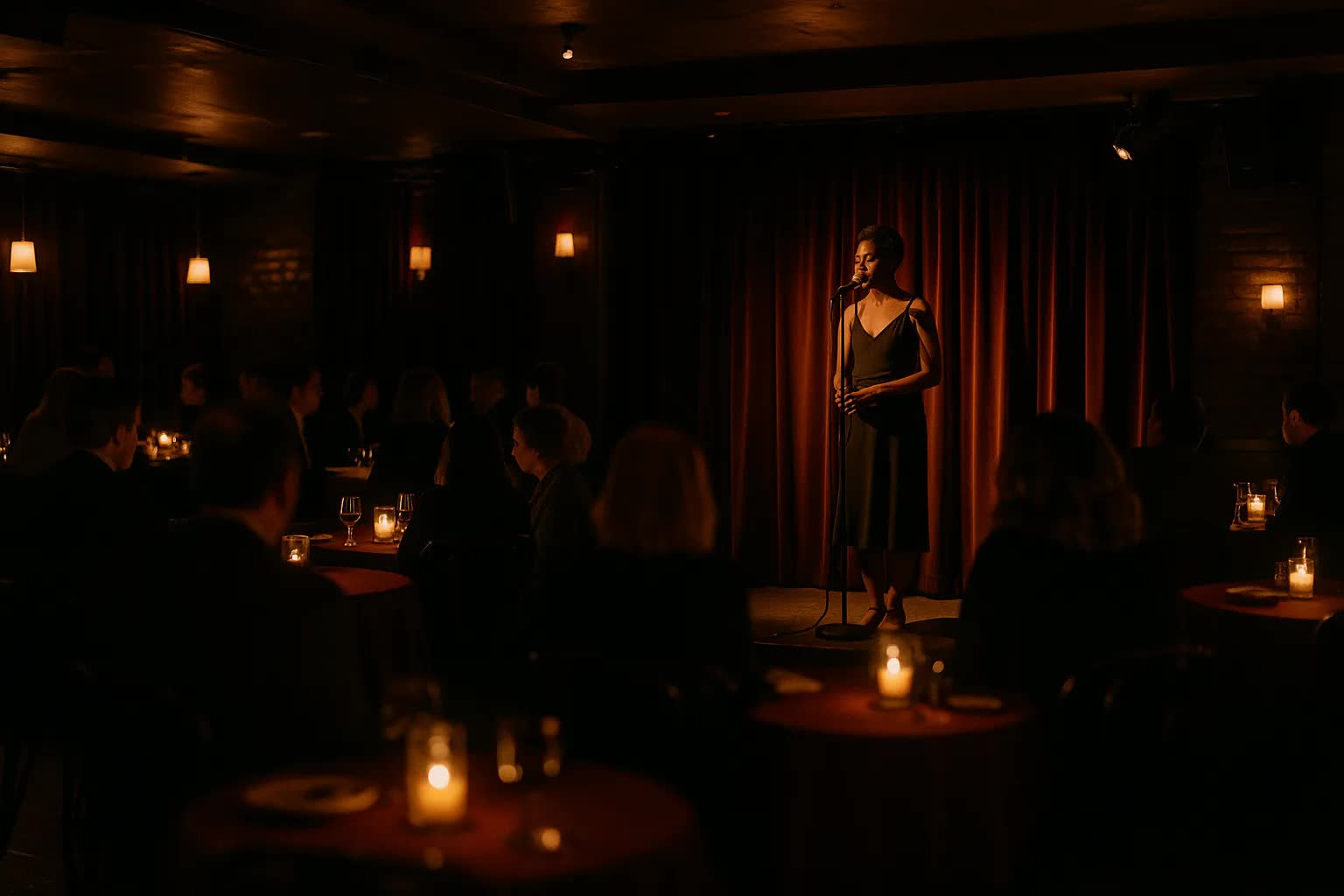
NEW YORK — Midtown’s retro ballrooms and hotel backrooms are filling again as chefs and performers conspire to revive the supper club, a once-dusty form of dinner theater that is finding new life between Bryant Park and the grand concourse of Grand Central. On weeknights, small lights now halo long banquettes on West 45th Street and patrons in cocktail attire lean over candlelit menus as a pianist cues the first number; promoters, restaurateurs and hoteliers say that a hunger for intimate live performance paired with curated meals is reshaping a corner of Midtown nightlife that had been all but dormant for the last decade.
The supper-club revival pulls from a midcentury template — a compact room, attentive service, coordinated courses and a program of cabaret, jazz or spoken-word — but its contemporary forms are hybrid: tasting menus timed to six-part sets, lighting rigs that double as culinary timers, and residencies designed for young performers who are not yet Broadway fixtures. Venues with names like The Meridian Room and Riviera Supper Club, often tucked behind hotel lobbies or within old garment-district ballrooms, have been retrofitted to meet modern codes while preserving decorative plasterwork and original oak floors.
Chefs say the partnership between kitchen and stage has required a new kind of choreography. “We have to treat the set list like a table map,” said Rafael Ortega, executive chef at The Meridian Room, who opened a 70-seat supper series on 47th Street last fall. “If the singer needs a pause, the fish courses must be timed differently. The meal is part of the narrative now.” Ortega, a former sous chef in a Michelin-minded kitchen, said he has simplified some techniques to keep service steady while offering adventurous flavors aimed at diners who expect a theater-quality arc in their evening.
Promoters are betting that Midtown’s dense hotel inventory and steady business travel will support late-night, high-touch programming. The Riviera Supper Club reopened this March in a former ballroom on 40th Street between Seventh and Eighth Avenues, with a schedule of six shows a week featuring jazz trios and cabaret acts. “Hotels have underused spaces,” said Eleanor Finch, general manager of the Astor Park Hotel, which leases its backroom for pop-up series. “For us it’s revenue diversification, for the city it’s vibrancy, and for artists it’s a platform — a win-win if you can get the acoustics right.”
The numbers backing the trend are modest but telling. Since January 2025, 12 dedicated supper-club series have launched or relaunched across Midtown and adjacent neighborhoods, offering a combined 1,020 seats per week at peak schedules; average ticket prices range from $55 for early-bird cabaret nights to $195 for prix-fixe chef-collaboration evenings, with an average spent-per-head of $120 including wine pairings. Operators report average nightly capacities of 70 to 90 seats and estimate that local demand and tourist foot traffic have driven a 30% year-over-year increase in midweek bookings for downtown-style entertainment in the Midtown theater corridor.
Performers say the format offers creative benefits as well as economic ones. “In a supper club you can rehearse an arc with a real audience every night,” said Lena Vargas, a cabaret singer who holds a six-night residency at Riviera Supper Club. “Timing is everything — the audience’s laughter is part of the music and the menu, and that interplay makes the work better.” Vargas, whose set blends standards with new material, said she appreciates the smaller stages where subtler material does better than in a large theater.
Culinary teams are experimenting with service models that reduce the friction of live performance: staggered seatings, reduced plate clatter, and wine flights timed to curtain calls. Chef Simone Park of Crosby Backroom, a small supper series in the Garment District, has worked with sound designers to create ‘quiet service’ kitchen equipment and with staff to train servers in cue-based movement. “We’re modernizing an old form,” Park said. “The challenge is to preserve the intimacy that makes supper clubs special while running an efficient, profitable operation.”
The resurgence has not been without friction. Community boards in Hell’s Kitchen and Murray Hill have fielded complaints about late-night noise and deliveries; permit offices have been busy issuing amplified-music variances and catering permits. Local business-improvement groups such as Midtown South Alliance have partnered with operators to create shared loading schedules and sound-mitigation plans. Union representatives have also entered discussions about backstage staffing as some venues sign multiyear residency deals that require consistent crew and front-of-house teams.
Audience response has skewed younger and more diverse than older models of the supper club, operators say. Attendees often travel from nearby neighborhoods — a couple from the Upper West Side sat near a table of Queens residents the night this reporter visited — and restaurants report that roughly 60% of ticket buyers live in the five-borough area, while 40% are visitors, a mix of domestic travelers and international tourists. The creative programming has also created pathways for emerging artists: Midtown Cabaret Collective, an independent curatorial group, has launched a three-month residency program to give early-career performers guaranteed rent compensation and a guaranteed number of seats per performance.
If the early returns hold, organizers say the revival could extend beyond Midtown’s core. Several operators are planning satellite pop-ups in Chelsea and Bryant Park-adjacent hotels for the summer and a Memorial Day weekend festival of dinner-theater that aims to link restaurants with independent producers. “We’re watching this as an experiment,” said Marjorie Klein, artistic director of Midtown Cabaret Collective. “If the model proves sustainable, it won’t just reanimate old ballrooms; it could change how New Yorkers think about an evening out — dining and seeing a show, together, in the same intimate breath.”