How MoMA Keeps Digital Art From Dying With Its Machines
As the hardware that ran early digital artworks goes obsolete, conservators at the museum are racing to preserve pieces that were never meant to last.
By Omar Haddad · July 23, 2026 · 5 min read
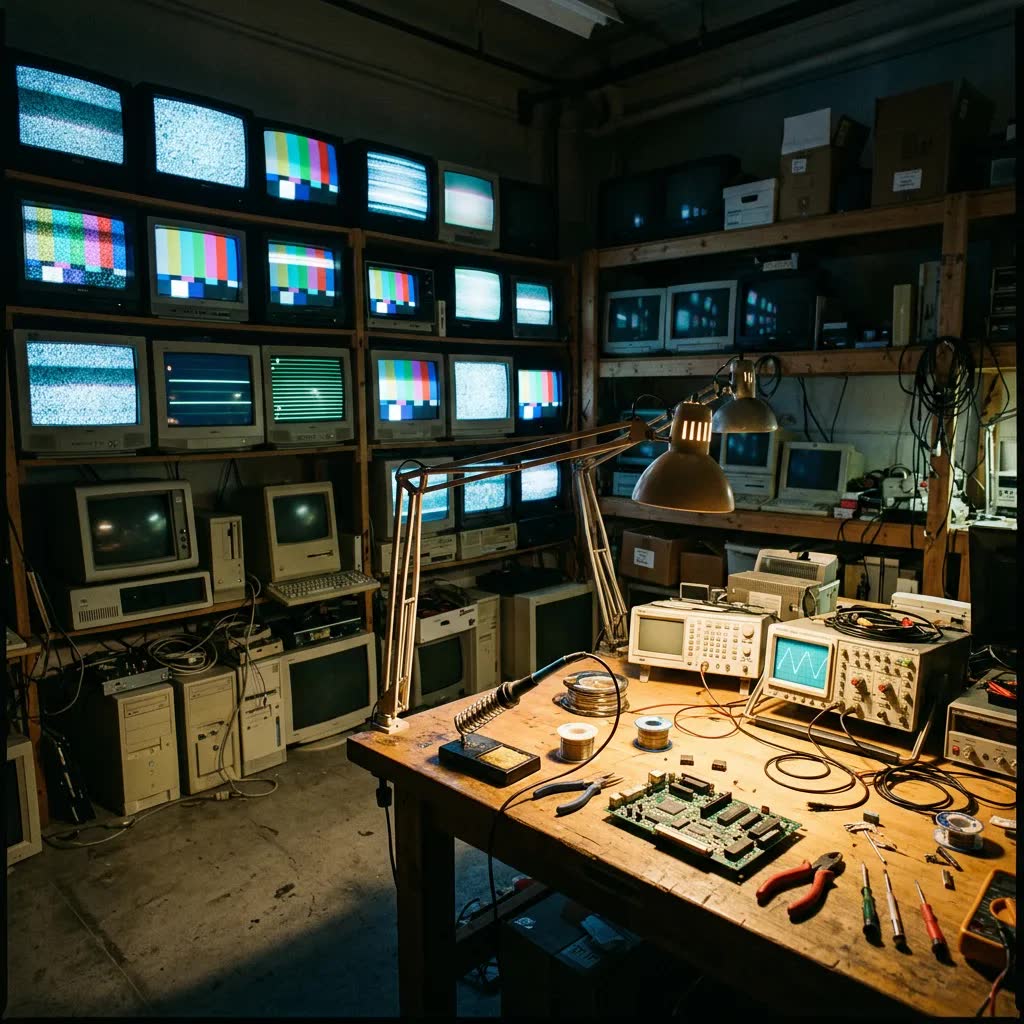
NEW YORK — Inside a conservation lab at the Museum of Modern Art, a small team confronts a problem older institutions never faced: how to keep alive artworks that depend on computers, software, and screens that the world has long since abandoned. As the digital and media artworks in the museum's collection age, the machines that display them break down, the software refuses to run on modern systems, and the file formats slip toward illegibility.
Digital conservation is a strange inversion of traditional restoration. Where a conservator of paintings labors to slow the physical decay of a single irreplaceable object, a digital conservator must often decide when to abandon the original hardware entirely and migrate a work to new systems — a choice that raises thorny questions about authenticity. "Is the artwork the code, the experience, or the specific beige monitor it was made for?" one conservator asked. "You have to answer that before you can save it."
The team's methods range from stockpiling obsolete equipment — hunting down vintage computers and cathode-ray monitors on secondhand markets — to painstakingly documenting exactly how a work should look and behave so it can be faithfully reconstructed later. In some cases they use emulation, running old software inside programs that mimic the vanished hardware. Each approach carries trade-offs between fidelity to the original and long-term durability.
The stakes are high because so much influential art of recent decades was made with technology that was cutting-edge at the time and disposable soon after. Works that once dazzled on the newest screens now flicker on dying tubes, and without intervention they could simply vanish, leaving only documentation behind. "We could lose whole chapters of art history not because they were destroyed," one conservator said, "but because nothing was left that could play them."
The work often involves the artists themselves, or their estates, in decisions about how a piece may be updated as technology changes. Some artists welcome migration to new formats; others insist their work is inseparable from the specific technology of its era, forcing conservators to preserve the original at all costs. Those conversations, conservators say, are as delicate as any chemical treatment. "You're negotiating not just with materials but with intentions," one said.
For all its technical difficulty, the team frames the effort as an extension of the museum's oldest mission: to carry culture forward across time. The tools have changed, but the impulse has not. "A conservator in 1950 was fighting entropy with solvents and patience," one said, gesturing at a wall of aging monitors awaiting attention. "We're fighting the same fight. Ours just needs a soldering iron and a very good backup."