MTA Tests Redundant Communications After Recent Underground Outages
A pilot linking fiber routes and cellular mesh networks aims to prevent the kind of signal failures that stalled trains last month.
By Luisa Pereira · March 31, 2026 · 4 min read
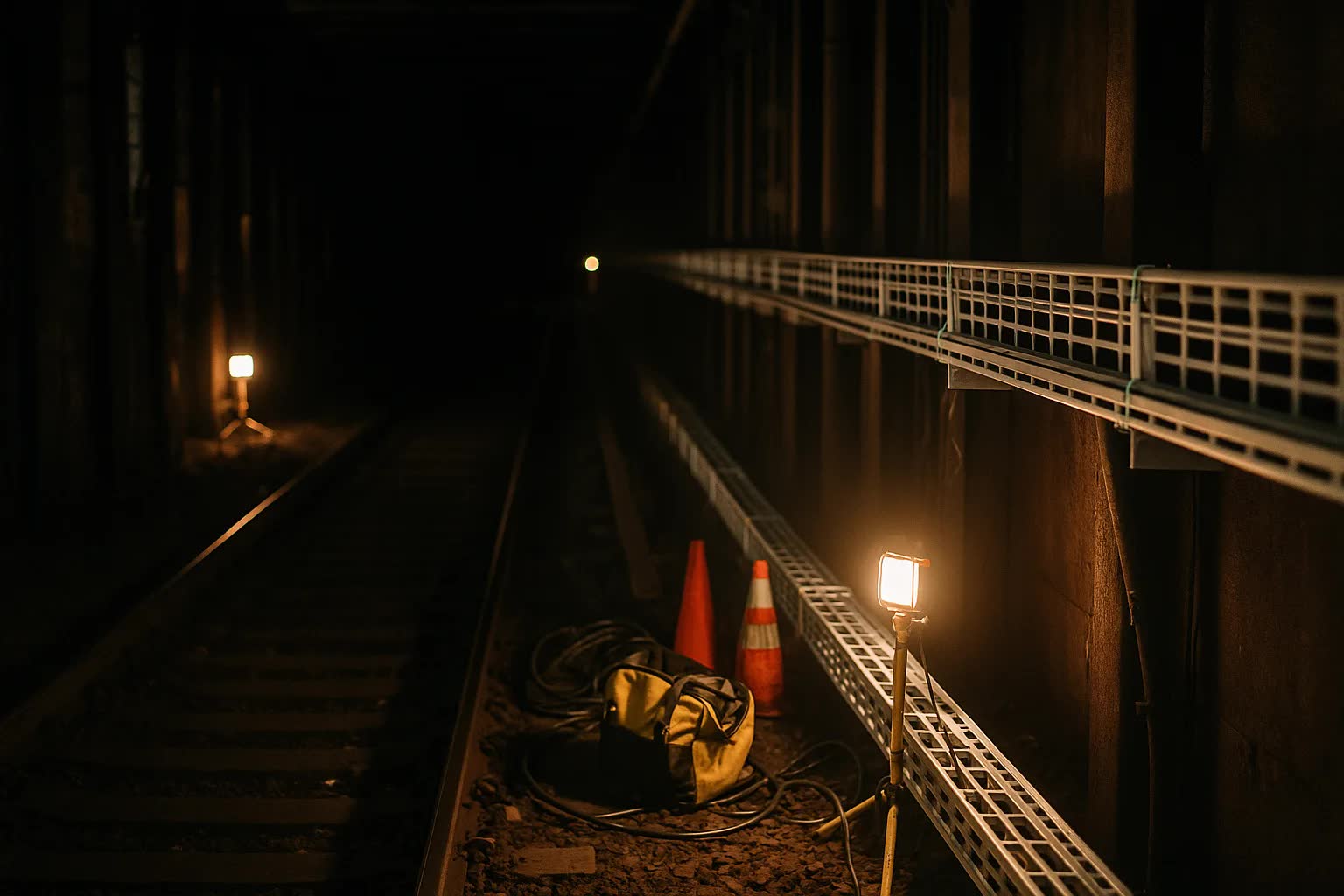
NEW YORK — A month after a cascade of underground signal failures left commuters stranded beneath 42nd Street and snarled morning service from Bay Ridge to the Upper East Side, the Metropolitan Transportation Authority this week launched a pilot program to tie together redundant fiber routes and a cellular mesh network designed to keep trains moving when primary communications fail.
The pilot, announced by MTA technicians at a cramped briefing room in Downtown Brooklyn, will stitch together separate fiber paths with roof-mounted and tunnel-installed cellular nodes so that control centers can automatically reroute signal and radio traffic if a cable is damaged or a piece of equipment goes dark. The system uses what officials described as “ring topology” fiber — two physically distinct cables running different alignments — and a self-healing mesh of private cellular small cells that can carry train-to-wayside and dispatcher voice and data traffic.
“We don’t want a single cut, a single corroded splice, to translate into stalled trains and stranded riders,” said Marina Delgado, chief resilience officer for MTA Transit Infrastructure, speaking at the briefing. “This pilot is explicitly about operational continuity in the places where one failure now ripples into an entire line.”
The urgency is plain to riders who were left waiting on platforms or walking through dimly lit tunnels last month. A senior MTA planner who requested anonymity said investigators traced the most disruptive outages to a combination of exposed fiber in a century-old conduit and a priority routing plan that funneled too much critical traffic down a single physical path. “Our routing logic was smart about traffic load, but it was blind to single-point physical vulnerabilities,” the planner said. “This is about marrying logic with physical redundancy.”
The pilot’s numbers are concrete: it will cover roughly 18 miles of subway right-of-way across Manhattan and northwestern Brooklyn, touch 30 stations on four lines, and install about 1,200 mesh nodes and 240 hardened junction points. The budget for the deployment is $28 million, officials said, and the first phase is expected to take about 18 months to complete; MTA staff estimate the system could cut communication-related signal failures by as much as 90 percent and lower average incident delay times from roughly 47 minutes to under 5 minutes.
Union leaders and frontline employees greeted the announcement with cautious approval and pointed to the need for safe installation practices. “Our members want modern, redundant systems, but we also want safe access to the tunnels and trenches to install and maintain this gear,” said Jonah Kim, president of Transit Signal Workers Local 17. “We will monitor contractor work plans and staffing levels to make sure this doesn’t become an excuse for rushed night work that jeopardizes crews.”
Neighborhoods whose commutes were hardest hit last month are among the early beneficiaries. The pilot will concentrate hardware in the Montague Street/Atlantic Avenue corridors and the stretch between 14th Street and Bedford Avenue — an effort aimed at reducing the risk of the very outages that left commuters in Williamsburg cafes and Union Square vendors serving patrons who could not get home. Small businesses along Montague Street and vendors in the Fulton Mall told reporters they are hopeful the investments will produce fewer service interruptions that dent weekend foot traffic.
Technically, the mesh is designed to act like a digital bandage: when a fiber path is lost, trains and wayside equipment switch over to encrypted cellular links that carry signaling, video, and voice data until the fiber is repaired or traffic is shifted. Vendors for the pilot include two firms contracted this year — MetroFiber Systems, a fiber infrastructure firm, and UrbanMesh Solutions, a cellular integration company — which built interoperability software that can speak to legacy signal cabinets as well as newer communications-based train control test beds. Latency during failover is expected to remain under 50 milliseconds for operational traffic, according to materials provided at the briefing.
City watchdogs and some members of the transit board signaled that they will watch procurement and performance closely. The MTA’s internal audit bureau will run quarterly reviews of contractor compliance, and the authority agreed to provide a public progress report after the first six months of testing. Council Member Asha Rahman, whose district includes several affected corridors, said in a statement provided to NYDailyWatch that the pilot “addresses a basic expectation: that when we pay our fares the trains should run, and they should do so safely.”
If the pilot delivers on its forecasts, the MTA says the architecture could be scaled across its underground network and folded into future signal upgrades. Officials expect to present a full evaluation within nine months of the pilot’s go-live window, and if outcomes match modeled reductions in delay and outage frequency the authority will seek additional capital funding to expand the redundancy program systemwide. Riders and transit workers who endured last month’s disruptions will be watching those months closely — and if the pilot works, they may never have to.