MTA Trials Smart Signal Timers Along Queens Boulevard After Data Study
An AI-driven timing system hopes to cut pedestrian wait times and reduce collisions on one of the city's deadliest corridors during the pilot phase.
By Rashid Karim · February 4, 2026 · 4 min read
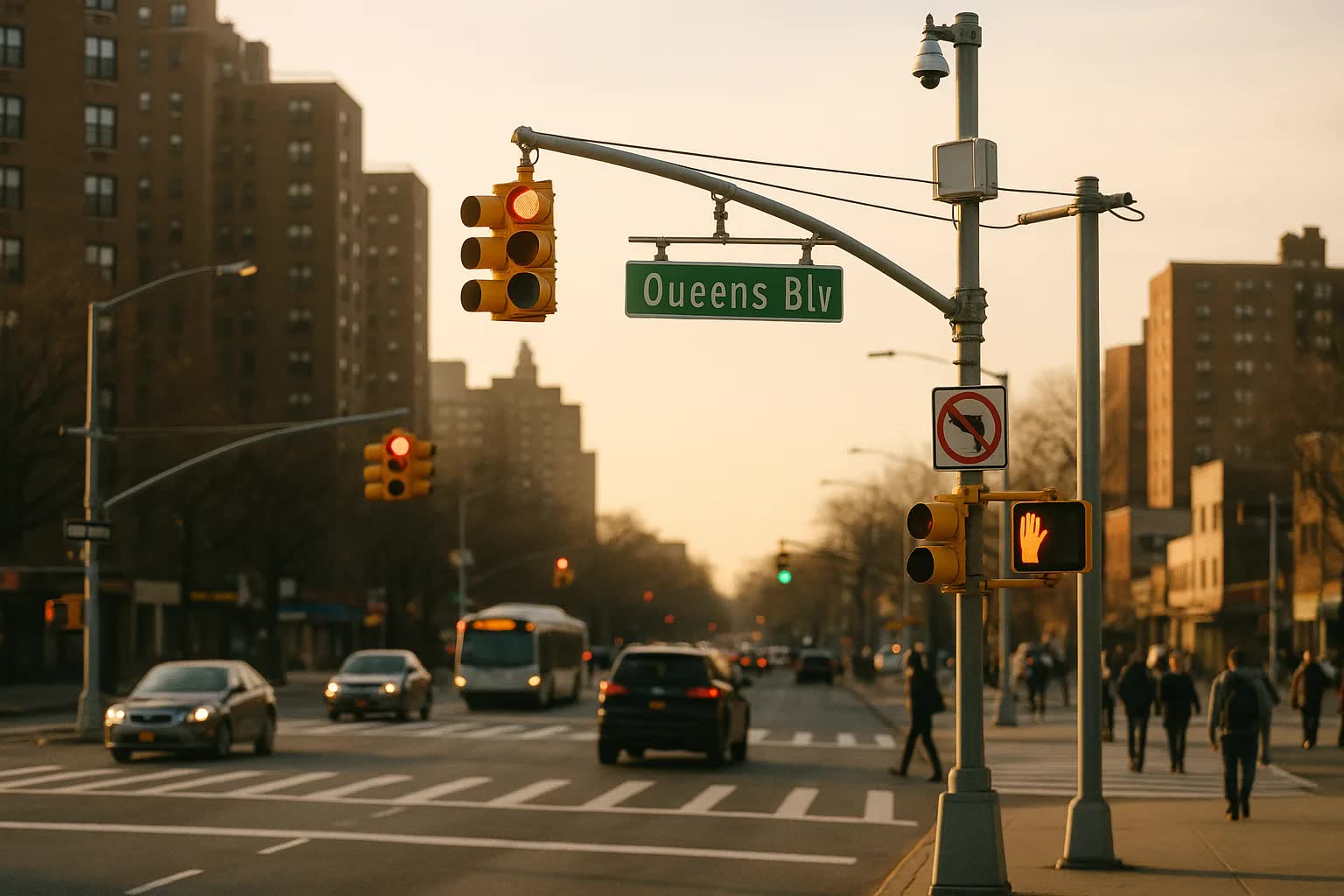
NEW YORK — The Metropolitan Transportation Authority has begun a months-long pilot of AI-driven
smart
signal timers along Queens Boulevard, aiming to shorten pedestrian waits and reduce collisions on one of the city's deadliest corridors, city and agency officials said Wednesday.
The pilot, launched this week in the stretch between Sunnyside and Rego Park, replaces fixed-cycle timing with a system that adjusts crosswalk signals in real time based on pedestrian volumes, vehicle flow and transit vehicle locations. Agency engineers said the move responds to a data study completed last year that highlighted chronic delays for people on foot, particularly around high-traffic intersections such as Yellowstone Boulevard at 63rd Drive and near the Kew Gardens Road subway entrance.
Officials emphasized the signal system is not a black box but a set of configurable algorithms that will run alongside existing traffic control equipment and be subject to manual override. “We built the pilot so we're not handing over the streets to an untested program,” said Marisol Herrera, director of pedestrian programs at the MTA, who said technicians will monitor performance from a control room in Jackson Heights. “Our priority is safety and predictability for riders and pedestrians, not just speed.”
Community groups and transit advocates say they were included in planning sessions with the MTA and the Department of Transportation. “For years people in Elmhurst and Forest Hills told us they were waiting through multiple light cycles to cross Roosevelt Avenue or Queens Boulevard,” said Ethan Cole, executive director of the Queens Pedestrian Alliance. “This technology, if properly tuned, can give pedestrians the dignity of shorter waits and could reduce risky crossings.
Engineers described how the system triangulates inputs: overhead cameras and ground sensors estimate pedestrian density, Bluetooth and loop detectors track vehicle platoons, and basic bus location data feeds into a priority matrix so transit vehicles can get timed green waves. Traffic signal cabinets are retrofitted with modular controllers that can accept the new timing logic but retain fallback modes. A senior MTA planner who requested anonymity said the software’s most important feature is transparency — each timing decision will be logged and auditable for later review.
Concrete numbers underscore the expectations: the pilot will cover roughly 3.8 miles of Queens Boulevard from 43rd Street in Sunnyside to 71st Avenue in Rego Park and include 26 signalized intersections; it will run for 12 months with an estimated upfront cost of $6.2 million and $900,000 in annual operating costs during the trial. Simulation modeling from last year projected a 28 percent average reduction in pedestrian wait times at peak hours and a potential 18 percent drop in vehicle-pedestrian collisions on the corridor, figures officials say will be tested against real-world outcomes.
Not everyone is immediately convinced. Some small-business owners in the corridor warned that shifting green times for vehicles could complicate deliveries and customers' ability to access storefronts on busy commercial strips near Queens Center Mall and the Elmhurst Hospital complex. Local bus drivers expressed cautious optimism about getting more consistent signal priority but said union representatives will watch for any impacts on schedules. “If buses move smoother, that’s good, but it can’t come at the expense of safe street access for seniors and students,” said Lila Fernandez, a mother and member of Community Board 4 in Sunnyside.
The pilot will also include publicly posted performance metrics and a complaints portal tied to each intersection, a transparency measure activists requested. MTA officials said they will release monthly dashboards showing pedestrian wait times, average vehicle delays and any instances the system defaulted to manual operation. The data-study that preceded the pilot pooled two years of collision data, infrared pedestrian counts and subway-entry numbers to identify priority segments; agency staff have said they will publish that baseline research when the dashboard goes live.
Transportation researchers said the corridor is a logical testing ground because Queens Boulevard is a spine for multiple transit lines, heavy retail activity and a high concentration of pedestrians and buses. “It's a controlled environment with meaningful variation in demand throughout the day, which makes it suitable for running algorithms that learn over time,” said Dr. Jonah Park, an urban mobility researcher at a nonprofit institute who is advising the city pro bono. He added that successful pilots typically require community engagement, careful tuning during initial weeks and clear protocols for rollback if safety metrics worsen.
The MTA said performance during the 12-month pilot will determine whether the smart timers are expanded to other corridors such as Roosevelt Avenue and parts of Northern Boulevard. If results match or exceed the simulation, the agency could seek capital funding to retrofit additional intersections across Queens and parts of Brooklyn and the Bronx. Officials also said they will coordinate with the Department of Transportation and local community boards before any wider rollout, and that a public review is expected in late summer, when the first tranche of empirical results will be available.