Musical Bodies: When Instruments Become Human
At The Met, 130 objects spanning 4,000 years of music history reveal that instruments have always been extensions of the body.
By Lanney Jing · August 3, 2026 · 5 min read
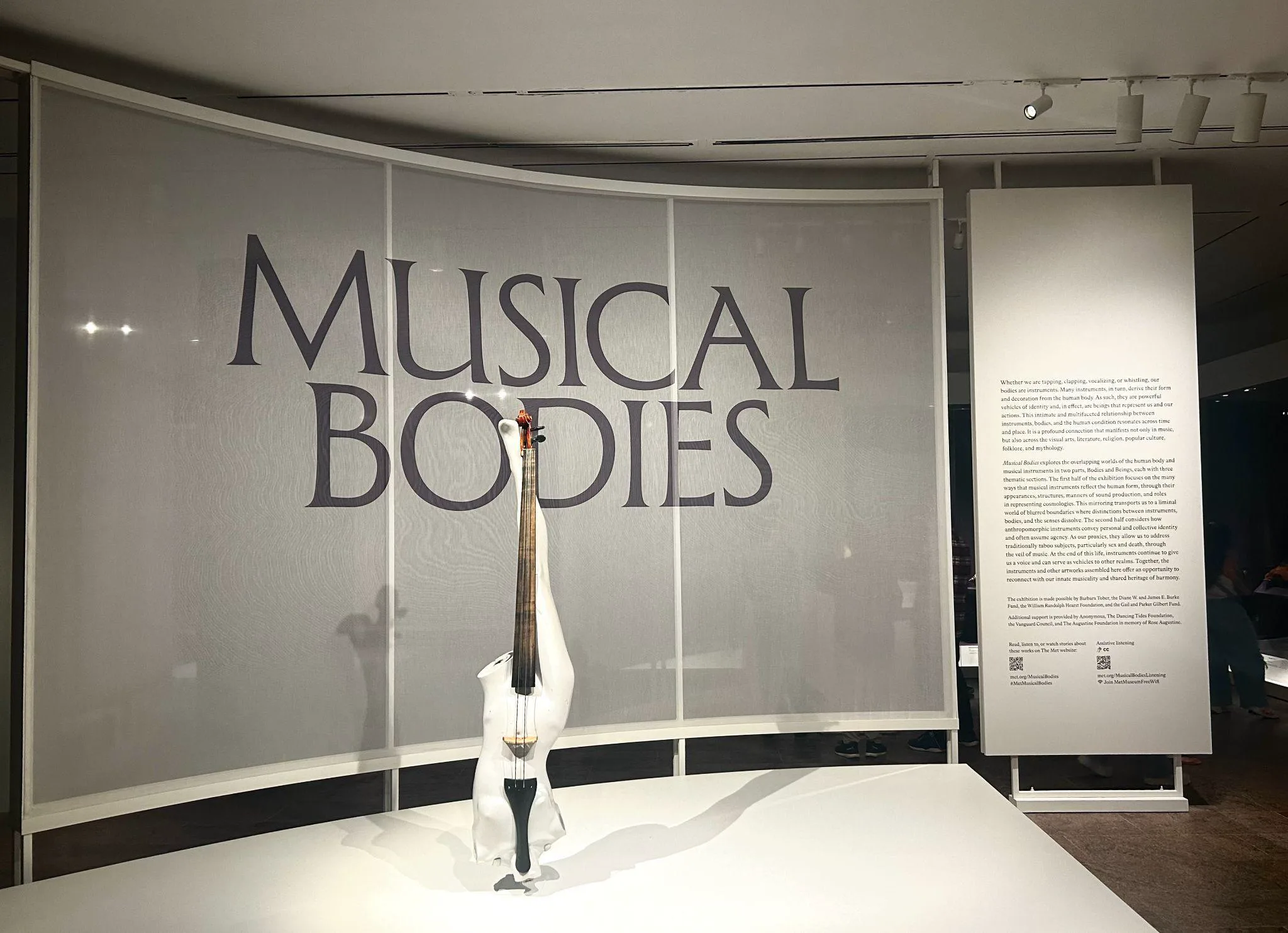
At first glance, Musical Bodies, currently on view at The Metropolitan Museum of Art, appears to be a survey of musical instruments from different civilizations and historical periods. Yet beneath its impressive display of artifacts lies a more profound proposition: music originates from the human body, and musical instruments are extensions of that body. Bringing together approximately 130 objects spanning over 4,000 years of music history, the exhibition examines the enduring relationship between sound, anatomy, culture, and identity. Through instruments, artworks, manuscripts, costumes, and interactive installations, Musical Bodies reveals how humanity continuously seek to transform bodily movement, breath, emotion, and memory into sound.
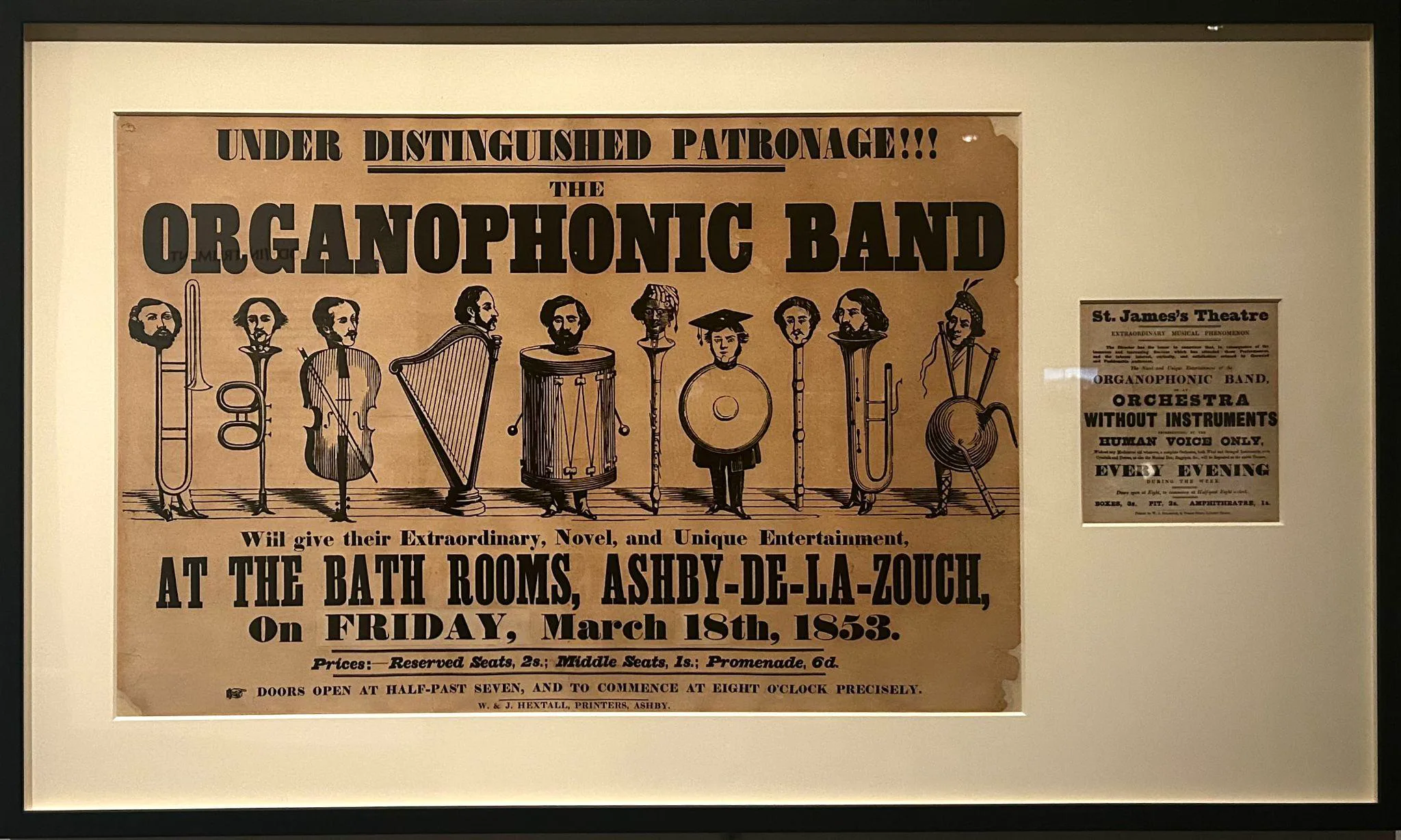
The exhibition establishes this idea immediately at the entry. A large screen presents performances rooted entirely in the body, including a cappella singing, beatboxing, and tap dancing. Before the invention of instruments, the human body itself served as the earliest musical tool. Rhythm emerged from clapping hands, stamping feet, and vocal expression long before it was transferred to drums, strings, and keyboards. By foregrounding these performances, the exhibition reminds visitors that music begins not with technology but with physical presence. This simple yet powerful introduction frames the rest of the exhibition as an exploration of how bodily capabilities have been amplified over time.
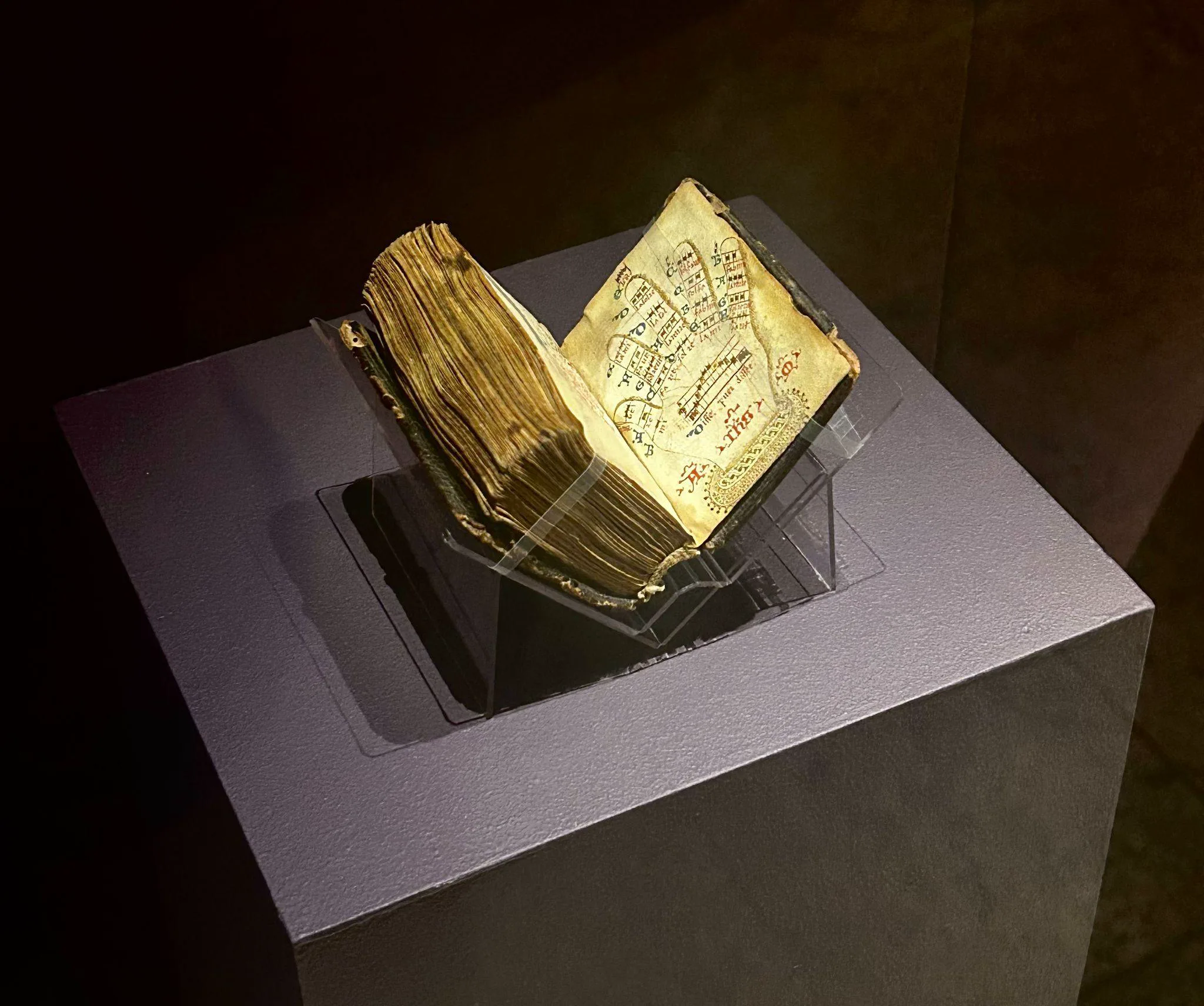
At the same time, Musical Bodies functions as a condensed history of musical development. Historical instruments from various cultures trace the evolving relationship between sound production and human understanding. Particularly fascinating is the inclusion of the Liturgical Miscellany Featuring a Guidonian Hand from Italy, a pedagogical tool used to teach pitch and musical notation. The work demonstrates how the hand itself became a map for musical learning, transforming a part of the body into a visual system for organizing sound. Rather than separating music from anatomy, such objects reveal how deeply musical knowledge has long been embedded in bodily experience.
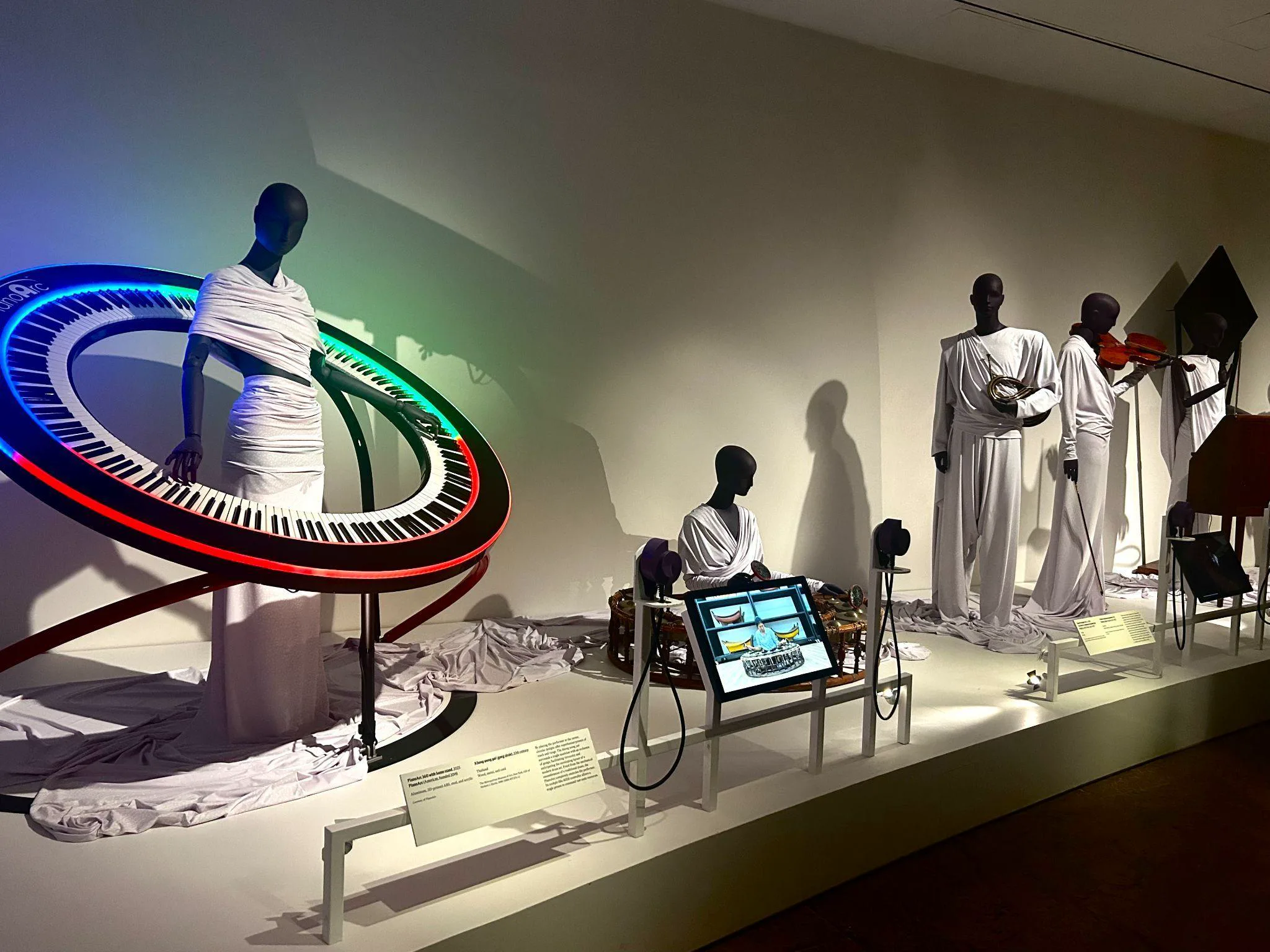
While the exhibition is rooted in history, it also looks toward the future. Alongside ancient objects are experimental electronic instruments, digital interfaces, and cybernetic designs that expand traditional understandings of performance. Particularly memorable is an interactive “keyboard corridor,” where visitors trigger notes simply by walking across a sensor-equipped floor. Here, the boundary between performer, instrument, and audience begins to dissolve. Sound is generated through movement itself, recalling the exhibition’s broader argument that music remains inseparable from the body, even in an age of advanced technology.
Throughout the galleries, numerous instruments incorporate human forms directly into their design. Sculpted heads, hands, torsos, and other anatomical features appear repeatedly across objects from different regions and historical periods. These artifacts suggest that the connection between instruments and bodies is not a modern concept but one that has lasted for centuries. The body serves simultaneously as a practical model, an aesthetic ideal, and a symbolic source of meaning. Musical instruments are therefore presented not merely as sound-producing devices but as physical reflections of humanity itself.
One of the exhibition’s more thought-provoking themes concerns the relationship between musical instruments and representations of the female body. Across many cultures, instruments have borrowed feminine forms and curves, associating sound with beauty, sensuality, and desire. The exhibition traces some of these visual traditions to Classical antiquity and broader mythological narratives surrounding love and attraction. Yet these objects also reveal the persistence of the male gaze within artistic and musical traditions. The aesthetic celebration of the female form often coexists with its objectification, exposing how concepts of beauty and desire have shaped both visual and musical culture.
Beyond individual bodies, the exhibition highlights the role of music as a marker of cultural identity. Every civilization represented possesses distinctive instruments, performance traditions, and sonic languages. These objects function as records of collective memory, preserving histories, beliefs, and social practices that often extend beyond written documentation. Musical instruments emerge as cultural artifacts as significant as architecture, painting, or literature. They carry traces of the communities that created and played them, becoming vessels of historical continuity.
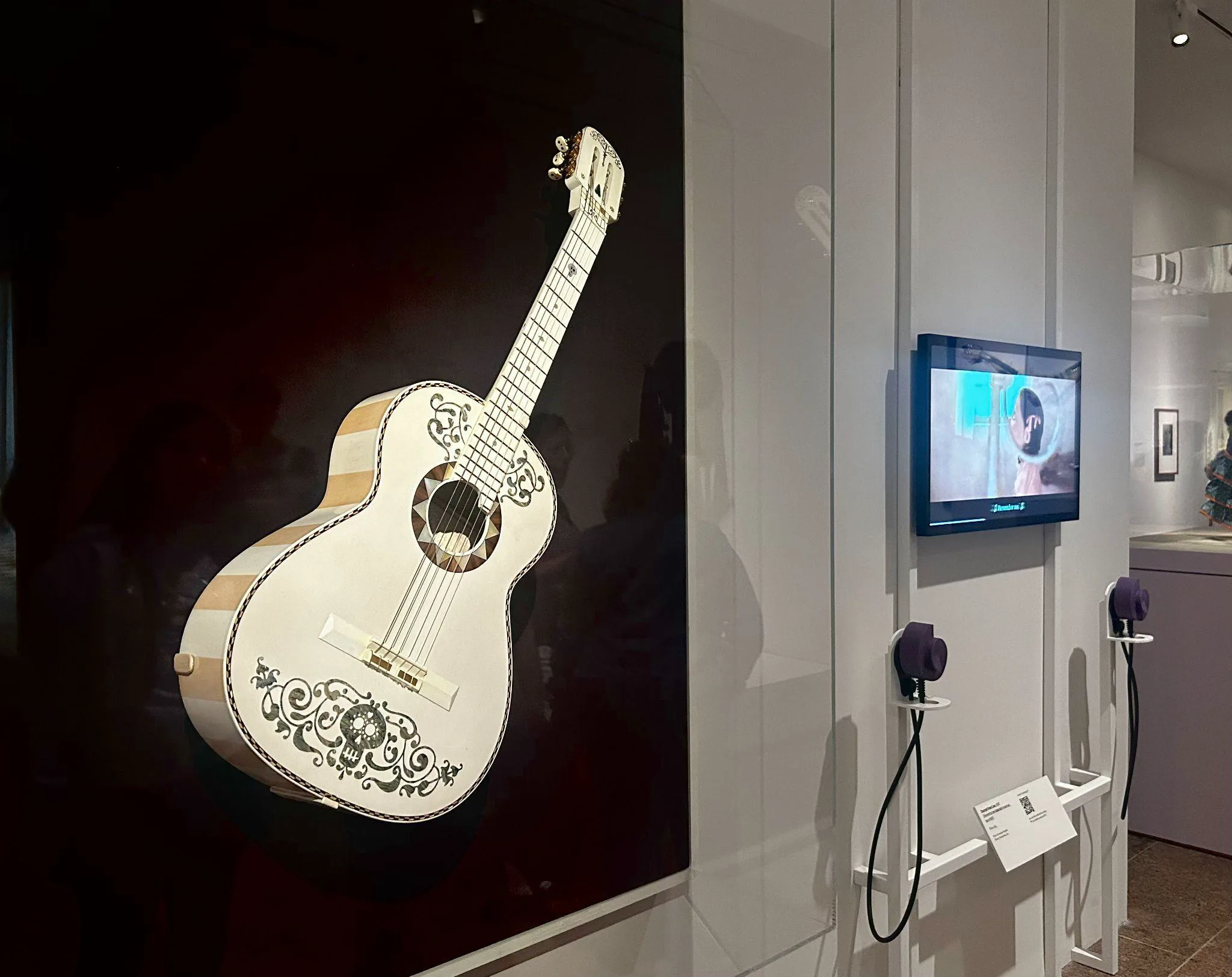
The final sections of the exhibition move beyond questions of form and function to address the emotional and spiritual lives of instruments. Here, instruments appear not as static objects but as carriers of memory, ritual, and personal connection. References to works such as Coco reinforce the idea that music frequently serves as a bridge between generations, preserving relationships long after individuals have disappeared. Instruments become carriers of stories, emotions, and inherited traditions. They accumulate meaning through use, acquiring histories that cannot be separated from the people who played them.
Ultimately, Musical Bodies succeeds because it challenges the tendency to view instruments as mere tools. Across four millennia of musical history, the exhibition demonstrates that instruments have always occupied an ambiguous space between object and organism, technology and body, artifact and companion. Sound originates within human beings, and every instrument represents an attempt to extend the body beyond its natural limits. In this sense, musical instruments are not external devices created by humans. Rather, they are part of a continuing effort to transform breath into voice, movement into rhythm, and life itself into music.