Nassau Towns Buckle as Proposal to Privatize Commuter Parking Sparks Town Hall Backlash
Officials argue privatization will raise revenue and efficiency, but commuters and local businesses fear higher costs and displacement.
By Kira Sato · January 18, 2026 · 4 min read
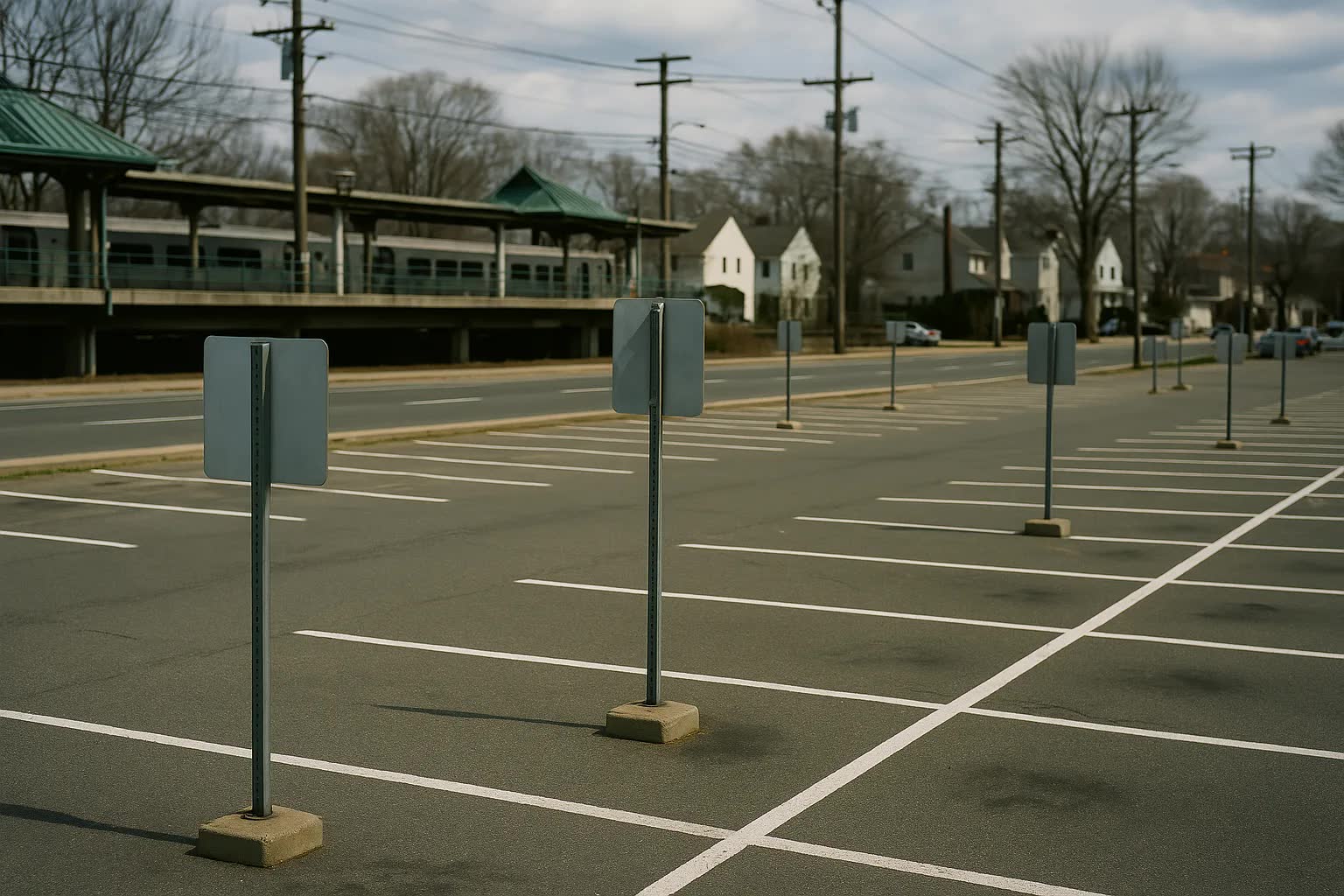
Commuters who drive from Long Island into Manhattan said the morning squeeze felt different last week as a debate over privatizing commuter parking moved from county offices to the front steps of town halls across Nassau County, threatening to reshape where thousands leave their cars before hopping the Long Island Rail Road into Midtown and the Financial District.
The plan, advanced by the Nassau County Department of Transportation in partnership with consultant HarborGate Partners, would transfer management — and in some cases long-term leases — of a swath of commuter lots serving LIRR stations to private operators, a move county officials say will raise revenue and improve maintenance amid shrinking budgets.
Town officials and residents at packed sessions in Hempstead, Freeport and Oyster Bay pushed back hard, citing fears of higher daily charges and spillover parking in neighborhoods bordering stations such as Mineola, Garden City and Rockville Centre. "You can't ask people to pay more at the lot and then have them clog our side streets and Main Streets," said Maya Rivera, Hempstead town supervisor, addressing a crowd at Hempstead Town Hall on Jan. 14.
Local merchants warned of collateral damage. "Our clients are regulars who need to park and get to work," said Thomas Bell, owner of Bell & Sons Auto on Main Street in Freeport, who said his garage already fields calls from commuters looking for affordable monthly spots. "If rates jump or private operators redevelop lots into mixed-use projects, mom-and-pop shops will lose customers before the first bulldozer arrives."
Privatization proponents argue the county faces few good alternatives. Budget documents show declining state aid and rising capital costs for lot upgrades, and HarborGate officials say private capital can modernize facilities and introduce technologies such as app-based reservations and license-plate recognition to reduce congestion. "We can deliver better service at no higher long-term cost to taxpayers," said Alan Cortez, HarborGate's project director, at a public briefing in Freeport.
Concrete figures in county presentations have sharpened tensions: Nassau operates roughly 24 commuter lots with about 9,500 spaces serving 37 stations; the privatization proposal would place 15 of the busiest lots — about 7,200 spaces — under long-term lease. HarborGate estimated a one-time lease payment to the county of $150 million and projected operating revenues that could grow by 5 percent annually. County modeling anticipated daily rates rising from an average of $8 to about $12 under private management, affecting an estimated 60,000 weekday commuters who use those lots and roughly 85,000 daily riders who board LIRR trains at the impacted stations.
The transit authority itself has been cautious. "We are not a party to the deal but we are monitoring it closely," said a senior MTA planner who requested anonymity, citing internal regulations. The planner added that any rise in parking costs could push some commuters to drive all the way into Manhattan or to seek parking in adjacent towns, adding unexpected demand to city garages and surface streets in Queens neighborhoods such as Jamaica and Flushing that connect to the LIRR.
Several town councils have moved swiftly: Hempstead and Oyster Bay passed nonbinding resolutions opposing the leases, while Mineola's board demanded a negotiated review to protect residents. "We need protections for low-income riders, seniors and municipal employees who rely on predictable parking rates," said Eleanor Cho, president of the Mineola Chamber of Commerce, after a hearing outside Mineola station. Local advocates plan legal reviews to determine whether leases would require additional environmental and zoning reviews.
Despite the opposition, proponents point to potential efficiencies. HarborGate's Cortez said private operators could add electric-vehicle charging stations, solar canopies and dynamic pricing that incentivizes off-peak use, generating new streams of revenue for the county. "Properly structured, a public-private partnership can fund upgrades without raising property taxes," Cortez said. Opponents counter that dynamic pricing can translate into higher bills for those with the least flexibility, and redevelopment could displace long-standing commuter surface lots in favor of parking garages with premium fees or mixed developments with fewer public stalls.
The county executive's office has scheduled a formal vote before the County Board in March, with a public comment window that closes in mid-February. Advocates on both sides say the next six weeks will be decisive: residents plan more rallies at stations and town halls, while HarborGate and allied business groups press to finalize term sheets. Legal challenges, zoning appeals and demands for binding community benefits agreements are likely if the board advances a deal, and commuters say they will track every step. Whatever the outcome, the dispute has already forced a larger conversation about access, equity and the true cost of commuting from Nassau into New York City.