Neighborhood Tool Libraries Empower DIY in Bed-Stuy
New community-run lending programs are making saws, drills and scaffolding more accessible to renters and small-scale renovators.
By Anika Bose · March 13, 2026 · 4 min read
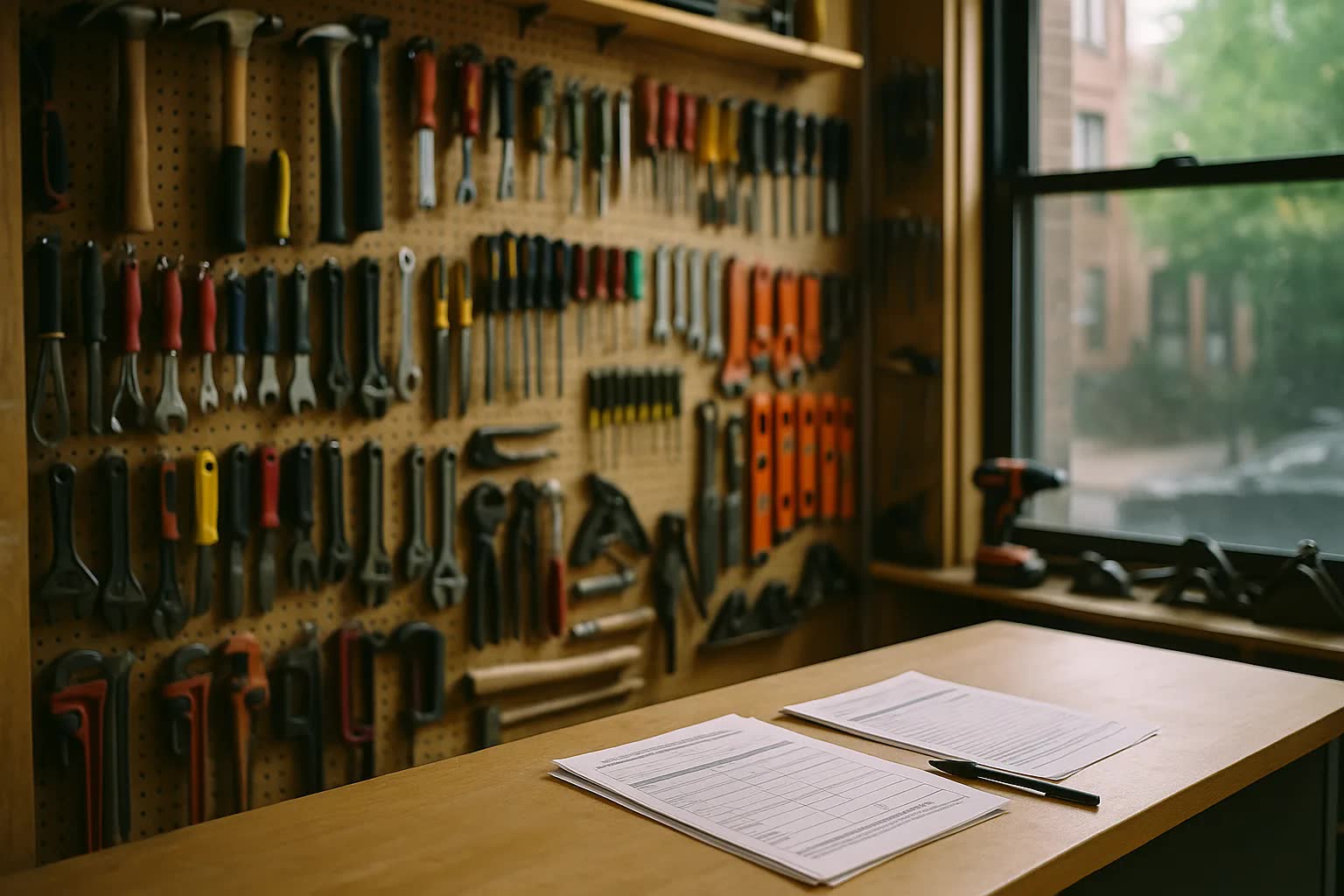
NEW YORK — On a damp Saturday morning in Bedford-Stuyvesant, a line of renters and small-scale renovators threaded through the stoop-lined blocks between Tompkins Avenue and Fulton Street to pick up drills, scaffolding and sheet goods from a storefront that once sold carpet remnants, now painted bright blue and labeled Bed-Stuy Tool Collective.
The crowd is the visible end of a quiet shift in how New Yorkers are tackling home projects: community-run tool libraries that lend ladders, power saws and specialty scaffolding to people who live in apartments, rent brownstones or run tiny window-repair crews, lowering the barriers to do-it-yourself work without the expense of owning costly equipment.
Inside the collective’s workshop on Halsey Street, volunteers run check-in kiosks, test batteries and teach safety briefings on staple guns and angle grinders before handing over a rental for a weekend project; down the block at the Clinton Hill Tool Coop, a converted garage holds scaffold sections and rolling platforms used by neighbors restoring stoops and repairing cornices.
"We started this because people were either paying $200 a day to rent a lift or buying a $1,200 scaffold they’d use once," said Marta Ruiz, executive director of the Bedford-Stuyvesant Tool Collective. "Access is more than affordability; it’s about giving people the knowledge to complete a job safely and the dignity of doing that work themselves."
The scale is modest but measurable: since opening in 2022 the three Bed-Stuy cooperatives and one pop-up depot in Prospect Heights report a combined membership of roughly 1,450 households, an inventory of about 3,200 distinct tools and 4,200 loans last year alone. Average loan values — what it would have cost a member to buy the tool outright — are estimated at $180, and staff and volunteers say the program saved members an estimated $360,000 collectively in purchase and rental fees in 2025.
Members describe projects that would have been impractical without the libraries. Jamal Price, a renter and tenant organizer who lives on MacDonough Street, said he borrowed scaffold planks and a torque wrench to repair a leaking roof over a shared hallway. "I couldn’t have done the repair without the Collective — the scaffold alone would have been two days’ pay," he said. "It keeps repairs local and keeps landlords from arguing it’s an emergency they have to hire out."
Local small-business relationships have been crucial. Cornerstone Hardware on Fulton Street provides parts discounts, while neighborhood contractors offer tool maintenance in exchange for storage space during winter. High school shop classes in Crown Heights and a youth workforce program run out of a community center on Nostrand Avenue now send students to weekend safety sessions. The tool libraries also coordinate with small landlords to schedule safe access for exterior work, a compromise that has eased tensions on streets where multi-family brownstones share narrow sidewalks.
But sustaining the network has required navigating regulatory and financial hurdles. Insurance for heavy equipment is costly, city permitting for scaffolding — even for temporary residential use — can vary by borough block, and the libraries rely on a mix of membership fees, small grants and volunteer labor. "Liability is the thing that keeps a lot of us up at night," said Keisha Allen, program coordinator at the Clinton Hill Tool Coop. "We try to be conservative: mandatory trainings, signed waivers, and a sliding-fee repair fund. Still, one uninsured accident could change everything, so we’re constantly negotiating better policies with local insurers."
The growth of tool lending has also intersected with questions about housing stability. Advocates argue that empowering renters and small owners to maintain properties can prevent small issues from becoming displacement triggers, while critics say the trend can enable cosmetic upgrades that accelerate property value increases in already gentrifying corridors. Organizers say they are mindful of that balance and have instituted equity measures — lower fees for long-term residents, priority booking for urgent repairs and outreach in neighborhoods such as Stuyvesant Heights and Bed-Stuy's northern blocks where long-time tenants are concentrated.
Organizers are now planning for the next steps: a mobile tool van to serve late-night shift workers in East New York, a satellite depot near Atlantic Avenue and a pilot partnership with two foundations to underwrite insurance and technical training. If those plans materialize, organizers say the model could spread to other Brooklyn neighborhoods and beyond, offering a way for communities to keep renovation dollars local while teaching residents the skills to maintain the homes they rent and own.