New Jersey Boardwalk Talent Shows Rekindle Shoreline Summer Traditions
Municipal rec centers and local businesses are reintroducing amateur talent competitions to draw families back to boardwalks between headliners.
By Anika Bose · December 22, 2025 · 4 min read
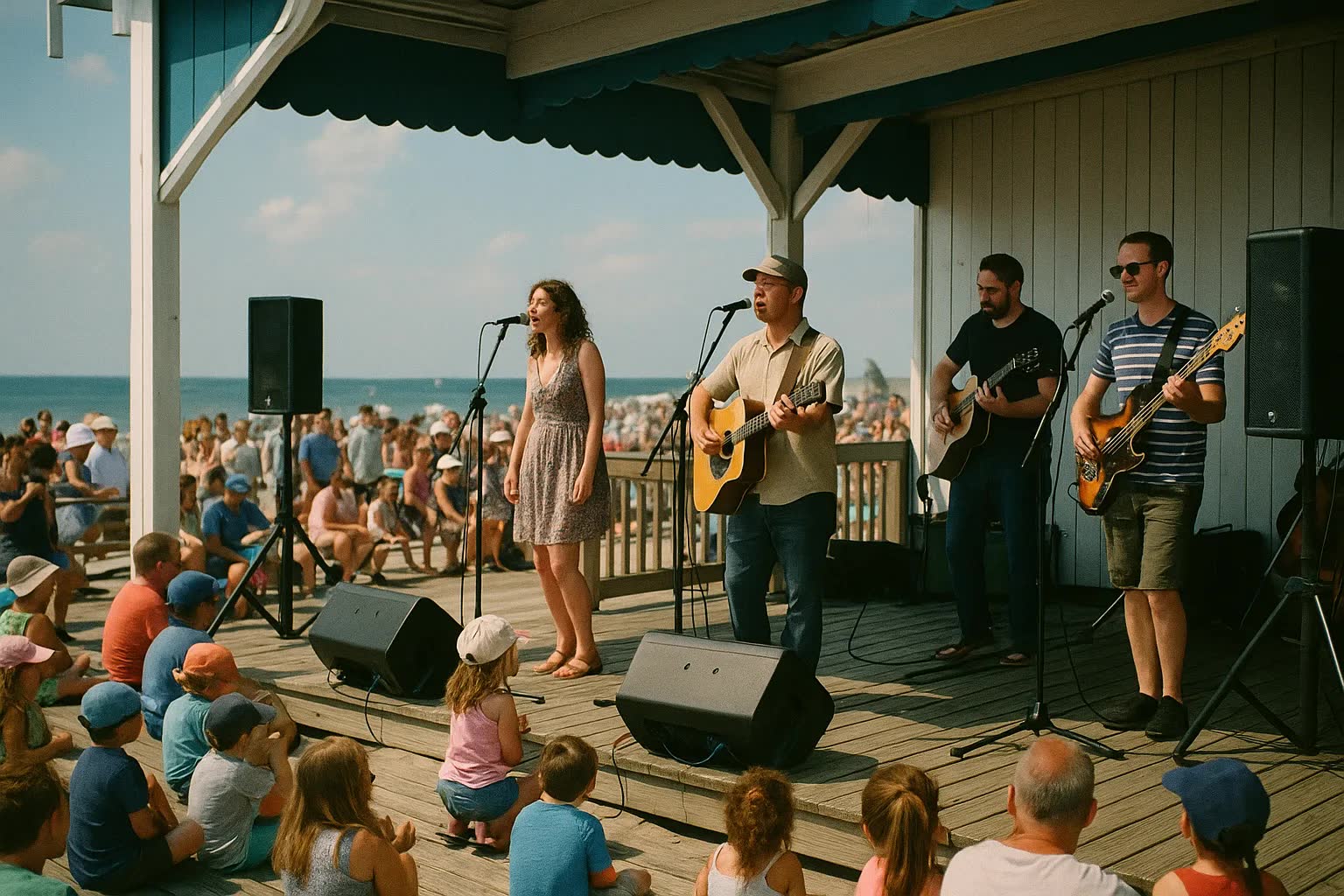
On a bright August morning last summer, parents from Park Slope and Astoria piled into NJ Transit trains at Penn Station, while a group of teenagers from Harlem boarded a ferry from Lower Manhattan to Jersey City, all bound for the same thing: grassroots talent shows staged on New Jersey boardwalks that are quietly restoring a shore-to-city ritual that had faded after the pandemic and rising operating costs.
Municipal recreation centers in Asbury Park, Seaside Heights, Ocean City and Wildwood partnered with local businesses to stage scheduled amateur competitions between headline concerts and carnival acts, turning the stretch between seasonal big-name performers into a rotation of family-friendly showcases. Events range from seven-minute amateur sets for singers to juggling exhibitions, improv skits, children's dance-offs and teen comedy nights intended to keep families wandering the planks long after the sun sets.
“We wanted something that would make a parent from Brooklyn or Queens say ‘let’s make a day of this,’ instead of a two-hour pit stop,” said Marisa Delgado, director of the Asbury Park Recreation and Cultural Affairs Center. “By programming short, low-barrier performances and pairing them with deals from local vendors, we’ve managed to stitch the afternoons back into a Shore experience that serves both residents and visitors.”
Local business owners say the talent shows have created a steady flow of foot traffic that used to evaporate between big acts. On the Wildwood boardwalk, Joe Marino of Joe’s Boardwalk Pizza on Schellenger Avenue redesigned his walk-up counter and snack menu to include family combo deals timed with the competition schedule. On the Ocean City boardwalk, Seaside Sweets and the Pier Arcade launched co-branded punch cards that rewarded families who attended three talent slots in one day.
“It’s not just the extra slices and cone sales — it’s the rhythm,” said Tyrone Willis, owner of Neptune Arcade and Games in Belmar. “When the rec center starts on a Tuesday afternoon with a kids’ talent show, families linger into the evening. They go to the arcade between sets, spend on tickets, pick up dinner. Our midsummer weekday takings increased enough that we rehired two seasonal attendants.”
The impact is measurable by the metrics local officials shared: 62 organized talent events took place along eight municipal boardwalks from June through August in 2025, drawing an estimated 45,300 attendees, a 22 percent increase in weekday foot traffic compared with 2019. Participating businesses reported an average revenue bump of 18 percent on days with scheduled shows, and the collective rec center programming budget for the initiative totaled $128,500, partially offset by sponsorships and vendor fees.
Program formats emphasize accessibility. Auditions are held two weekends before the main summer stretch at rec centers and public libraries, with a streamlined selection process that prioritizes family-friendly content and short set lengths. Judges are often local musicians or teachers from community colleges; winners receive cash prizes ranging from $250 to $1,000, free studio time donated by nearby independent labels, and coupon booklets redeemable at boardwalk vendors. Organizers also contract with volunteer stage managers and sound technicians to keep production costs low.
Not everyone is entirely enthusiastic. Residents in some blocks near the boardwalks have expressed concerns about noise and crowds, and municipal planners have had to negotiate permitting windows and amplified sound curfews. “We love the revival, but we don’t want the whole season to feel like a music festival every night,” said Elena Ortiz, a longtime Wildwood Heights resident who leads a neighborhood association. City and borough councils are balancing zoning and policing resources as they consider whether to formalize the programs into permanent summer schedules.
For performers, the boardwalk stages have become a proving ground. Fifteen-year-old Sana Malik of Astoria, Queens, who won a teen open-mic in Seaside Heights, said the exposure led to three summer gigs at nearby eateries and a scholarship audition at a state summer arts program. “I met other singers and a band, and we started practicing together,” Malik said. “I didn’t expect to get that much attention from one seven-minute slot, but the crowd and the judges were really supportive.” Several city arts nonprofits in Manhattan and Brooklyn have begun informal partnerships to funnel family groups to the shore on off-peak days as part of cultural-exchange weekends.
Program directors and small-business owners say plans for 2026 include expanding shows into shoulder months, piloting nighttime family talent slots with lower sound levels, and streaming select competitions on municipal websites to draw more visitors from New York City neighborhoods such as Brooklyn Heights and the Upper West Side. Organizers describe the initiative as an attempt to preserve an old shoreline tradition while adapting to modern constraints — offering parents a reason to leave the subway platforms and boardwalks with kids in tow, and giving local talent a hometown stage.