New Jersey Comedy Clubs Become Testing Grounds for Late‑Night TV Writers
Commuter-friendly clubs near Journal Square and Hoboken are hosting writer-performer nights where sketches get stage-tested before network tryouts.
By Omar Haddad · March 2, 2026 · 5 min read
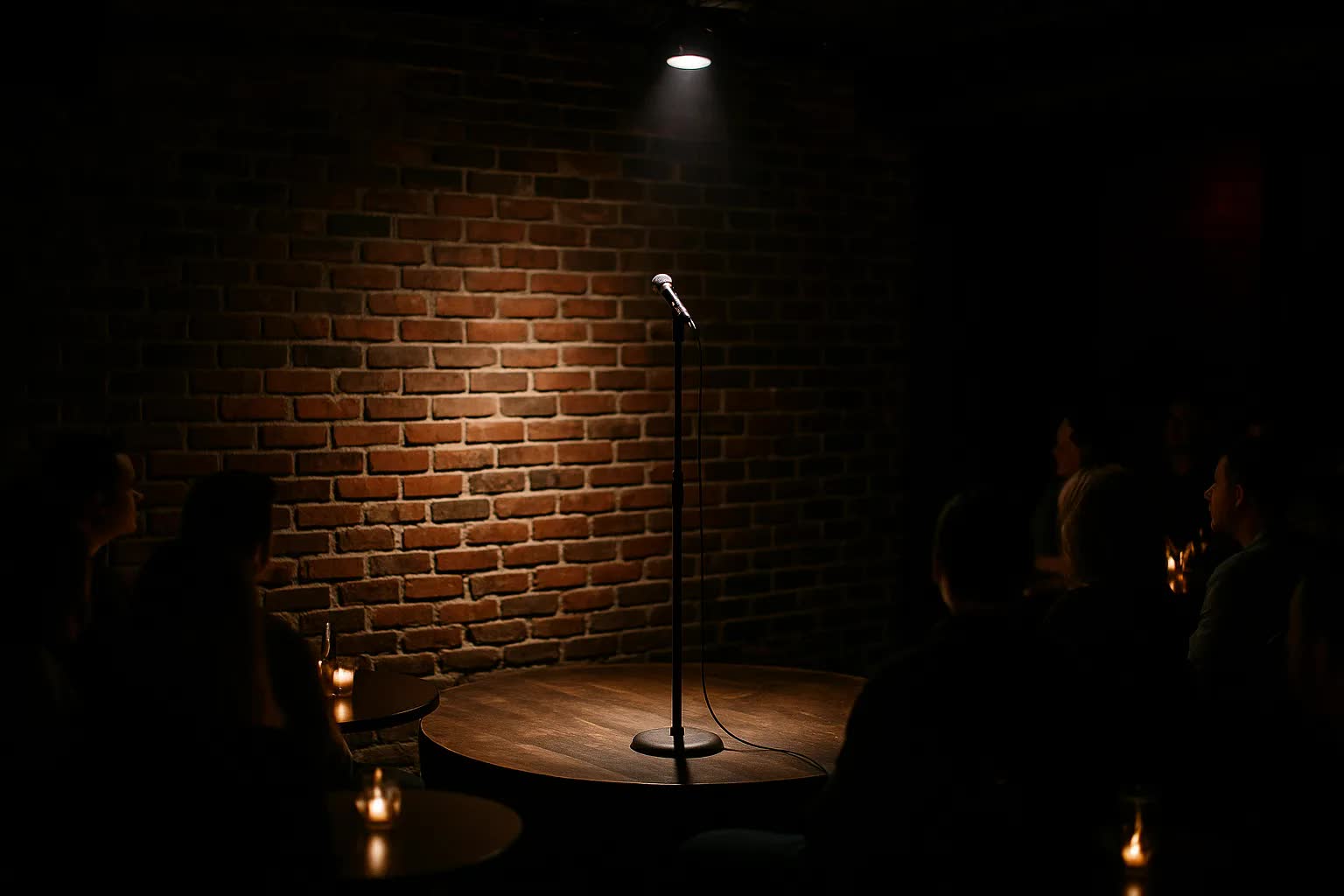
For Manhattan writers exhausted after long days in writers’ rooms or late-night studio tapings in Hell’s Kitchen, the commute to a New Jersey comedy club has become as routine as the subway ride to the 1 train: shorter, cheaper and increasingly indispensable to the development pipeline for late-night television. From Union Square to Midtown, writers who used to test sketches on friends in small East Village lofts now catch the PATH to Journal Square or the Hoboken terminal, where commuter-friendly venues stage weekly "writer nights" that mimic the pressure cooker of a network tryout but in a lower-stakes environment.
The shift has been noticeable on Washington Street in Hoboken and along the approach to Journal Square Plaza in Jersey City, where small rooms hold 80 to 120 people and the back bar hums until midnight. Clubs like Punchline East in Journal Square and The Dockside Laff in Hoboken have started branding specific nights for writers and performers — advertised as "sketch labs" or "writer-performer showcases" — and program them with the express purpose of giving sketches their first audience runs. The rooms are cramped, the lights are inexpensive and the tastes are eclectic, but the payoff for a sharp five-minute sketch can be immediate.
"We treat it like a lab," said Marisol Vega, head writer for the fictional late-night series Night Thread and a frequent participant in the Hoboken nights. "You get two runs, real laughter, and then you learn whether the premise actually works on a crowd that didn’t just see your idea in a pitch meeting. That feedback loop is worth the one-way PATH fare." Vega said the choice of Hoboken is pragmatic: close enough to return to Manhattan after an evening rehearsal, but far enough from the studio ecosystem to encourage risk-taking.
Club owners describe a similar calculation. "Journal Square is a sleeper hit for writers because the PATH schedule lets people be home before the last subway runs," said Thomas Chen, owner of Punchline East and a former standup from Flushing who opened his second room in 2023. "We’ve retooled our calendar to host writers every Thursday and Saturday. It’s good for business and for the creative community — our bar lines are longer, and the crowds are hungry to be part of the process." Chen has installed a modest riser for performances and charges a small door fee to offset stipends paid to performers.
Since the phenomenon gained momentum in late 2023, the numbers suggest it has matured into a measurable pipeline. Four clubs in the Journal Square–Hoboken corridor now host an average of 12 writer-performer nights per month; those nights attract roughly 90 writers and 680 paying audience members monthly. Club owners and producers report that 18 sketches tested in these rooms advanced to formal network tryouts in 2024, and preliminary deals or staffed pilots emerged from five of those. Average audience size per show hovers between 70 and 105, with door prices ranging from $8 to $20 and average post-show tips for performers around $35.
The geography matters. From the West Village, a PATH ride from Christopher Street to Hoboken takes about 25 minutes; from midtown, a 20-minute trip to Journal Square is common. Producers and scouts who once would not cross the Hudson after dark now find it convenient to catch a 10:45 p.m. PATH and still be home by 11:30 p.m. "The proximity removes the gatekeeping that used to keep good ideas on paper," said Leila Morales, booking director at The Dockside Laff. "A writer can test a sketch at 9 p.m., get notes, tweak it, and run it again at 11 p.m. — that speed is a game changer."
Networks and production offices have taken notice, sending development executives and talent coordinators to these nights under no official banner. Industry types describe the rooms as an informal audition circuit; a clever bit performed three nights running in Hoboken can surface in a Manhattan meeting within the week. "You learn quickly what holds up," said Aaron Beltran, a comedian-performer and occasional staff writer who moved to Jersey City last year. "The best bits are the ones that don’t need explanation. If people laugh on Summit Avenue in Jersey City, they’ll laugh on West 42nd Street."
Not everyone sees the rise of Jersey Club labs as entirely benign. Local unions and established writers’ rooms have raised questions about labor, credit and compensation when sketches move from an uncredited stage run to a staffed writers’ room. The Clubs’ owners’ association has started contracting with a small legal service to provide standard forms that address rights and credits; some writers carry their own basic release forms. "We’re trying to keep it fair but nimble," Chen said. "This is about exposure and iteration, not handing over IP for a $10 door fee. Still, we’ve had to tighten up how we document performances."
The economic ripple through Journal Square and Hoboken has been subtle but real: late-night shows have increased bar sales by an estimated 12 to 18 percent on club nights, according to Chen’s internal sales figures, and nearby restaurants on Newark Avenue and Washington Street report fuller late-night dinners. Local landlords, some of whom have been cautious since the pandemic, now see value in spaces with flexible seating that can host 70-to-120-person shows; a handful of new short-term leases for pop-up comedy rooms have been signed in the past 18 months. Neighborhood regulars say the attitude is similar to indie music venues in the 1990s — lowbrow, a little chaotic, and unexpectedly fruitful.
Looking ahead, the Lab Nights model shows signs of scaling beyond the Hudson. Punchline East plans to launch an early-evening series aimed at sketch teams from Brooklyn and Queens this spring, and The Dockside Laff has scheduled a "pilot showcase" in June to invite development executives explicitly. For writers and performers, the corridor between Journal Square and Hoboken has become less a backwater and more a testing ground: an affordable, commuter-friendly stretch where a joke can be tightened, ripped apart and rebuilt in the time it takes to ride the PATH back to Manhattan.