New LaGuardia Ride-Hail Zones Draw Pushback From Local Businesses
Restaurants and retail owners say designated pick-up areas reroute foot traffic away and create congestion on adjacent streets.
By Ezekiel Harris · February 11, 2026 · 4 min read
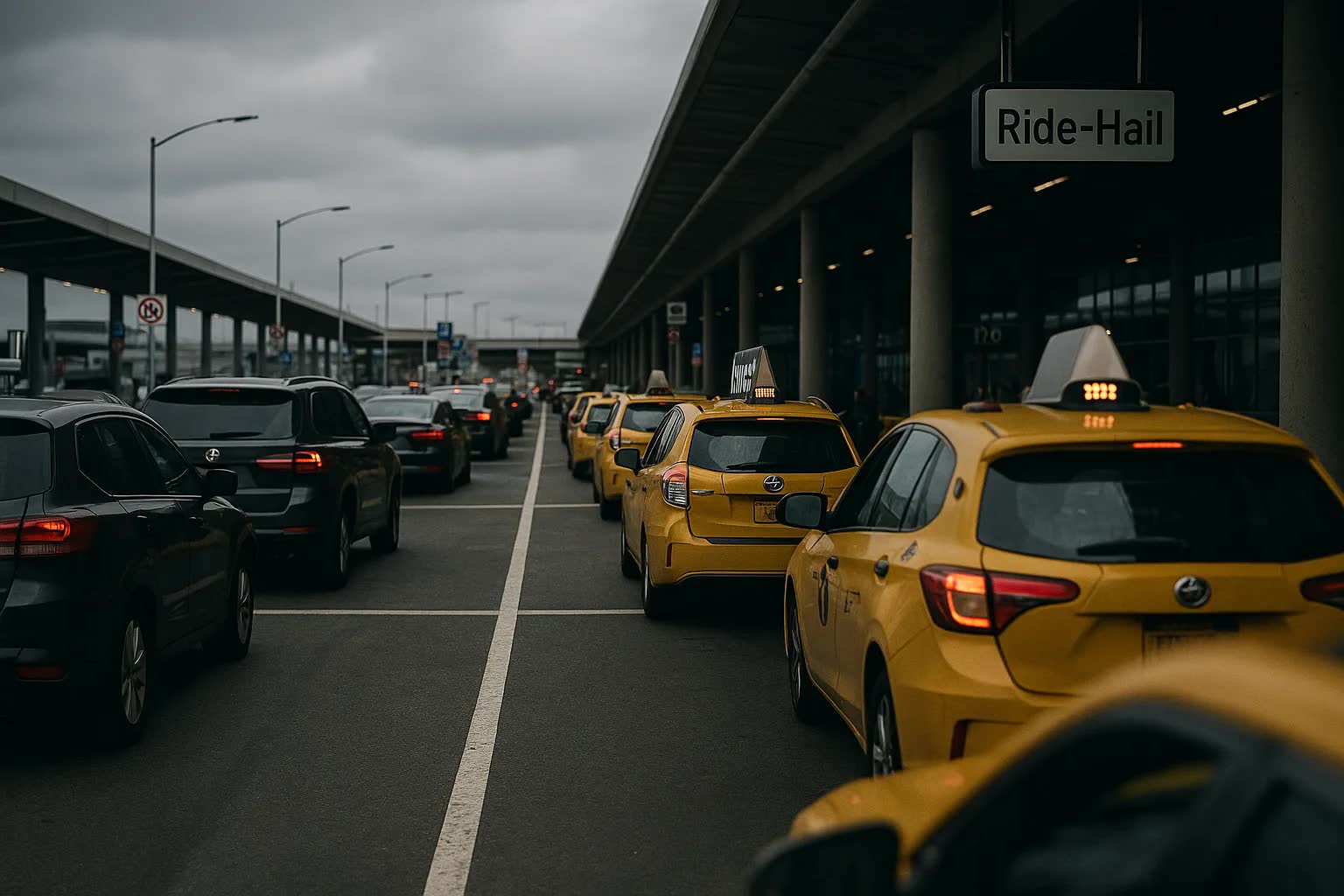
LaGuardia Airport’s new ride-hail pick-up scheme, rolled out last month by the Port Authority and city traffic officials, has left a string of Queens storefronts fuming as designated zones funnel passenger flows away from longtime restaurant and retail corridors in East Elmhurst, Jackson Heights and Astoria and push car and foot traffic onto narrower side streets.
The pilot program, announced quietly in late December and activated Jan. 15, concentrates Uber, Lyft and other app-based pick-ups at six curbside zones at Terminal B and C and six satellite zones stretching between Astoria Boulevard and 94th Street in East Elmhurst, officials said, with the stated aim of reducing curbside chaos at the terminals themselves and speeding pickups along Grand Central Parkway exits.
“We used to get a steady stream of travelers stopping in for coffee and snacks between flights,” said Maria Rojas, owner of La Isla Café on 94th Street near 23rd Avenue in East Elmhurst. “Now those people are picked up three blocks away, and they don’t see us. Our morning and noon windows are down nearly half compared with January.”
Small-business advocates say the changes were imposed with little neighborhood-level outreach. “This map was drawn with the airport in mind, not the street,” said Jamal Turner, executive director of the Jackson Heights Business Improvement District. “For small retailers, a lost impulse buyer is a lost rent check. The city and the Port Authority need to measure the economic spillover of these operational changes.”
The Port Authority and the city defend the zones as safety measures meant to unclog the airport’s main curbline and reduce illegal stopping that has injured pedestrians in past years. Port Authority spokeswoman Sonia Patel said the agency has been monitoring curbside incidents and that the pick-up points are intended to create predictable, marshalable locations for drivers. “Our primary goal is to make travel to and from LaGuardia safer and more efficient while minimizing disruption at the terminal fronts,” Patel said. “We are coordinating with the Department of Transportation on wayfinding and enforcement.”
Numbers being circulated by neighborhood groups and shared with elected officials show a sharp if early impact on street-level commerce: the pilot includes 12 total ride-hail zones, roughly 1.2 miles of designated curb space outside the airport’s property line, and an average of 3,400 ride-hail pickups per weekday shifted to off-terminal sites, based on anonymized data from two ride-hail companies provided to the Port Authority. Businesses in the immediate corridors reported revenue declines ranging from 15 percent to 48 percent for the month following the change; Community Board 3’s small-business survey logged 128 complaints in the first two weeks and estimated average pickup-related pedestrian detours of 400 to 900 feet per customer trip.
City DOT officials say the plan will be adjusted as data arrives. “We anticipated that rerouting would change pedestrian patterns,” said Ethan Cole, chief of traffic operations at the city Department of Transportation. “That’s why this is a pilot: we’ll tweak signage, curb markings and enforcement after reviewing volumes and local impacts.” Cole added that an initial enforcement wave in late January issued 62 warnings and 14 summonses for illegal stopping near the terminals, a figure he said underscored the program’s safety intent.
Still, community leaders and merchants say the program’s secondary effects are worsening congestion on neighborhood streets that were never sized for airport queues. On 23rd Avenue between 94th and 95th Streets and along Ditmars Boulevard in Astoria, double-parking and idling cars have slowed bus routes and created noise and pollution complaints, according to locally filed 311 reports and independent observations by neighborhood volunteers. “There’s nowhere for our delivery trucks to stop now, and customers don’t want to fight for a sidewalk,” said Priya Shah, chair of Community Board 3, noting a spike in complaints at the board’s recent business committee meeting.
Some of the friction stems from the program’s enforcement model. A senior Port Authority planner who requested anonymity acknowledged staff underestimated the time it would take drivers to roll into and out of the satellite zones during peak hours and that waypoint signage at two intersections was installed after the pilot’s start date. “We moved quickly to address safety risks at the terminal curb, and in doing so created unintended bottlenecks on adjacent streets,” the planner said. “We are committed to modifying the plan where it harms neighborhoods.”
Merchants are urging a suite of mitigations: more visible and earlier wayfinding from the Grand Central Parkway ramps, temporary loading zones for local businesses, time-of-day restrictions on airport-only pick-ups in narrow blocks and a revenue-sharing study to compensate heavily affected corridors. Several businesses, including Parkside Deli and Punto y Sazón on 23rd Avenue, say they are weighing relocation deeper into Jackson Heights or closer to subway hubs if traffic patterns don’t normalize; one petition collected more than 300 signatures in two days and was delivered to the Port Authority last week.
The Port Authority and DOT have scheduled a public review and monitoring period that officials say will include monthly data releases and a stakeholders’ forum on Feb. 25 at the Jackson Heights Library. Agency leaders have signaled they will consider trimming or relocating zones if metrics show persistent harm. For now, business owners say the next 60 days will determine whether the airport’s ride-hail strategy can be reconciled with the street-level economy of Queens neighborhoods or whether a second round of redesign will be needed to protect local commerce and curbside safety.