New Long Island Rail Plan Promises Faster Oyster Bay Service
A proposed timetable and capital investment could cut commutes by up to 20 minutes for Nassau County riders if approved by the MTA and LIRR.
By Maya Singh · January 6, 2026 · 4 min read
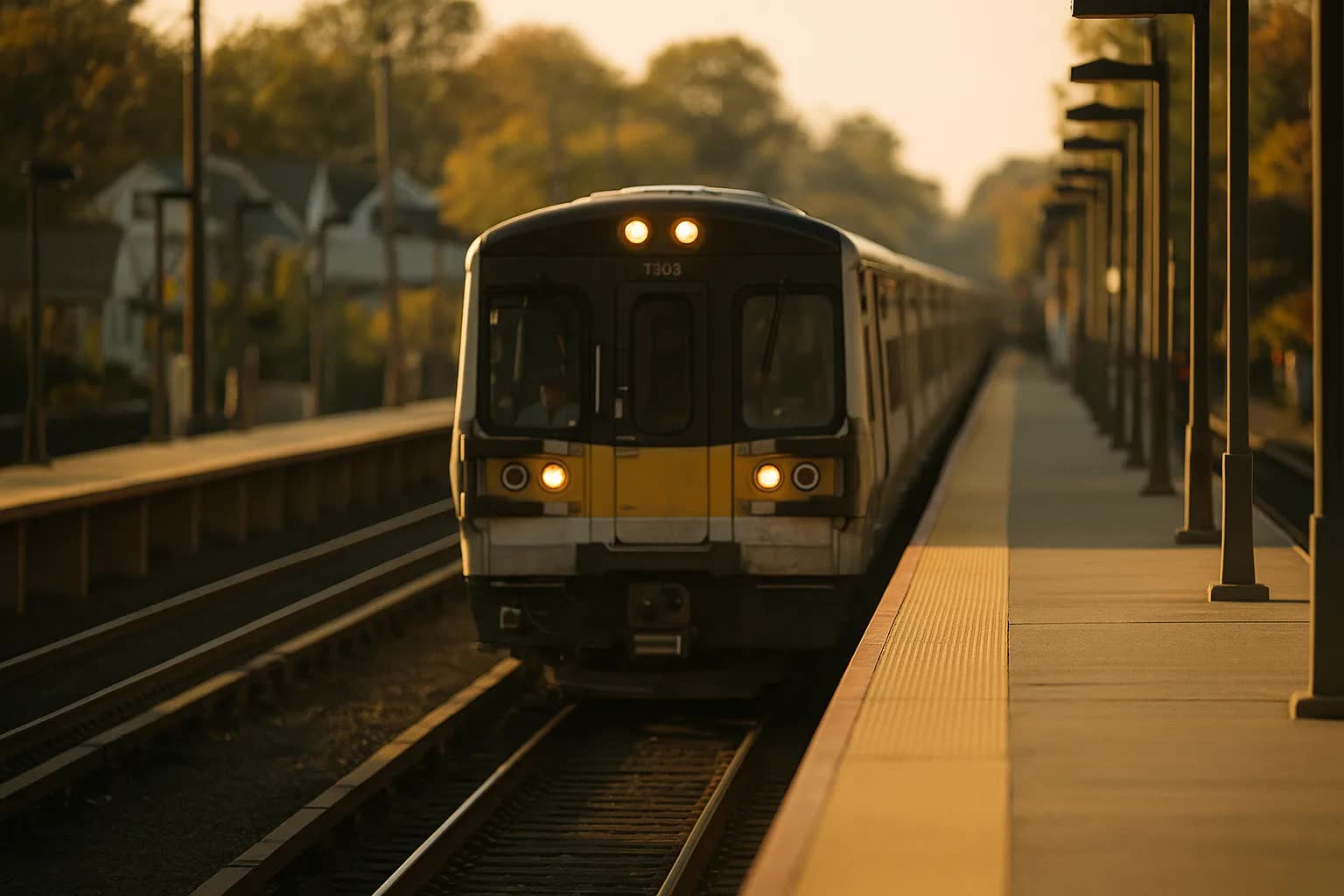
NEW YORK — A new Long Island Rail Road plan unveiled Tuesday promises to shave as much as 20 minutes off commutes between Oyster Bay in Nassau County and Manhattan, a change that would reshape rush-hour patterns at Grand Central and relieve crowded platforms in Midtown and Long Island City.
The draft timetable, produced by LIRR planners with backing from a Nassau County advisory group, pairs off-peak scheduling adjustments with a targeted capital program that would add passing tracks, modernize signals and lengthen platforms at four key stations. Officials said the plan is intended to speed service on the Oyster Bay branch without reducing stops in downtown Oyster Bay or adjacent villages, while creating more consistent trip times for riders transferring at Mineola and Jamaica.
“For decades, Oyster Bay riders have faced variable trip times because of single-track bottlenecks,” said Evan Marks, chief project officer for Nassau Transit Partners, a county-appointed contractor advising the plan. “This timetable redesign and the track work are about predictability as much as speed. A 15- to 20-minute saving for peak commuters is the difference between missing or making an early evening engagement in the city.”
Technical improvements in the proposal include two new 2,000-foot passing sidings between Cold Spring Harbor and Oyster Bay, replacement of antiquated wayside signals with a modern communications-based train control overlay on 12 miles of right-of-way, and 700-foot platform extensions at Mineola, East Williston, Oyster Bay and Syosset. Planners say those physical changes would allow longer trains to overtake local services and improve boarding at peak times, particularly for riders bound for Grand Central Terminal on weekday mornings and evenings.
The numbers attached to the proposal are specific: an estimated capital cost of $420 million spread over five years, with $260 million earmarked for track and signaling, $90 million for platform and station work, and $70 million for rolling stock adjustments and contingency. The timetable would add four express slots in each peak period and increase average peak speed by roughly 12 mph on constrained segments, shaving between 12 and 20 minutes per train. Planners project a 9 percent increase in annual ridership on the branch, roughly 2,300 additional weekday trips within three years of completion.
“This is not a vanity project,” said Amira Khalid, president of the Oyster Bay Chamber of Commerce. “Faster, more reliable trains mean employees can live where they work, retail can rely on steady customers and homeowners who commute to Midtown have a predictable door-to-door time. That stability is vital for local business planning and the health of our downtown.”
Commuters in neighborhoods that feed the branch have already weighed in. On a cold morning at the Mineola station, a neighborhood that sits at a busy junction for Hempstead and Oyster Bay riders, commuters described chronic uncertainty about arrival times into the Upper East Side and Midtown. “If I can get home 15 minutes earlier, that’s dinner with the kids,” said Michael Rivera, a data analyst who lives off Jericho Turnpike and rides from Oyster Bay three days a week. Riders in Hunters Point, Long Island City and the Upper East Side said clearer, clocklike schedules could ease crowding on connecting subways and commuter shuttles.
The plan’s authors acknowledged hurdles ahead. It must pass an MTA staff review and then win approval from the authority’s capital committee before hitting the full board. Officials said they will seek a combination of state matching funds and a competitive federal infrastructure grant to cover roughly 70 percent of the program cost, with the rest split between Nassau County and the LIRR’s capital budget. Environmental reviews and utility relocations could add another 12 to 18 months before construction begins, according to internal project timelines.
Not everyone is fully on board. Some homeowners along the line voiced concerns about construction staging and potential disruptions to street-level parking in downtown Oyster Bay, while preservation groups noted that certain stretches of track run adjacent to historic districts and sensitive wetlands. “We welcome better service, but we need clear mitigation plans for noise, dust and traffic impacts during construction,” said Laura Hines, director of the North Shore Neighborhood Alliance, citing narrow side streets off Audrey and Main avenues in Oyster Bay village.
If approved on schedule, planners say initial elements of the timetable could be trialed as soon as fall 2026, with full service improvements phased in over three years. Officials emphasized that the proposal is designed to be modular: signal upgrades and timetable changes could produce modest travel-time gains immediately, while the more extensive track and platform work would follow in stages. Riders and businesses in Oyster Bay and the surrounding Nassau communities will be watching the spring MTA meetings closely as the timetable moves from draft to decision, a process that could chart the course of commuting across the North Shore for a generation.