Stand-Up Is Booming in the Outer Boroughs, One Cramped Back Room at a Time
A wave of new comedy rooms in Queens and Brooklyn is decentralizing a scene long anchored in Manhattan, giving first-timers more stages than ever.
By Evelyn Torres · July 14, 2026 · 4 min read
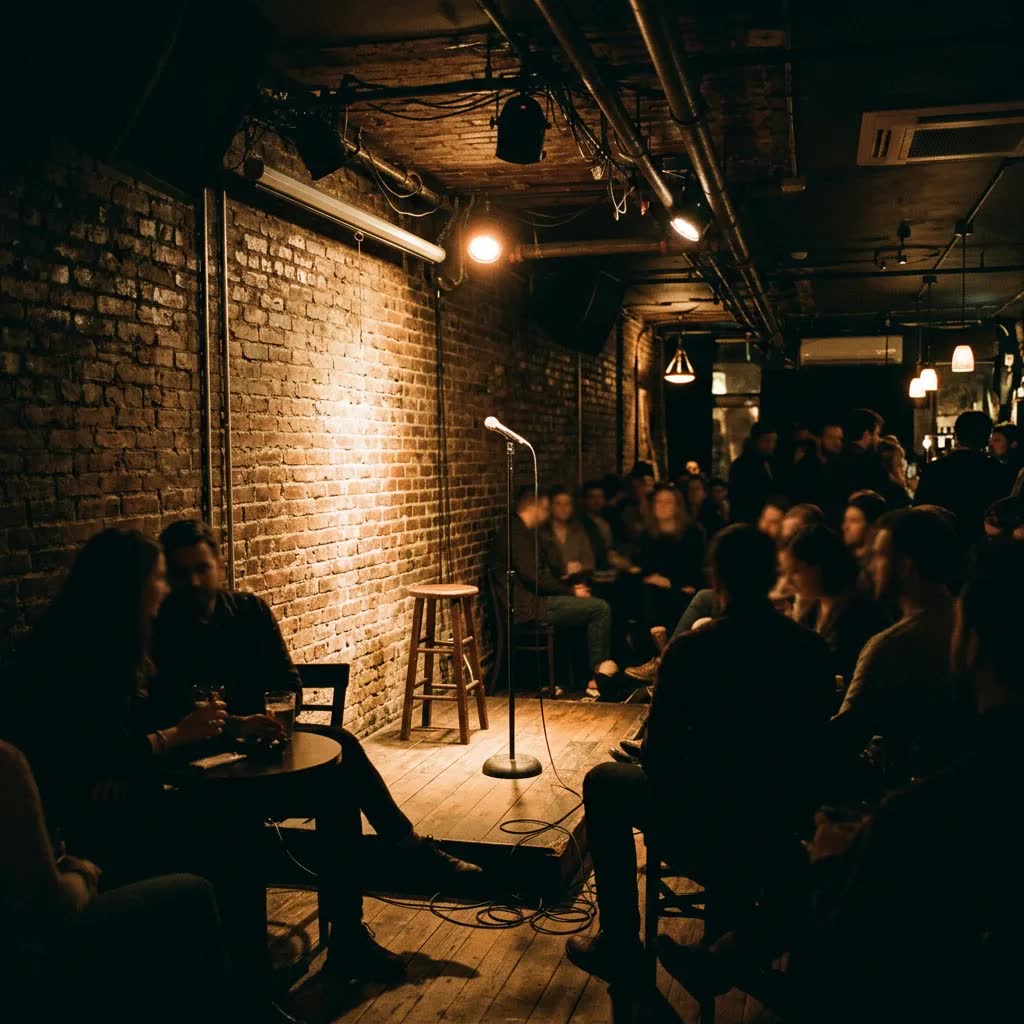
NEW YORK — On a Wednesday night in Astoria, in the back room of a bar that smells faintly of spilled beer and hope, a nervous accountant took the stage to tell jokes for the first time in her life. She had four minutes, a room of thirty strangers, and a growing suspicion that she had made a terrible mistake. She was also part of a boom: across Queens and Brooklyn, new comedy rooms and open mics are multiplying, reshaping a stand-up scene that for generations revolved almost entirely around a handful of storied Manhattan clubs.
Comics and organizers describe a decentralization of the city's comedy geography, driven partly by rents and partly by generational shift. Where an aspiring stand-up once had to fight for a coveted slot at a famous downtown club, there are now dozens of scrappy rooms scattered across the outer boroughs, many of them free to enter and welcoming to first-timers. "You used to have to know somebody, and beg, and wait a year for a five-minute spot," one Queens-based comic said. "Now there's a mic within walking distance of you almost every night. The scene got bigger by getting smaller."
The proliferation of stages has been a boon for newcomers, who can now fail — an essential and constant part of learning stand-up — in front of forgiving crowds without much at stake. Several room hosts described a wave of first-timers over the past year, drawn in part by a broader cultural fascination with comedy and by the low barrier to simply signing up on a clipboard and taking a shot. The quality, they cheerfully admit, is wildly uneven.
The economics remain brutal. Most rooms pay performers little or nothing, surviving on drink sales and the goodwill of bar owners willing to surrender a back room on a slow weeknight. Comics piece together sets across multiple venues in a single evening, chasing stage time rather than money, and the vast majority will never make a living at it. But the sheer volume of stages, veterans say, has produced a fertile, chaotic ecosystem in which raw talent has more chances than ever to develop.
Some worry about oversaturation, and about the risk that too many rooms will thin out the audiences that make live comedy work. A crowded weeknight lineup can mean more comics than paying customers, a dispiriting math that closes rooms as quickly as they open. Yet for every venue that folds, organizers say, two more seem to appear, propelled by a steady supply of people who have decided, against all financial logic, that they need to try telling jokes to strangers.
Back in Astoria, the accountant's set landed somewhere between a triumph and a car crash — two solid laughs, one long silence, and an ending she rushed through in evident panic. Afterward, though, she was grinning. "That was the most terrifying four minutes of my life," she said, already scrolling her phone for the next open mic. "I signed up for another one Thursday."