New York's Fall Stages Bet on New Voices and Flexible Runs
The city's theater, dance and music presenters are building their fall calendars around shorter engagements, neighborhood partnerships and work by emerging artists.
By Elliot Ramsey · August 24, 2026 · 6 min read
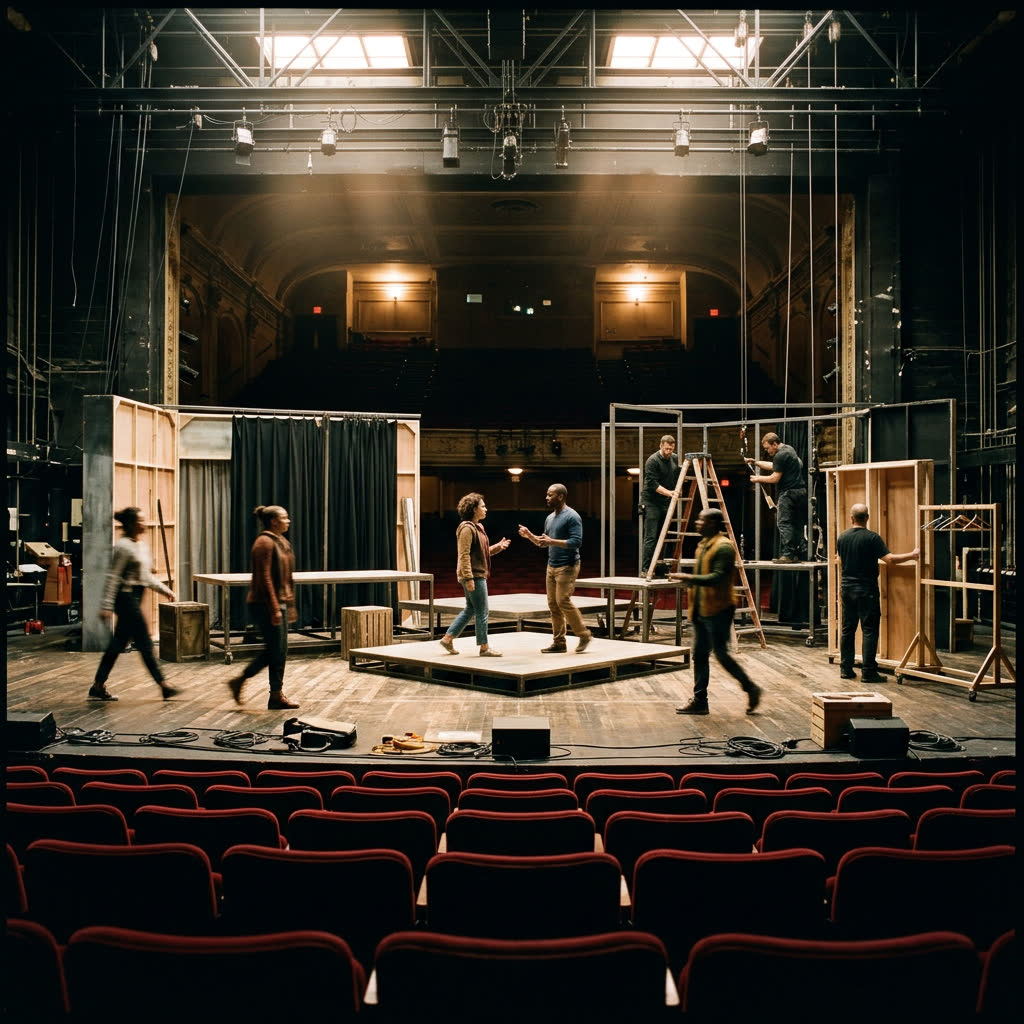
NEW YORK — Fall performing-arts calendars arriving across New York this month point to a season defined less by one dominant spectacle than by a wide range of compact runs, collaborations and works in development. Presenters in Manhattan, Brooklyn, Queens and the Bronx are announcing schedules that mix established forms with lower-cost opportunities for audiences to try something unfamiliar.
At the Mercer Street Theater, the season opens in September with "Borrowed Rooms," a new ensemble drama following six tenants during the final weekend before a building renovation. Its four-week run will be followed by two plays performed in repertory, allowing the same acting company and adaptable set to support different stories on alternating nights.
Dance programming is moving beyond conventional stages. The Northline Dance Project plans an October work that begins in its Greenpoint studio and leads audiences through a courtyard and former loading bay. In the Bronx, the Concourse Arts Lab will pair choreographers with percussionists for three weekend programs whose afternoon performances are designed for families.
Music presenters are also experimenting with scale. The Harbor Chamber Society will place small ensembles in libraries and community rooms before bringing the musicians together for a larger November concert. Artistic director Simone Webb said the neighborhood performances are complete programs, not previews, and tickets will be free with advance registration.
Several organizations are keeping engagements short to control production costs and make room for more artists. That strategy can widen a season but leaves less time for word of mouth to build, said arts economist Daniel Kline. He noted that presenters are increasingly scheduling return dates in spring for productions that find an audience during an initial fall run.
New writing is prominent throughout the early calendars. The Queens Lantern Theater will stage "Second Transfer," a multilingual comedy set during an interrupted subway trip, while the West 142nd Street Playhouse is producing "The Ledger," a family drama centered on a neighborhood repair shop. Both productions include post-show conversations on selected dates but can be attended without participating in a discussion.
Accessibility is being treated as part of the schedule rather than an occasional addition. Multiple venues list captioned, audio-described and relaxed performances at the time tickets go on sale. Some are also offering early-evening curtain times, which administrators say can better serve older patrons, families and workers whose commutes make a traditional 8 p.m. start difficult.
The season still carries uncertainty. Smaller organizations are watching advance sales closely after summer audiences often waited until the final days to buy tickets. To reduce risk for patrons, several presenters have adopted low-fee exchanges and sliding-scale sections, while others are offering packages that can be used across unrelated productions instead of requiring fixed dates.
For audiences, the breadth of the calendar may reward planning without demanding firm commitments months ahead. September brings readings and first runs, October is crowded with dance and new plays, and chamber music expands in November. The common thread is a wager that New Yorkers will return often if venues offer clear prices, flexible choices and a sense that each performance belongs to its neighborhood.