A Plan to Formalize Subway Busking Divides the Musicians It Would Cover
A proposal to expand and formalize the permit system for underground performers has split a community that prizes both fairness and freedom.
By Marcus Bell · July 30, 2026 · 4 min read
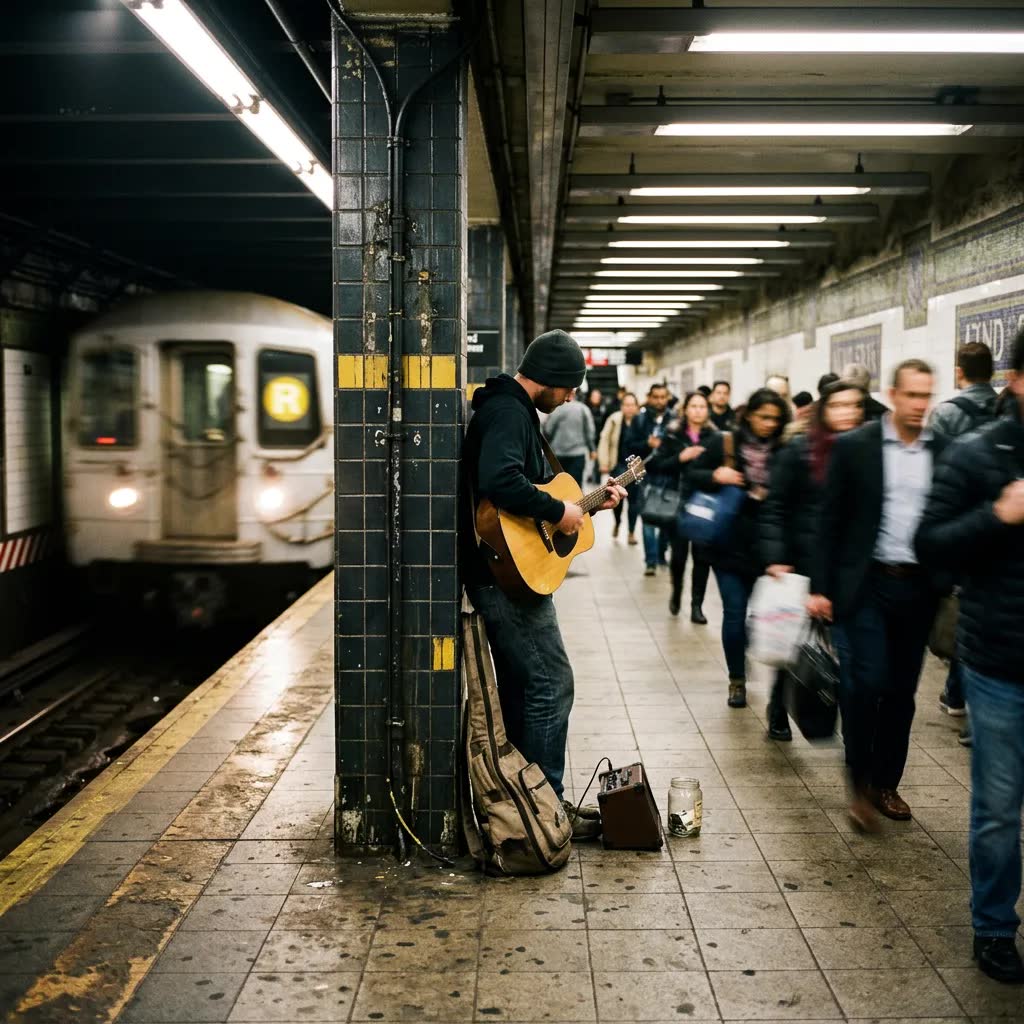
NEW YORK — The music that fills the city's subway stations — the mariachi bands, the classical cellists, the drummers who turn plastic buckets into full kits — has always occupied a gray zone, half sanctioned and half improvised. A new proposal to expand and formalize the permit system that governs underground performance has thrust that gray zone into the light, and, in the process, divided the very musicians it is meant to serve.
The plan, floated by transit officials and a coalition of performer advocates, would enlarge the roster of official performance slots at prime stations and distribute them through a transparent lottery, in an effort to reduce the turf disputes and confusion that have long plagued the busking scene. Supporters argue that a clearer system would protect performers from harassment, give them a legitimate claim to their spots, and reduce the friction with police and station agents that periodically flares into confrontation.
"Right now it's chaos, and chaos favors whoever's biggest and loudest," said one veteran subway performer who backs the expansion. "A real permit means when somebody tells me to move, I can point to a piece of paper. It means the quiet acts, the older players, the people who won't fight for a spot, actually get a fair shot at one. That's not selling out. That's just fairness."
Other performers see the proposal as a bureaucratic net thrown over something that has always thrived precisely because it was ungoverned. They worry that formalizing the system will hand control to whoever administers the lottery, squeeze out spontaneity, and impose paperwork and rules on an art form built on showing up with an instrument and playing. "The whole point is that anybody can just start playing," one skeptic said. "The second you need a permit, you've killed the thing that made it magic."
Transit officials, for their part, have framed the proposal as an attempt to support performers rather than police them, pointing to the genuine chaos of overlapping claims and the occasional ugly disputes that erupt when two acts want the same platform at rush hour. They insist the expanded system would create more opportunities, not fewer, and have promised that any changes would come only after extensive consultation with the performer community.
That consultation, if the early reaction is any guide, will be contentious. At an informal gathering of performers convened to discuss the plan, the argument ran long and heated, breaking largely along lines of temperament rather than genre — those who craved order versus those who feared it. "We agree on the music," one performer said afterward, shaking his head. "We just can't agree on whether the music needs a form to fill out. And honestly, maybe that argument is the most New York thing about the whole scene."