Can New York Turn Subway Heat Into Clean Energy?
New York City, New York State, and the MTA are studying a Thermal Energy Network at the Brooklyn Bridge–City Hall and Chambers Street station complex — a first for any U.S. transit system — that would capture underground heat and redirect it to warm nearby buildings in winter.
By Iris Ye · August 9, 2026 · 5 min read
NEW YORK, Aug. 10, 2026 — On a hot summer day in New York, heading underground does not necessarily mean escaping the heat. At Brooklyn Bridge–City Hall, one of the hottest stations in the subway system, platform temperatures averaged 96 degrees Fahrenheit during the summer months of 2025, according to city officials.
For New Yorkers who rely on the subway, the experience is familiar: stepping off an air-conditioned train onto a sweltering platform or waiting underground as temperatures climb. But the city is now asking whether that everyday discomfort could become something more useful.
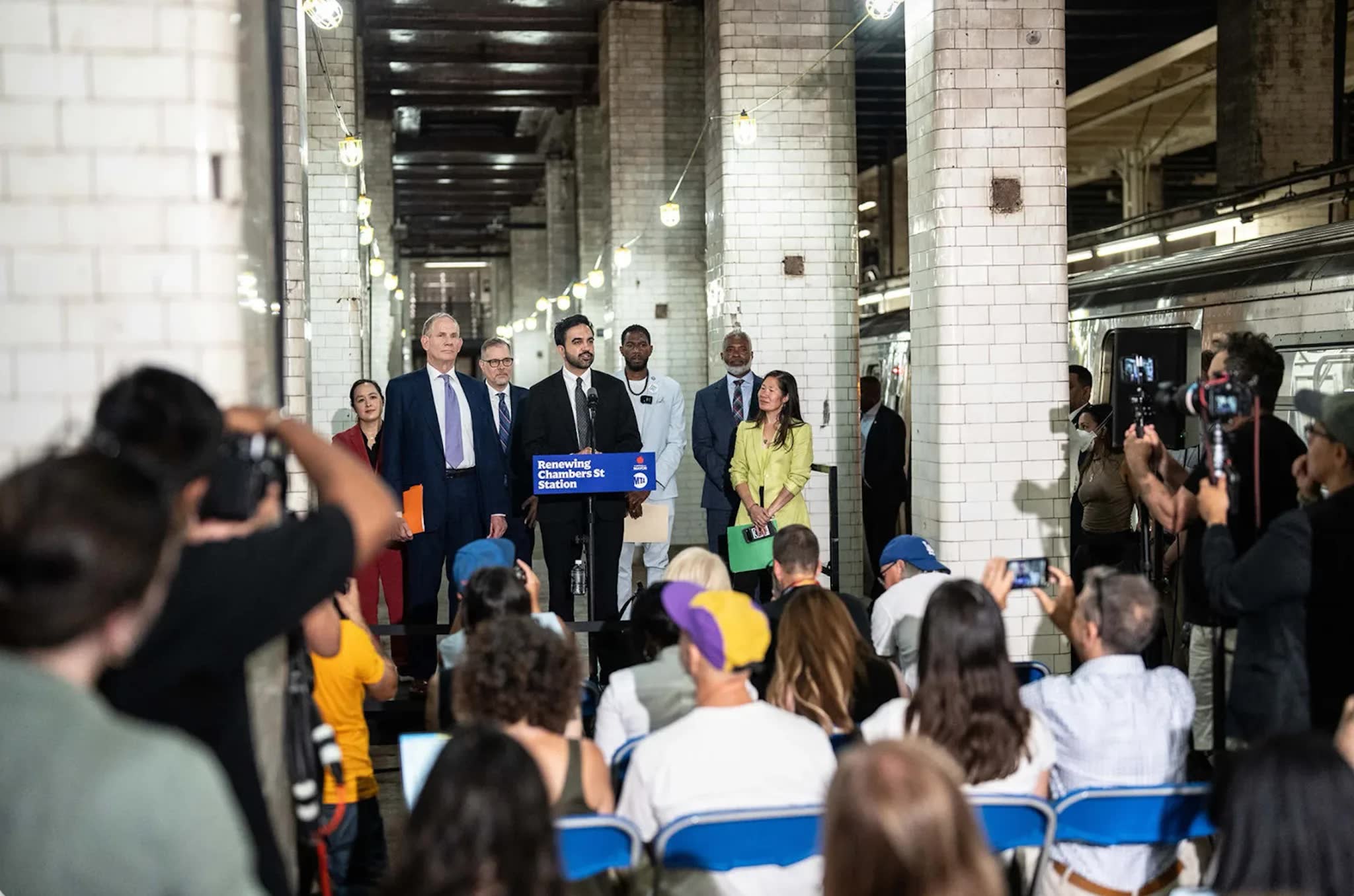
New York City, New York State and the Metropolitan Transportation Authority announced Monday that they will study a Thermal Energy Network, or TEN, at the Brooklyn Bridge–City Hall 4/5/6 and Chambers Street J/Z station complex in Lower Manhattan. If eventually installed, officials say it would be the first thermal energy network in a U.S. transit system.
The concept is relatively simple. Radiant cooling technology would absorb heat from the Brooklyn Bridge–City Hall platforms, and potentially Chambers Street as well, then transfer it through pipes to geothermal boreholes drilled beneath an abandoned platform at Chambers Street. The excess heat could be stored underground and later used to warm nearby municipal buildings during colder months.
In other words, heat that makes a summer commute uncomfortable could potentially become a source of warmth in winter.
The proposal comes as extreme heat poses a growing challenge to New York's transportation infrastructure. The region currently experiences about 18 days above 90 degrees Fahrenheit and two heat waves in an average year, according to the MTA. By 2050, the number of days above 90 degrees is projected to roughly triple, while heat waves are expected to increase to seven per year.
Subway heat is increasingly becoming an infrastructure problem as well as a daily discomfort for riders — part of a broader challenge facing New York and other aging cities: how to adapt infrastructure built for an earlier climate without simply consuming more energy to do so.
For riders, the most immediate promise is straightforward — cooler platforms. The proposal also points to a broader shift in how cities are beginning to think about the clean-energy transition.
That transition is often framed around generating more renewable power, expanding electric transportation, or making buildings more efficient. Thermal energy networks offer another approach: making better use of energy that cities already produce and often waste.
Such networks are already used at some hospitals and universities to move heat between buildings and reduce reliance on fossil fuels, according to city and state officials. Bringing the concept into a subway system would extend that approach to infrastructure used every day. The city says radiant cooling can be 25 to 35 percent more energy efficient than traditional air conditioning.
For now, however, the project remains at the feasibility stage. An initial feasibility study will determine how much cooling the system could actually achieve and how much it might save the city in energy costs. The contract is expected to be awarded this fall, and design work would begin in early 2027 only if geothermal feasibility is confirmed.
That leaves significant questions unanswered. Energy savings will ultimately have to justify the cost of drilling, installation, and long-term maintenance. Drilling boreholes, installing pipes, and integrating new technology into a century-old subway network could present technical and financial challenges. The MTA itself has noted that cooling the system is difficult because of its open entrances, vents, and aging infrastructure.
Chambers Street, however, offers an unusual testing ground. Its abandoned center platform allows technology to be tested without occupying passenger areas, while Brooklyn Bridge–City Hall experiences additional heat from trains dwelling at the 6 line terminal. Even if the experiment succeeds, expanding it across the subway system would be another challenge entirely — stations differ widely in their layouts, underground conditions, and surrounding buildings.
For New Yorkers, the first measure of success will be simple: whether standing underground in August actually feels cooler. But the larger test is more ambitious — whether one of the inconveniences of life in an aging city can become part of the infrastructure of a cleaner one.