Newark Airport's Cargo Growth Attracts Big E-Commerce Fulfillment Centers
Proximity to New York markets and highway access are driving logistics developers to expand warehouse clusters in NJ.
By Hana Kim · February 10, 2026 · 4 min read
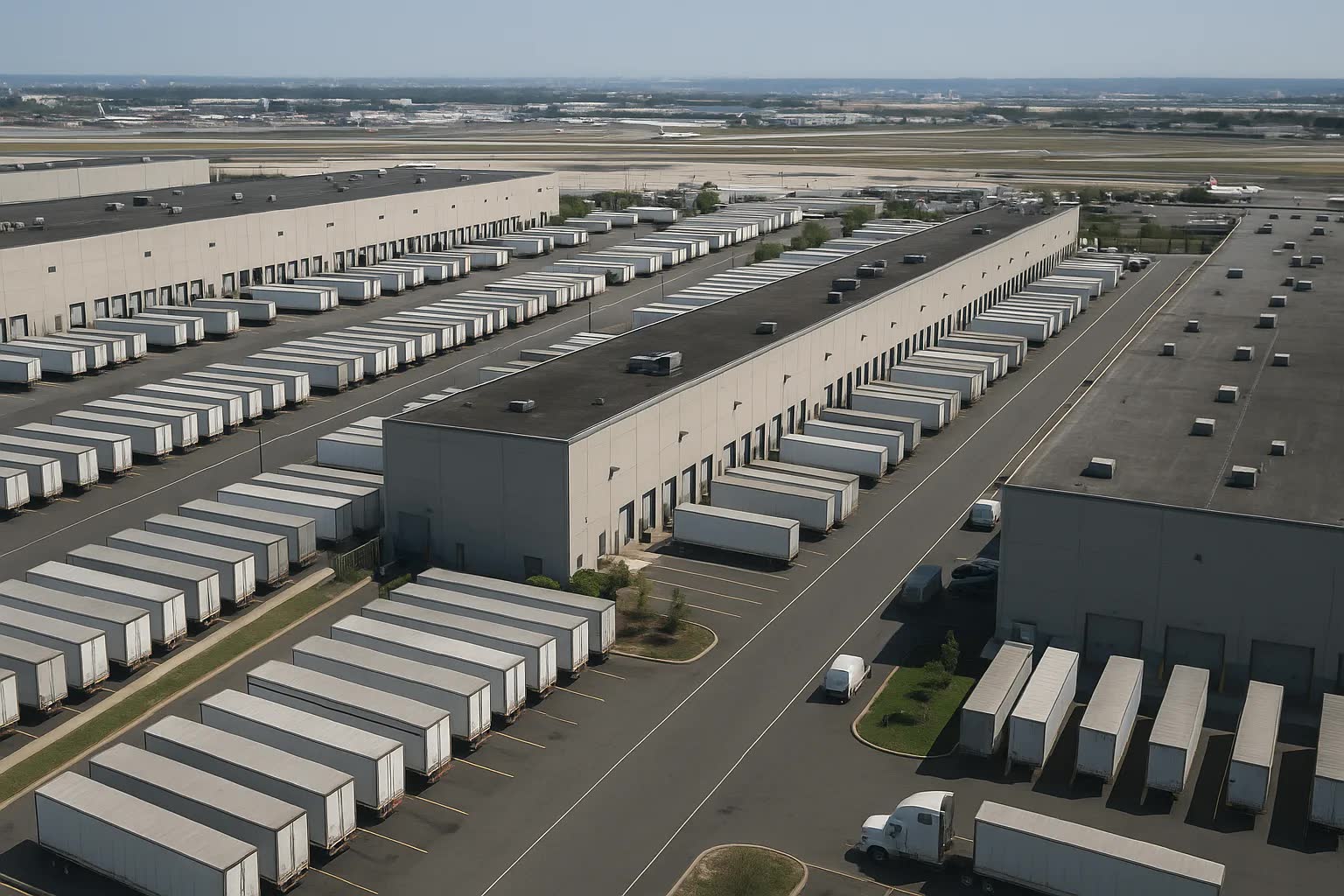
On a late January morning in Chelsea, delivery bikes and white vans threaded through Hudson Yards-bound commuters on 11th Avenue, the last-mile scene animated by a logistical shift playing out 10 miles across the Hudson: Newark Liberty International Airport has emerged as a magnet for e-commerce fulfillment developers, drawing warehouses and automated sorting centers to Elizabeth, Kearny and the Ironbound district of Newark that can reach Midtown Manhattan and borough neighborhoods like Williamsburg and Long Island City in under an hour by road when traffic cooperates.
Developers say the calculus is straightforward: air cargo growth at Newark and direct highway access to Manhattan make the area a more efficient hub for same-day and next-day deliveries than inland sites. "Newark offers unmatched access not just to Manhattan but to the entire Northeast Corridor — we can push inventory into the city faster and at lower cost than from sites near Philadelphia or upstate," said Marisol Vega, director of logistics at HarborPoint Development, which is building a 940,000-square-foot fulfillment complex on the Elizabeth waterfront.
For retailers and marketplaces that cluster storefronts along 34th Street, in SoHo and near the Brooklyn Navy Yard, the proximity matters. "We service thousands of orders a day for customers in Chelsea and the Lower East Side; cutting transit time by 20 to 30 minutes reduces delivery windows and the cost of repeat attempts," said Daniel Cho, vice president of operations at QuickShip Fulfillment, which opened a 420,000-square-foot automated center in Kearny last summer and runs a shuttle fleet into Manhattan bridges and tunnel approaches.
The boom has measurable scale. Airport cargo throughput climbed to an estimated 1.7 million metric tons in calendar 2025, up roughly 21 percent from 1.4 million tons in 2023, according to an industry aggregation prepared for local planning officials; developers have announced or broken ground on approximately 7.2 million square feet of logistics space within five miles of the airport, and leasing brokers report average asking rents in newly built, high-clearance warehouses running $9 to $12 per square foot, with some large tenants securing longer-term deals projected to support roughly 6,200 permanent and 3,800 seasonal jobs regionwide.
Highway and rail links help explain those numbers. Port Newark–Elizabeth Marine Terminal and the neighboring intermodal ExpressRail yard feed cargo onto turnpikes and local routes, while the New Jersey Turnpike (I-95), Routes 1 and 9, and the Pulaski Skyway create corridors that reach the Holland and Lincoln tunnel approaches. "It's the combination of air, rail and road that makes this work — once inventory is on the tarmac, it can be on a truck and into Manhattan storefronts within an hour," said Evelyn Ramos, president of the Newark Cargo Alliance, a private consortium advising municipalities on logistics growth. At the same time, congestion on the Turnpike and neighborhood streets is already rising, complicating scheduling and emissions control.
Municipal leaders and developers are leaning on zoning incentives and tax-abatement programs to make projects pencil out on sites that were formerly scrap yards or low-rise industry. Meadowbrook Logistics closed on the 67-acre Gateway Logistics Park in Kearny for roughly $245 million in late 2025, and the company expects to spend another $160 million on construction and automation. State and local incentive packages, officials said, often include payment-in-lieu-of-taxes agreements and infrastructure upgrades for water, power and shore protection; developers argue those investments will futureproof sites against storms and sea-level rise near the Hackensack Meadowlands.
Not everyone welcomes the rapid conversion of industrial land into sprawling distribution campuses. In Newark's Ironbound neighborhood and in parts of Kearny, community groups have pushed back on plans that would funnel hundreds of additional trucks per hour onto residential streets, degrade air quality and displace small employers. "We support jobs in our neighborhood, but not at the cost of our air and the kids' health — we need enforceable limits on truck routes and better monitoring," said Rabia Torres, a community organizer and lifelong Ironbound resident, calling for stricter idling enforcement and expanded green buffers along waterfront sites.
Labor dynamics are shifting as automation rises. The newest fulfillment centers blend robotic sorters and autonomous conveyors with human pickers and maintenance teams, reducing some entry-level carton-handling roles while creating higher-skill jobs in systems maintenance and operations analytics. "We are investing in retraining because automation changes the mix of roles — we hire more technicians and fewer manual packers, and we've partnered with two community colleges in Hudson and Union counties to train people in mechatronics and warehouse software," said Marcus Ellison, director of workforce development at Meadowbrook Logistics.
Industry and transportation planners acknowledge competition from other Northeast airports and distribution centers but argue Newark's edge is real and durable, especially for New York City markets. "JFK and Newark serve different routes and cargo types; Newark's proximity to the core Manhattan market and its integrated rail-road links give it a logistical advantage," said a senior MTA planner who requested anonymity because they were not authorized to speak publicly. Still, the planner cautioned that without better regional coordination on truck routing, curb space in neighborhoods from Midtown to Red Hook could get tighter and more contested.
Looking ahead, the interplay between airport cargo growth, warehouse automation and city demand will shape how quickly New York-area shoppers receive packages and how communities live with the traffic and air quality trade-offs; projects now breaking ground are expected to come online through 2028, and local officials say new permitting frameworks and emissions controls are under discussion, leaving developers, unions, residents and regulators to negotiate the terms for a logistics footprint that could redefine last-mile delivery across the metropolitan region.