Night Markets Bring New Flavors to Downtown Flushing
Weeknight open-air bazaars are extending business hours for immigrant restaurateurs and creating a late-evening dining scene.
By Maya Singh · January 21, 2026 · 4 min read
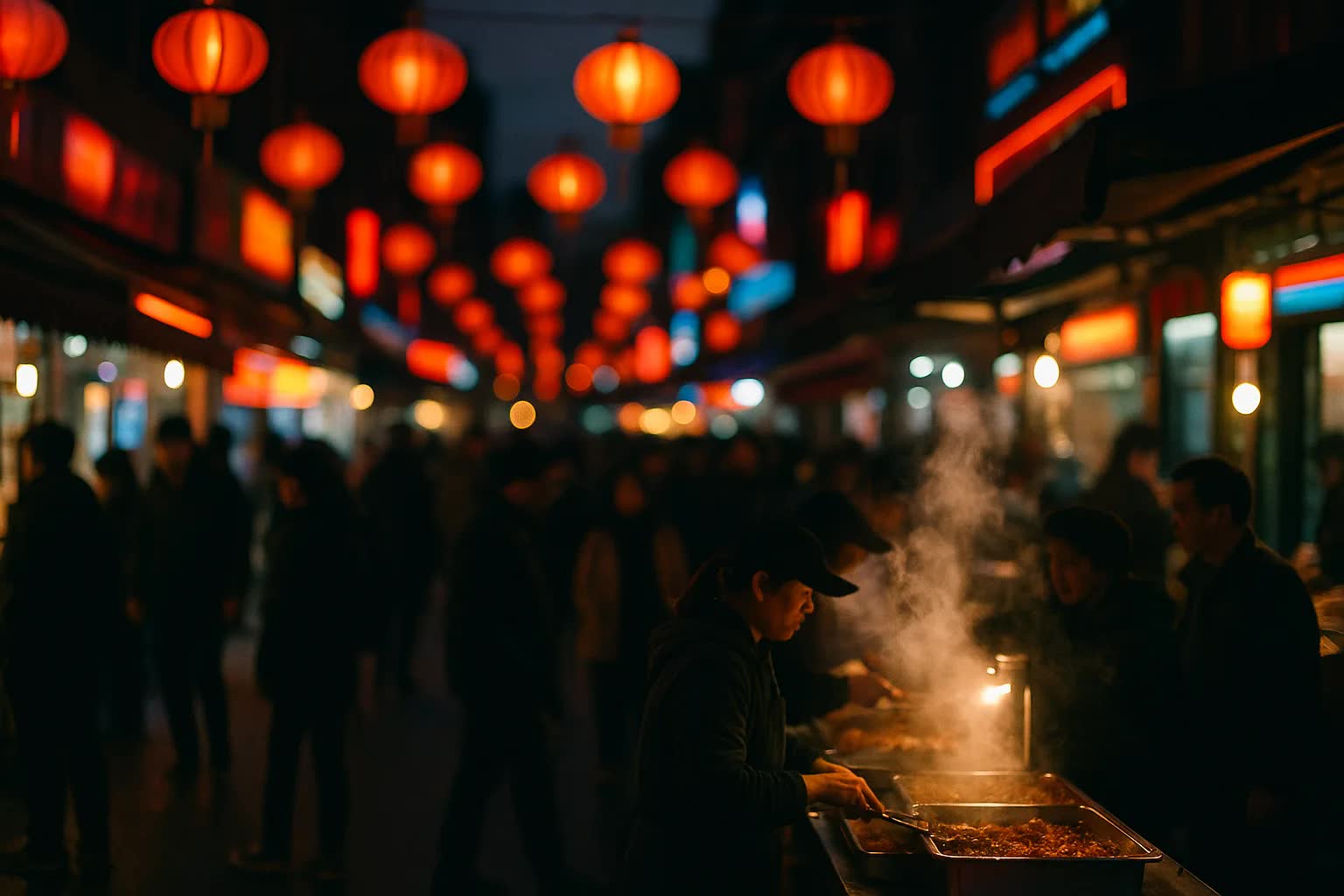
On weeknights in Downtown Flushing, the clatter of woks and the glow of paper lanterns have become as familiar as the 7 train's late-evening arrivals, signaling a new after-dark economy for immigrant restaurateurs who long relied on lunchtime crowds along Main Street. The open-air night markets — staged in parking lots and on closed-off blocks around Main, Roosevelt Avenue and Kissena Boulevard — are stretching business hours and reshaping how locals and commuters think about eating late in northeastern Queens.
What began as a handful of pop-ups last summer has turned into a rotating program of bazaars where longtime storefronts such as Golden Tofu and new kitchens like Lotus & Lime set up night stalls alongside Filipino bakeries and Bangladeshi grill trucks. Vendors sell quick plates and fulllength meals, from scallion pancake wraps to halal biryani and spicy tripe stew, while portable heaters, string lights and spilled-sake plastic cups create a communal dining room that pours into the sidewalks and the glass-fronted lobbies of mixed-use buildings on Roosevelt Avenue.
"Before the markets, we closed at 9 p.m. and relied on lunchtime office traffic and weekend families," said Lina Park, owner of Golden Tofu on Main Street, who runs a late-night dumpling stall three nights a week. "Now we stay open until midnight, hire two extra cooks for the evening shift and finally earn back some of the rent we've been carrying for years. The energy here at 10 p.m. feels like a second business day."
City and municipal partners have supplied numbers to back that anecdotal success. Since June, organizers say, the Downtown Flushing Night Markets have operated four nights a week — Wednesday through Saturday — with an average of 45 vendors per night and roughly 2,200 visitors on a typical evening. Vendors participating in municipal pilot permits reported revenue increases of 28 percent on nights the markets run; average per-vendor sales ranged from $800 to $3,400, and the city issued 32 temporary vending permits and coordinated 12 block closures between June and December, according to the Downtown Flushing Merchants Alliance.
Diego Morales, executive director of the Downtown Flushing Merchants Alliance, credited a mix of grassroots organization and city cooperation with the markets' expansion. "We worked with the Department of Small Business Services and the local community board to keep the process manageable for family-run businesses," Morales said. "The goal was simple: extend hours in a way that brings customers and keeps residents safe and respected." He said officials had prioritized locating markets near transit hubs to capture evening ridership from the 7 train and buses coming from Jackson Heights and Elmhurst.
Transit officials and planners have watched the experiment closely because Flushing is one of the busiest nodes in the borough; the Flushing–Main Street station sees tens of thousands of riders daily. "We aren't changing core service yet, but we are monitoring the later ridership peaks closely," said a senior MTA planner who requested anonymity because the agency has not issued a formal policy on weekend-night service pivots. The planner added that temporary shuttle bus adjustments on Roosevelt Avenue have already been trialed to ease platform crowding during market hours.
For diners, the markets are less about policy than discovery. Ai Chen, chef-owner of Lotus & Lime, said she uses the stall to test menu ideas before committing to expensive full-menu rollouts in her storefront kitchen on Bowne Street. "Last month we introduced a fermented soybean pancake that sold out in two nights; the feedback was instant and brutal and helpful," Chen said. Customers braving the late chill come from neighborhoods across Queens — except perhaps the Far Rockaway peninsula — and some ride in from Manhattan, turning a quick dinner into a mobile, multi-culture tasting tour.
The economic impact extends beyond vendor receipts. Restaurateurs report hiring extra staff for evening shifts, local suppliers see larger late deliveries, and nearby bodegas and laundromats note higher foot traffic after dark. Still, there are frictions: some residents have complained about noise and blocked driveways, and a handful of operators failed initial health inspections, prompting stepped-up education from city inspectors. Farah Rahman, director of the Queens Small Business Network, said the informal markets offer a pathway to permanence for immigrant entrepreneurs but urged more predictable access to storage, waste removal and winterized electrical hookups as key next steps.
Organizers and merchants say they plan to press for a year-round permitting structure and to pilot periodic markets in nearby Elmhurst and Flushing Meadows, and the Downtown Flushing Merchants Alliance plans a formal review of the pilot with the community board next month. Municipal partners, vendors and neighborhood advocates say the late-evening bazaar is more than an economic lifeline; it's an emerging cultural fixture that could redefine what a dinner hour looks like in one of New York's most diverse enclaves. For many immigrant restaurateurs, the night markets are not just extra hours on the clock but a chance to imagine new business models when the city wakes up to a different kind of night.