"Night Work" Exhibition Opens a Window on the City After Dark
A new Lower East Side exhibition uses photographs, recorded testimony and everyday objects to document the people whose shifts begin as much of New York heads home.
By Maya Chen · August 24, 2026 · 5 min read
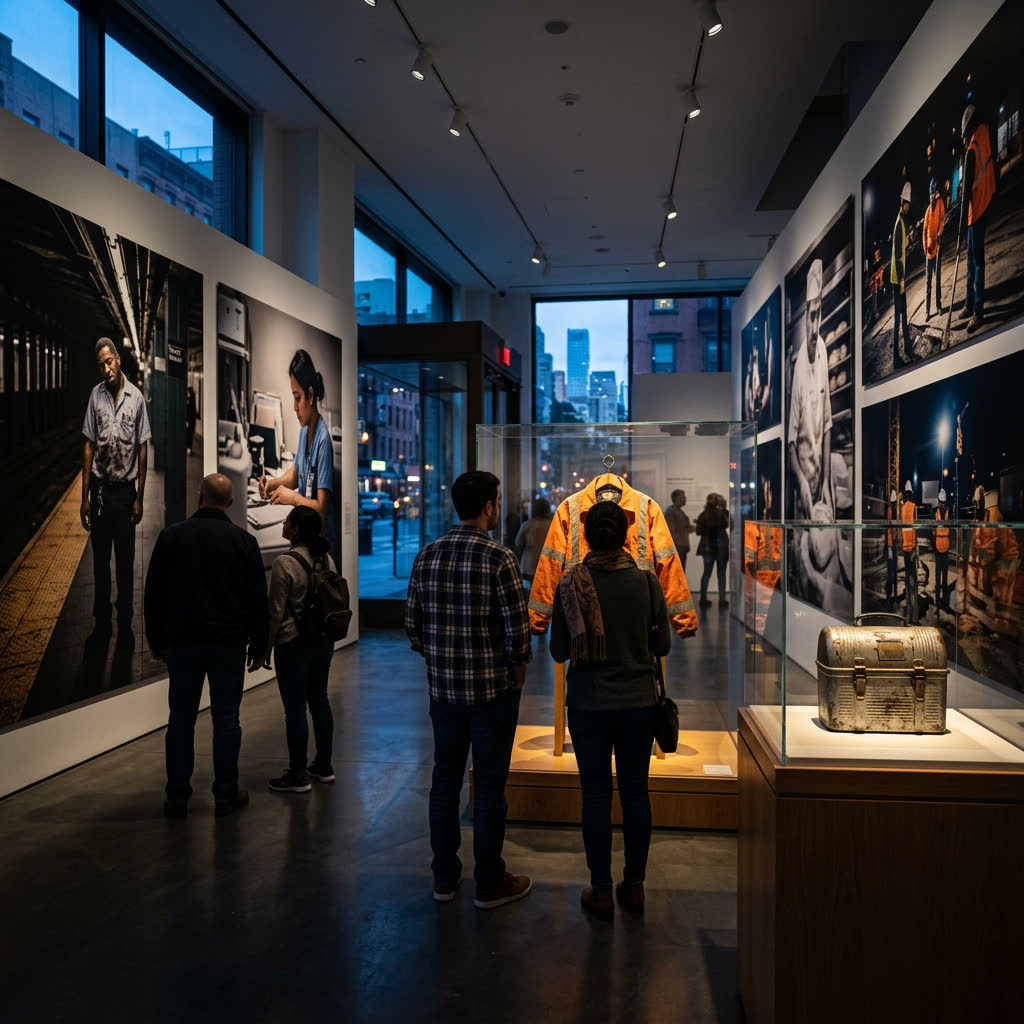
NEW YORK — A scuffed lunch thermos, a pair of reflective rain pants and the glowing face of a 3 a.m. time clock greet visitors to "Night Work," an exhibition opening Thursday at the East River Museum on the Lower East Side. The show examines the routines of New Yorkers who clean offices, stock markets, bake bread and keep buildings running while most of the city sleeps.
The exhibition brings together 74 photographs, 18 short audio histories and dozens of objects borrowed from workers in all five boroughs. Rather than arranging the material by occupation, curator Lena Ortiz organized the galleries around the stages of an overnight shift: the commute in, the first hours, the predawn lull and the trip home through a waking city.
One gallery is washed in dim blue light and filled with large-format photographs made by Queens photographer Nia Benton over three years. Her subjects include a florist preparing buckets at a wholesale market, a residential porter polishing a lobby floor and a baker checking trays through a clouded oven door. Benton said she worked without flash whenever possible so the images would preserve the quiet and unusual color of the overnight city.
The recorded voices are equally central. Visitors can lift handsets to hear workers describe finding child care, adjusting meals and trying to sleep through daytime construction noise. No speaker is presented as a symbol of an entire trade, Ortiz said; the aim is to let individual routines accumulate into a broader portrait of labor that is often visible only through its results.
A long table near the center of the show holds objects selected by participants themselves. There are handwritten bus directions, insulated coffee cups, family photographs tucked into lockers and a paperback swollen by rain. Museum labels explain who used each item and why it mattered, keeping attention on personal experience rather than turning work equipment into anonymous design.
The museum commissioned the exhibition after an earlier neighborhood oral-history project drew an unexpectedly large number of stories from overnight workers. Program director Malcolm Avery said staff scheduled interviews at unconventional hours and offered transit stipends so participants would not have to choose between taking part and getting home after a shift.
Public programs will include a Saturday morning photography walk, an evening workshop on recording family histories and two discussions with workers represented in the show. The museum also plans quieter admission periods after 9 a.m. on selected Fridays for visitors coming off overnight shifts, with free timed tickets available through its front desk.
Ortiz said the installation deliberately avoids presenting nighttime labor as either romantic or bleak. A final wall pairs sunrise photographs with brief notes about what each subject did after clocking out, from making breakfast for children to tending a window garden. "The city does not simply wake up on its own," she said. "We wanted people to leave thinking about the many mornings that have already happened before theirs begins."