NJ Transit Restores Overnight Newark–NYC Link, But Ridership Lags
Late-night workers cautiously welcome the return of a direct service even as transit officials push for higher weekend subsidies.
By Evelyn Torres · January 30, 2026 · 4 min read
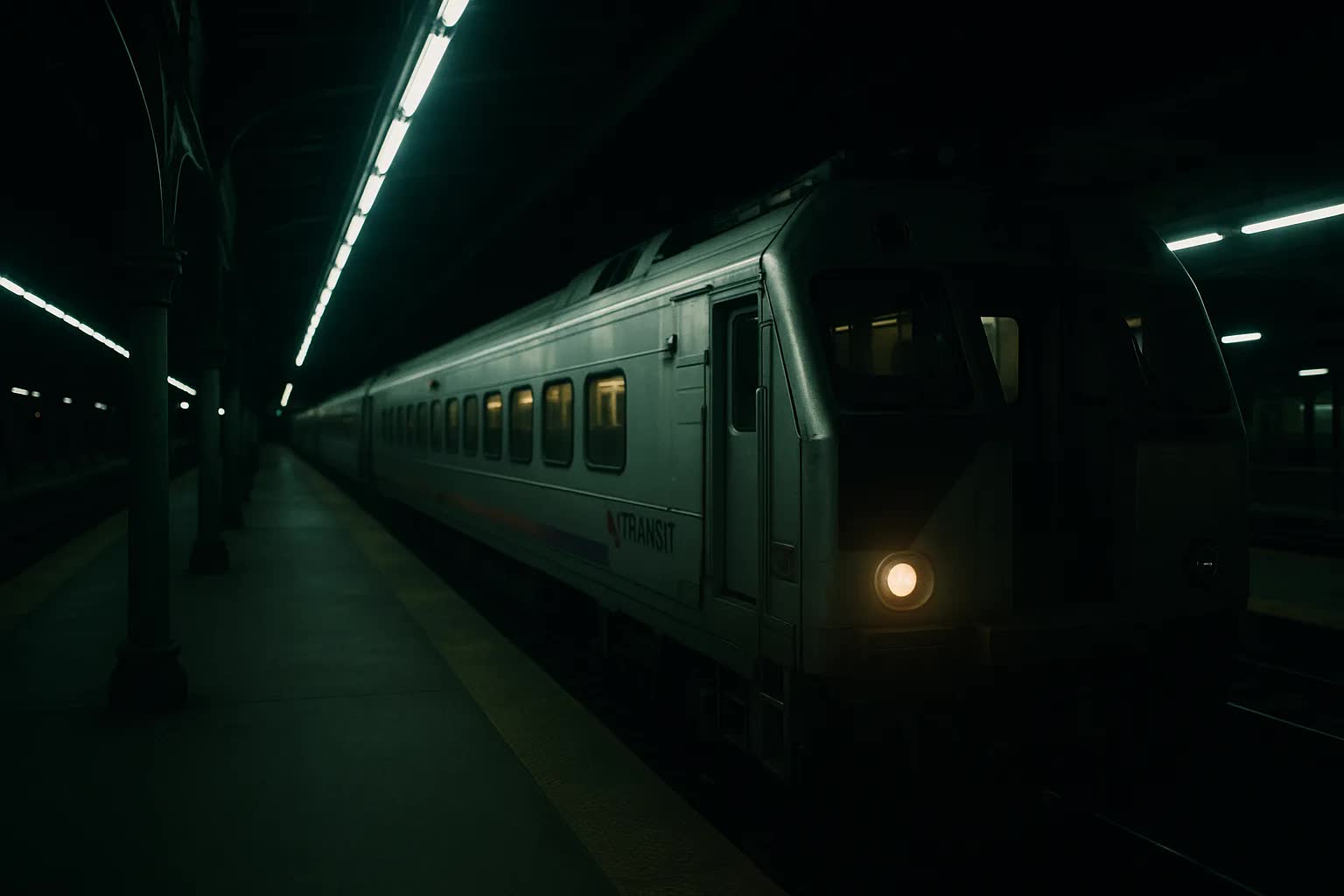
When the overnight Newark–New York direct train pulled back into New York Penn Station three weeks ago, commuters trudging out of Hell's Kitchen bars and nurses leaving overnight shifts at Bellevue felt an immediate relief — but the platform was not exactly crowded, underscoring how fragile late-night transit patterns in the city remain even as services are restored.
NJ Transit resumed a limited overnight direct service between Newark Penn Station and New York Penn on Jan. 14, running hourly trains between roughly midnight and 5 a.m. after a seven-month hiatus that had forced many riders to stitch together trips using PATH trains, overnight buses at the Port Authority Bus Terminal, or expensive ride-hail options from Journal Square or the Ironbound neighborhood in Newark.
"It’s such a nicer option to sit on a train than to stand outside at 2 a.m. waiting for a bus that might get me to 8th Avenue," said Carlos Medina, a registered nurse at Bellevue Hospital who lives in the East Village. "I rode it the first week and it shaved at least 20 minutes off my commute, but I haven’t switched my entire schedule over yet — I want to see if it actually keeps running on slow nights."
Local advocates and transit watchdogs say the restart is a positive first step but one that needs deeper financial support to flourish. "This service connects neighborhoods across the river, keeps workers safe and reduces late-night car trips — but it will wither without a committed weekend subsidy and better marketing in neighborhoods like Hell's Kitchen and the Ironbound," said Leah Rutledge, director of operations for NewarkLink Transit Advocates, which has campaigned for expanded overnight options since 2023.
Ridership and cost figures released by NJ Transit to community boards in the past week paint a picture of cautious utilization: the agency reported an average of 320 passengers per night systemwide since Jan. 14, compared with an average of 1,250 nightly riders on overnight Newark–NYC runs in 2019 before the pandemic. NJ Transit said the pilot is running five overnight departures in each direction; average fare revenue has been roughly $7 per boarding, covering about 18 percent of the estimated nightly operating cost. The agency is asking regional partners for $2.6 million in targeted weekend subsidies to expand frequency and launch a marketing campaign tied to late-night employment centers and entertainment venues.
"Operationally, the equipment is available and crews can be scheduled, but every hour of service is a negotiation with labor contracts and a choice among tight maintenance windows," said a senior NJ Transit planner who requested anonymity to discuss internal deliberations. The planner added that the agency has rotated push-pull locomotives through the Kearny maintenance yard to minimize conflicts with daytime timetables and that restoring a full overnight timetable would require additional overnight crew bases and depot funding.
For late-shift hospitality workers and performers, the calculation goes beyond speed. "I got off at Penn and walked to 52nd Street; it felt safer to be on a platform with a train every hour than standing by myself at the bus stop on Eighth Avenue," said Maya Thompson, a bartender at Marlowe & Co. in Hell's Kitchen who now uses the train twice a week. "But sometimes there’s only a handful of people on the car, and I worry the city or the agency will call it a failure too quickly."
Small businesses in both Newark and Midtown say the service has had a measurable but modest effect on late-night commerce. "Our breakfast rush is back on some mornings because dishwashers and kitchen staff from Journal Square and the Ironbound can get here earlier," said Jamal Hendricks, owner of the Ironbound Diner near Ferry Street in Newark. At street level in Midtown, doormen at a cluster of boutique hotels near Christopher Street and Sixth Avenue reported more late arrivals from Newark on weekend nights, though not yet at pre-pandemic levels.
Advocates are pushing for better coordination with the Port Authority, PATH and the MTA to create seamless late-night connections that would amplify ridership gains. "A direct train helps, but riders need timed transfers and a single, visible timetable across agencies; that’s especially true for hospitality workers moving between Williamsburg, Greenwich Village and Newark after midnight," said Sena Park, policy director at Transit for All NJ, noting that integrated fares and a small marketing budget could raise awareness quickly.
NJ Transit officials say they will review ridership figures through April and present recommendations at the agency’s spring board meeting, with a particular focus on whether weekend subsidies and modest service increases can push usage back toward pre-pandemic levels. If the pilot shows steady growth, planners say they could expand the overnight schedule in time for the summer tourism season and a calendar of late-night events, a test that will determine whether the restored link becomes a permanent fixture of the region’s overnight mobility network.