NJ Transit Riders Demand Voting Seats on Board as Service Woes Mount
Commuter advocates from Hudson County push for formal representation after a spate of delays and cancellations during peak hours.
By Rashid Karim · December 10, 2025 · 4 min read
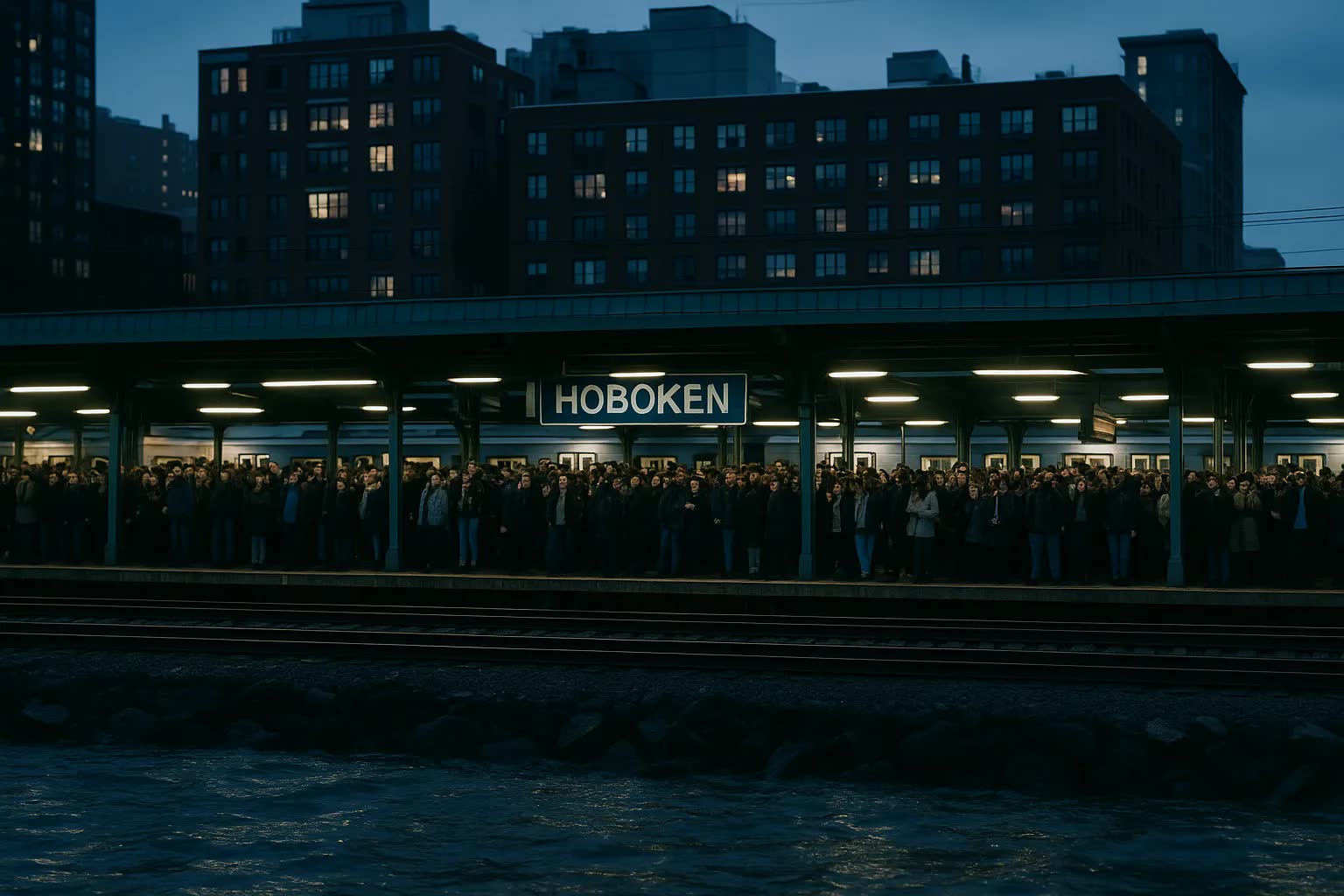
NEW YORK — Commuters descending from Hudson County on to Penn Station and the PATH platforms at Christopher Street and 33rd Street have begun demanding something unprecedented: a formal, voting seat on the NJ Transit board to give riders a direct say as delays, cancellations and crowding ripple through Midtown Manhattan during peak hours.
The push has gathered steam after a string of trouble on weekday mornings and evenings that left thousands stranded outside Hoboken Terminal, spilling onto the pedestrian plaza at Exchange Place in Jersey City and clogging buses along 14th Street and Washington Street. Riders say the disruptions are no longer occasional snags but sustained service failures that make the difference between arriving on time and missing work shifts in Chelsea and Hell's Kitchen or appointments on the West Side.
Advocacy groups rooted in Hudson County, including the Hudson Commuter Alliance and the Jersey City Riders Union, have organized town halls in Journal Square and public assemblies on the steps of Hoboken City Hall to press the case for representation. "We ride these trains to get to our jobs, to see our kids, to pay rent in a system that currently has no seat for the people who use it every day," said Maria Delgado, co-director of the Hudson Commuter Alliance, at a recent rally outside the PATH station at Grove Street.
Riders want a voting seat, not an advisory committee, arguing that the board’s current structure — dominated by gubernatorial appointees and agency insiders — leaves scarce room for everyday riders, many of whom are immigrants and shift workers from Hudson County neighborhoods such as Bergen-Lafayette, Marion and the Heights. Advocates say that even when local elected officials convey rider concerns, the feedback is filtered through political and technical priorities rather than routed directly by someone who depends on the service.
The numbers riders cite underscore their case: NJ Transit carries an estimated 335,000 weekday rail passengers systemwide, with roughly 92,000 of those trips originating in Hudson County stations, according to figures compiled by local advocacy groups and checked against agency data. They say on-time performance for peak-period weekday trains slipped to about 76% in the third quarter of 2025, cancellations rose by 48% year over year in November, and the agency received more than 14,800 formal complaints from riders through October — a 37% increase from the same period in 2024. Advocates note that Hudson County accounts for nearly 28% of weekday boardings but has had no rider-elected voting member on the board.
The demand for a voting seat has drawn broad support from tenant and labor groups that say unreliable service disproportionately harms low-wage and immigrant workers who can least afford late arrivals and missed shifts. "When a train is canceled at 7 a.m., a food-service worker from Journal Square can lose a day’s wages and the chance to feed their family," said Jamal Singh, president of the Journal Square Tenants Association. "Giving riders an actual vote on the board is not a luxury; it's accountability tied to survival for many in our neighborhoods."
NJ Transit officials acknowledged persistent problems but stopped short of conceding that a rider voting seat is the solution. A spokesperson for the agency, in a written statement, said capital investments in signal upgrades, additional cars and crew recruitment are under way and that officials welcome community input as they plan long-term improvements. Still, some within the planning ranks say the lack of organized rider input has hampered operational decision-making. "Planners and crews on the ground feel sidelined when decisions are made without systematic rider feedback," said a senior MTA planner who requested anonymity to speak candidly about internal operations.
The campaign is taking a multi-pronged approach. County commissioners in Hudson have passed nonbinding resolutions asking the state to authorize a rider-seat pilot; Jersey City and Hoboken councils have urged Trenton lawmakers to explore legislative fixes; and civil rights organizations are framing the debate around equitable participation, noting that immigrant communities in the county face language barriers and job precarity that make reliable transit a civil-rights issue. Advocates have floated several governance models, from a single rider-elected voting member to a rotating bloc of seats representing different county corridors.
Opponents warn that adding a voting rider to the board could politicize technical decisions and complicate fiduciary responsibilities. "Boards must balance expertise, regional representation and legal constraints. It is not a governance shortcut to simply add a seat and assume problems will be solved," said Eleanor Bryson, a long-serving NJ Transit board member who represents northern municipal interests. Agency lawyers have also flagged statutory hurdles that would require enabling legislation in Trenton and possible revisions to procurement and oversight rules.
For now, proponents are preparing for what could be a decisive winter of hearings and public pressure: a state legislative committee has scheduled a preliminary public hearing in Newark on Jan. 15, 2026, and Hudson County organizers plan a large rally at Hoboken Terminal the week before to ensure steady testimony. Whether the campaign wins a formal vote on the board, riders and civil-rights advocates say, the effort itself may reframe how northern New Jersey’s commuter voice is heard in the months leading up to the 2026 legislative session and beyond, testing whether governance can be reshaped to match the needs of the people who rely on the rails every day.