A Clean-Energy Training Program Aims to Turn Retrofits Into Careers
As buildings race to cut emissions under the city's climate law, a workforce initiative is trying to funnel New Yorkers into the jobs the mandate creates.
By Olivia Park · July 23, 2026 · 5 min read
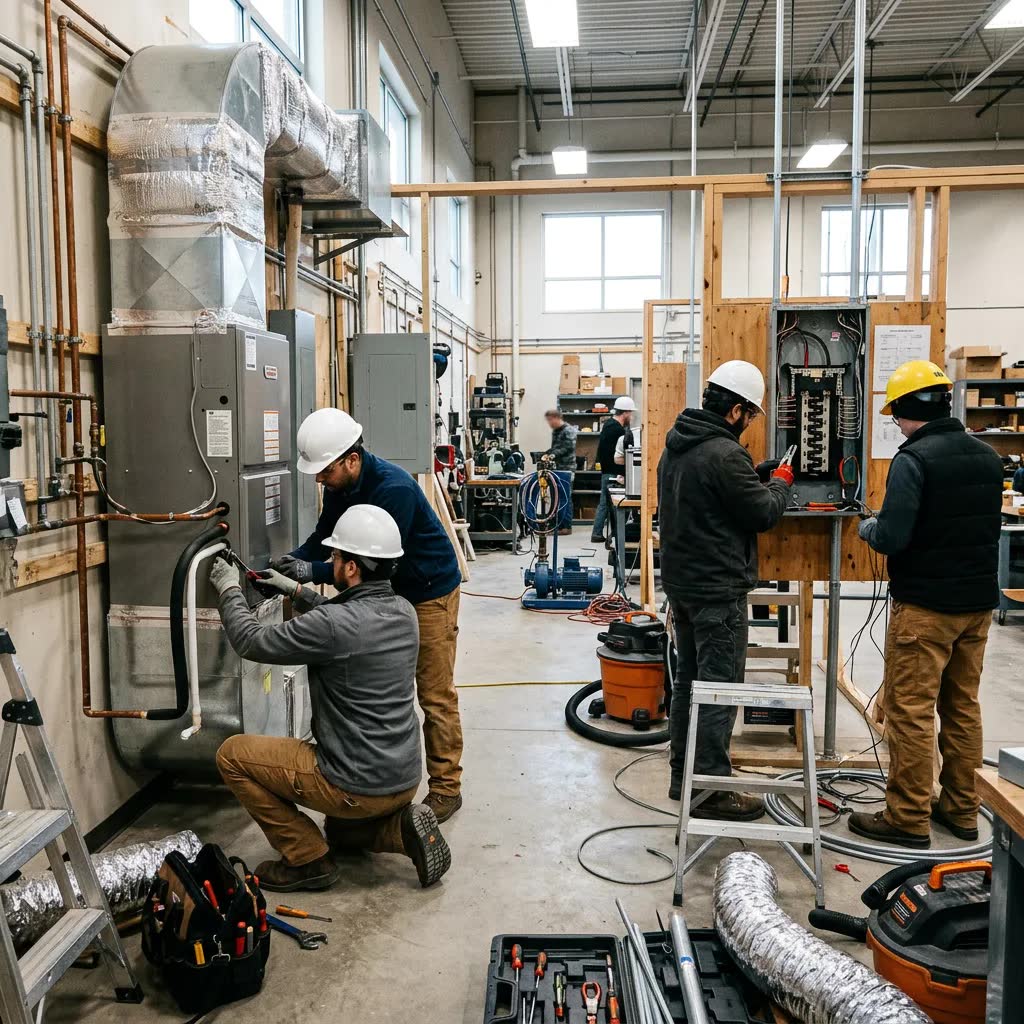
NEW YORK — With thousands of large buildings under pressure to slash their carbon emissions to comply with the city's landmark climate law, a growing set of workforce-training programs is racing to prepare New Yorkers for the retrofit jobs the mandate is expected to generate. Backers say the effort could turn an environmental requirement into a pipeline of stable, well-paying careers, if the training can keep pace with demand.
The programs focus on the skilled trades needed to make older buildings more efficient, including installing heat pumps, upgrading electrical systems, sealing building envelopes, and managing the sensors and controls that optimize energy use. Instructors said the work blends traditional construction skills with newer technical knowledge, requiring training that many workers have not previously had access to. Several programs partner with unions and community organizations to recruit participants.
Building owners, meanwhile, have warned that a shortage of qualified workers could slow the pace of retrofits and drive up costs as demand for specialized labor climbs. "You cannot decarbonize a building without people who know how," one property manager said, arguing that the workforce question is as important to meeting climate targets as the technology itself. Industry groups have pressed for expanded training capacity to avoid bottlenecks.
For participants, the programs offer a potential path into careers with room for advancement, and organizers said they had prioritized recruiting from neighborhoods with high unemployment and from workers displaced by other industries. "This is about making sure the people who live here get the jobs that fixing here creates," one program director said, emphasizing efforts to remove barriers such as tuition costs and scheduling conflicts.
Skeptics questioned whether the number of trainees would match the scale of the need, and whether the jobs would prove as durable and well-compensated as advocates promise. Much depends, they said, on how aggressively the climate law is enforced and on whether financing for retrofits materializes at scale. A weak enforcement regime, they warned, could leave trained workers without enough work.
City officials said they viewed the training programs as central to both the climate agenda and the broader economic strategy, framing the retrofit push as a rare chance to align environmental goals with job creation. "The buildings have to change either way," one official said. "The question is whether New Yorkers are the ones who get paid to change them." Officials said they would track placement rates to gauge the programs' success.