City Opens Record Number of Cooling Centers as July Heat Emergency Grips Five Boroughs
With the heat index climbing past 104 degrees for a third straight day, the Health Department activated more than 600 cooling sites and dispatched wellness teams to check on vulnerable residents.
By Grace Ng · July 6, 2026 · 5 min read
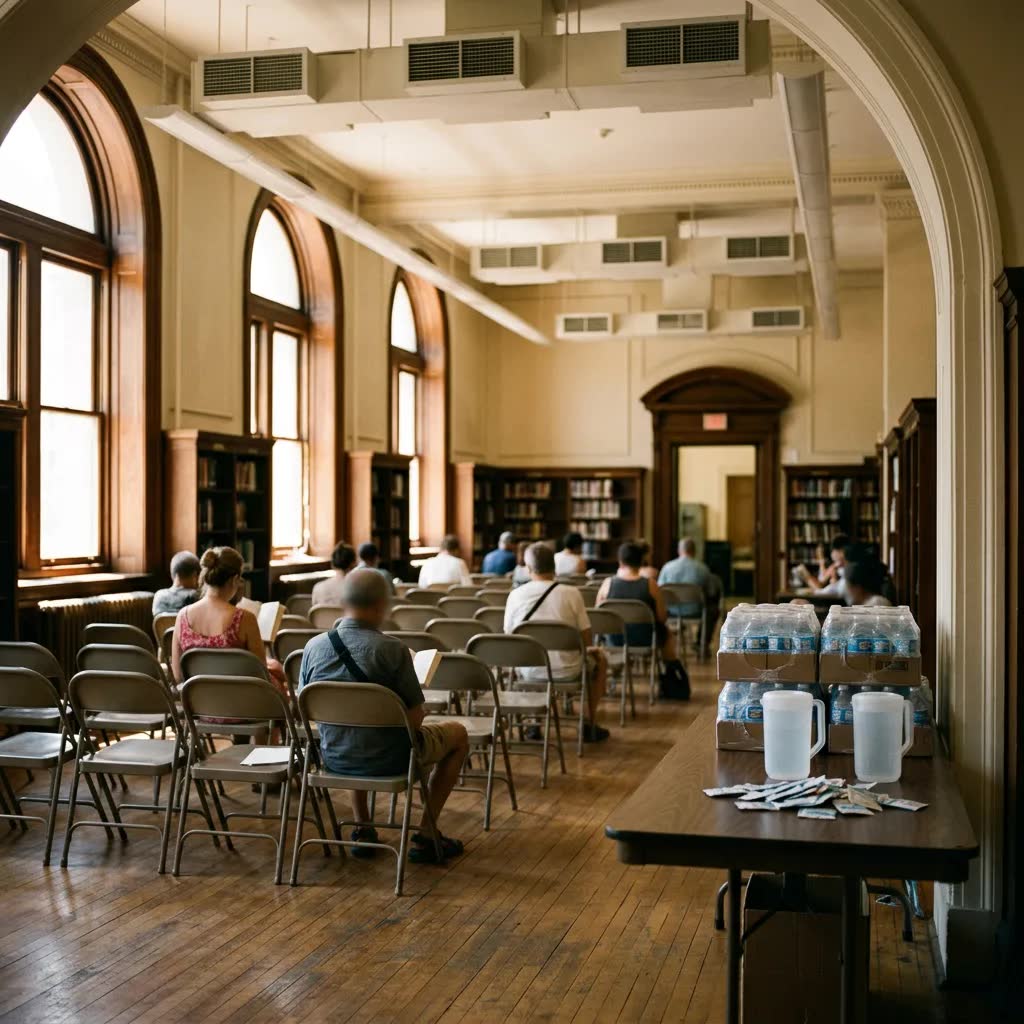
NEW YORK — The city entered its third consecutive day of extreme heat on Monday as the Health Department activated 612 cooling centers across the five boroughs, the largest single-day network it has opened in a decade. Libraries, senior centers, and recreation buildings threw open their doors to residents seeking relief, while air-conditioned buses idled at several outdoor transit hubs where riders had begun to wilt in the midday sun. Officials warned that the heat index, a measure combining temperature and humidity, would push past 104 degrees through Wednesday.
The Health Department's chief epidemiologist, Dr. Marguerite Delacroix, said the agency had shifted from passive advisories to active outreach, sending roughly 40 two-person wellness teams into neighborhoods with high concentrations of older residents living alone. "Heat is the quiet killer among weather emergencies — it doesn't leave the dramatic footage that a flood does, but it takes more lives," Delacroix said at a morning briefing. She estimated that door-knocking teams had already logged more than 3,000 in-person checks by noon on Monday.
The city's own modeling attributes an average of 350 excess deaths each summer to heat-related causes, with the overwhelming majority occurring indoors in apartments without functioning air-conditioning. Roughly one in ten city households still lacks a working AC unit, according to a 2025 housing survey, a gap that falls heaviest on low-income tenants and in older walk-up buildings across the outer boroughs. A revived subsidy program is offering qualifying households up to $850 toward a window unit and a summer electricity credit.
At a cooling center inside a Bronx public library, staff had rearranged the reading room into rows of chairs beneath the vents, and a volunteer handed out chilled water and electrolyte packets near the entrance. A branch supervisor said foot traffic had roughly tripled since Saturday, with many visitors staying the full afternoon rather than their usual half-hour. "People come in for the books and stay for the air," she said. "We'd rather they be here than sweating it out at home."
Mayor Zohran Mamdani, touring a cooling site in Queens, framed the heat response as a test of the city's basic obligations. "Nobody in the wealthiest city on earth should have to choose between paying an electric bill and staying safe in their own home," he said. He announced that overnight cooling hours would be extended at 25 sites through the duration of the emergency, calling the round-the-clock coverage "a first step toward treating heat like the public health crisis it is."
Public health researchers say the frequency of these emergencies is itself the story. The city has now recorded more days above 95 degrees in the first week of July than in any comparable stretch since record-keeping began, and long-range forecasts suggest little relief before mid-month. Delacroix urged residents to check on neighbors, avoid strenuous outdoor activity between noon and 6 p.m., and recognize the early signs of heat exhaustion — dizziness, nausea, and a headache that will not fade. "The body gives you warnings," she said. "The trick is listening before it's too late."