City Pushes Public Broadband Into Neighborhoods the Market Skipped
A municipal fiber initiative is wiring public-housing developments and commercial strips that private carriers long treated as unprofitable.
By Amina El-Sayed · July 29, 2026 · 5 min read
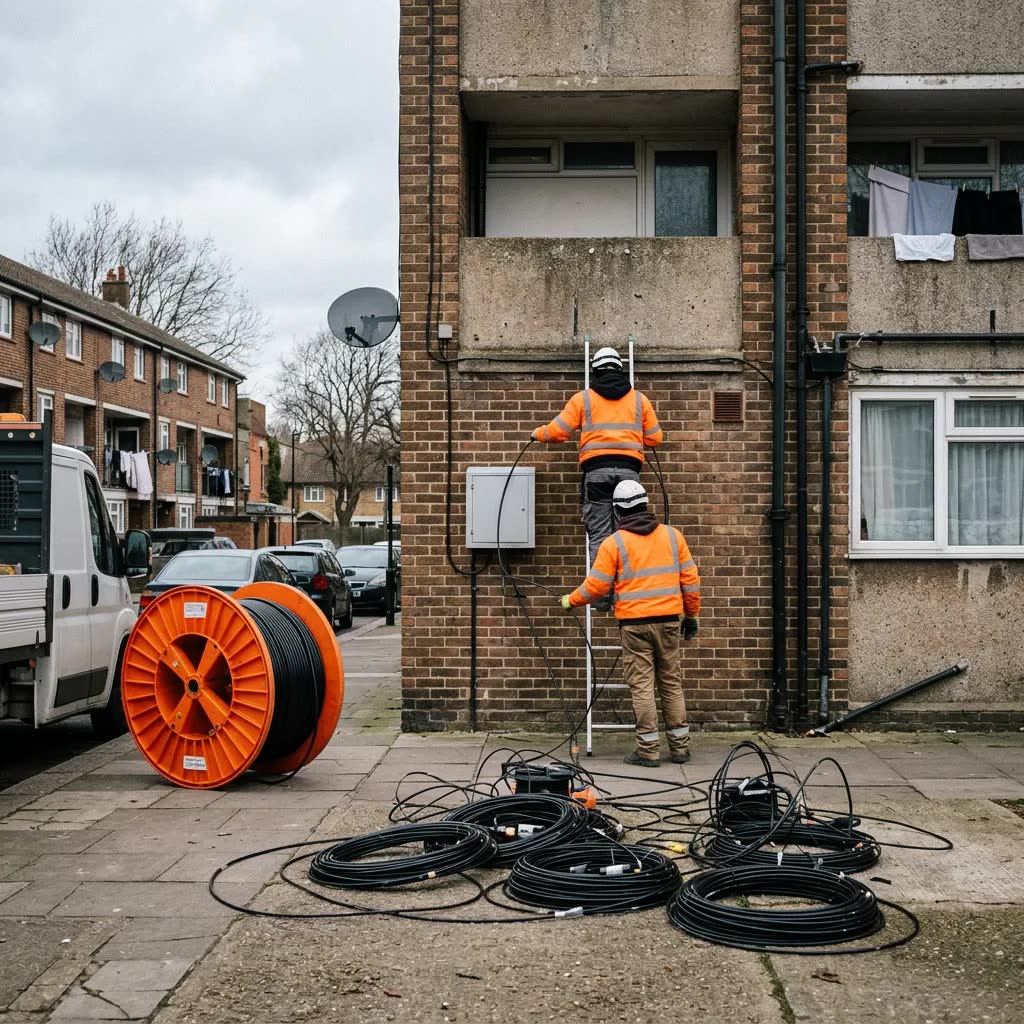
NEW YORK — Crews have begun stringing fiber-optic cable through a cluster of public-housing developments and low-income neighborhoods across the city as part of a municipal broadband initiative aimed at closing a stubborn digital divide. The effort targets areas where private internet providers have historically offered slow service, high prices, or nothing at all, leaving households to rely on cellphone data or aging connections that buckle under modern demands.
The initiative rests on a simple diagnosis: for years, the neighborhoods with the fewest options were the ones private carriers found least profitable to serve, a market failure that left thousands of families on the wrong side of the internet. "When homework, job applications, and telehealth all live online, no broadband means no shot," one city technology official said. The program aims to deliver high-speed service at prices well below prevailing market rates, subsidized by public investment.
The pandemic years, when schooling and work abruptly moved online, laid bare how many New Yorkers lacked reliable internet, and the initiative traces its political momentum to that reckoning. Officials describe broadband as basic infrastructure, on par with water and power, rather than a discretionary consumer product. That framing has guided the decision to treat the network as a public asset and to prioritize the most underserved buildings first.
Private telecom companies have watched the effort warily. Industry representatives argue that public networks can distort the market and that the city would be better served by subsidizing existing carriers to extend their lines. "Governments don't have a great track record running networks," one industry figure said, warning that municipal systems risk becoming expensive to maintain once the initial grant money runs out. City officials counter that decades of private inaction are precisely why the public sector had to step in.
Early results have been modest but encouraging, officials say, with the first connected buildings reporting strong sign-up rates and residents describing a tangible difference. "My kids can both be on a video call for school at the same time now," one tenant in a newly wired development said. "Before, we were rationing the internet like it was groceries." The city said it would publish adoption and speed data as the buildout progresses.
The longer-term challenge is sustainability: keeping the network maintained and upgraded after the initial construction is finished and the grants are spent. Independent analysts said the program's fate would hinge on whether the city can operate the network efficiently and keep subscriptions affordable without perpetual subsidy. "The ribbon-cutting is the easy part," one analyst said. "The real test is what this looks like in five years."