NYC Reports First Human Case of West Nile Virus This Year
NEW YORK, Aug. 19, 2026 — New York City has confirmed its first human case of West Nile virus in 2026 as health officials report increased virus activity in mosquitoes across all five boroughs.
By NYDailyWatch Staff · August 19, 2026 · 2 min read
NEW YORK, Aug. 19, 2026 — New York City has confirmed its first human case of West Nile virus in 2026 as health officials report increased virus activity in mosquitoes across all five boroughs.
The New York City Department of Health and Mental Hygiene announced Wednesday that a city resident contracted West Nile virus after spending time outdoors in New York City as well as several locations outside the city. Officials did not identify where the person was most likely infected.
The case comes during the peak of mosquito season, which typically runs from June through October, with West Nile virus activity generally highest in August and September. The virus is transmitted to humans through the bite of an infected mosquito and does not spread from person to person.
Health officials say West Nile virus has already been detected in mosquitoes across all five boroughs this year. More than 1,000 mosquito pools have tested positive for the virus citywide, with the first positive samples detected on June 16. The Health Department said the number of positive mosquito pools is nearly twice the level seen last year.
The department has stepped up mosquito surveillance and control efforts in response. Since July, the city has carried out eight targeted mosquito-control operations in neighborhoods where West Nile-positive mosquitoes were detected. Officials say those treatments typically reduce adult mosquito populations by about 70 percent and positive mosquito pools by more than 85 percent.
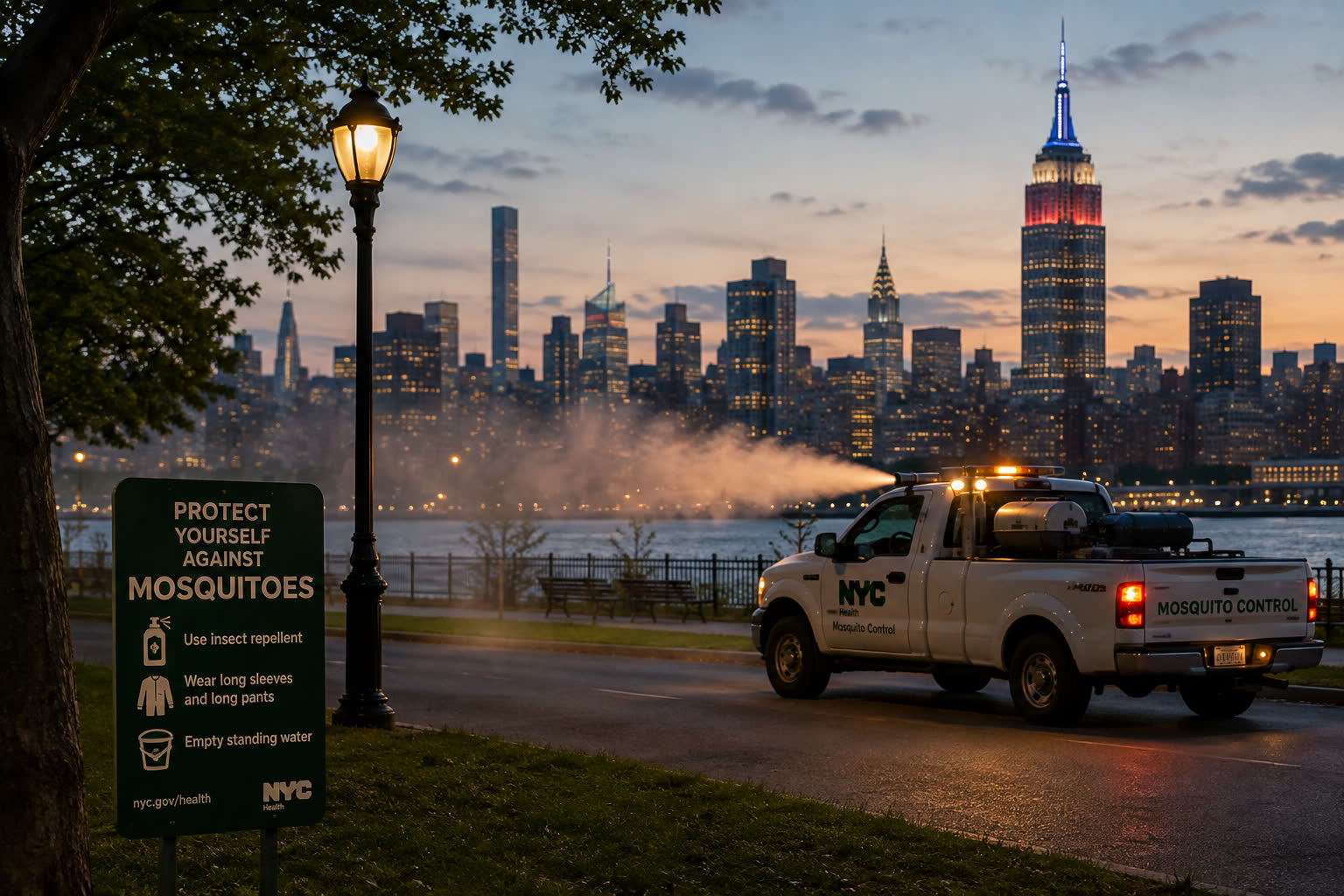
Additional mosquito spraying was scheduled Wednesday night in several Brooklyn neighborhoods, including Bay Ridge, Bensonhurst, Canarsie, Coney Island, East Flatbush, East New York, Marine Park and Sheepshead Bay. The city uses truck-based spraying in residential areas and parks when surveillance indicates an elevated public health risk.
“West Nile virus is spread by mosquito bites and cannot spread from person to person,” NYC Health Commissioner Dr. Alister F. Martin said, urging New Yorkers to use insect repellent, limit exposure around dawn and dusk, and remove standing water around their homes.
Most people infected with West Nile virus do not develop symptoms. Some may experience fever, headache, muscle aches, rash and fatigue. About one in 150 infected people can develop West Nile neuroinvasive disease, a potentially serious illness affecting the brain and spinal cord. Older adults and people with weakened immune systems face a higher risk of severe illness.
Nationally, 222 human cases of West Nile virus have been reported so far this year, according to the Centers for Disease Control and Prevention, with most cases reported in Arizona, Texas and California.
West Nile virus was first detected in New York more than 25 years ago and has since become a seasonal concern in the city. Health officials are urging residents to use EPA-registered insect repellents, wear clothing that covers exposed skin and empty standing water from containers such as buckets, flowerpots and birdbaths at least once a week.