In a Gowanus Warehouse, the Audience Is Told to Wander — and Most of Them Do
An immersive theater production sprawling across a converted warehouse lets ticketholders roam three floors of interconnected scenes, choosing their own path through the story.
By Priya Nair · July 24, 2026 · 5 min read
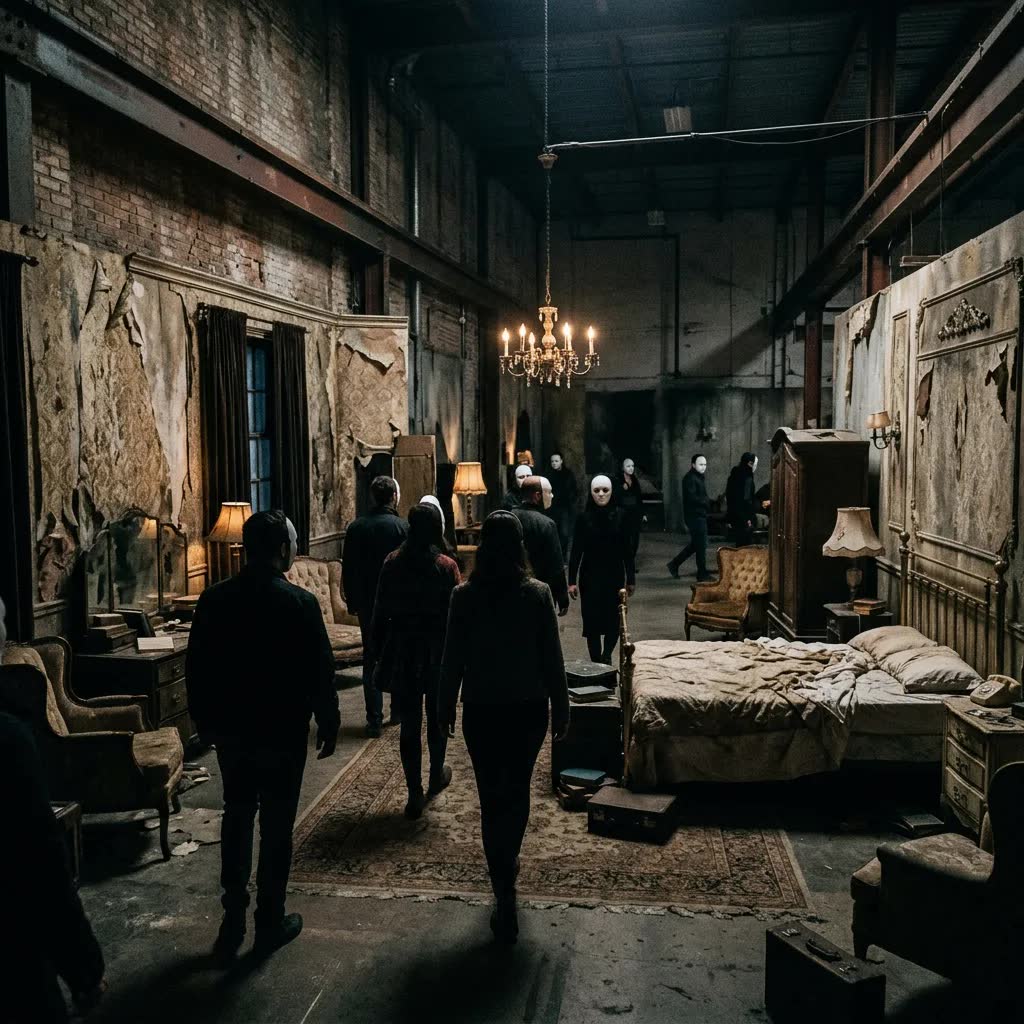
NEW YORK — There is no aisle, no assigned seat, and no comfortable convention to fall back on. When the doors open on the new immersive production filling a converted warehouse in Gowanus, the audience is handed a mask, told they may go anywhere they like, and then, disconcertingly, left to fend for themselves. Over the following ninety minutes, ticketholders wander three floors of meticulously dressed rooms while the show's story unfolds around them in fragments, none of which any single viewer can see in full.
The production belongs to a genre that has waxed and waned in the city for years: immersive, promenade-style theater that dissolves the boundary between spectator and stage. This staging is unusually sprawling, occupying a warehouse whose rooms have been transformed into a decaying hotel, a flooded basement, and a rooftop garden, each hosting scenes that repeat and interlock on a hidden clock. Audience members choose whether to follow a particular performer, linger in an empty room to read the props, or simply lose themselves.
"The show is different for every single person who walks through it, and that's not a bug, it's the entire idea," the director said. "You might spend the whole night following one character's heartbreak and never even know there was a murder happening two floors up. Two people can leave having seen completely different shows. Then they argue about it on the train home, and that argument is part of it too." The design rewards repeat visits, and the producers are betting a meaningful share of the audience will come back to chase the scenes they missed.
Immersive work of this kind is fiendishly expensive to mount, requiring a large cast performing simultaneously across many rooms, elaborate set construction, and a security and staffing operation to keep hundreds of roaming, masked strangers safe in a dark building. The producers declined to detail the budget but acknowledged it dwarfed that of a conventional off-Broadway play, a gamble they are betting the novelty and word of mouth will repay.
The form is not for everyone, and the production makes little effort to accommodate the reluctant. Audience members uneasy with crowds, darkness, or the pressure of constant choice can find the experience more stressful than transporting, and the show's refusal to hold anyone's hand has drawn some grumbling alongside the raves. The creators are unapologetic. Passivity, the director said, is the one thing the piece cannot allow.
On a recent night, the effect on the crowd was visible in the lobby afterward, where masked strangers pulled off their disguises and immediately began comparing notes, discovering with delight and occasional dismay how little of the same show they had actually witnessed. "I found a locked room and I still don't know what was in it," one attendee said, already pulling out her phone to buy a ticket for a second visit. "I have to go back. I have to know."