Parks Department Pilots Timed Entry on the High Line to Ease Weekend Crowds
A small-scale experiment will test whether reservations during peak hours can improve visitor flow without hurting local businesses.
By Zoe Kaplan · January 30, 2026 · 4 min read
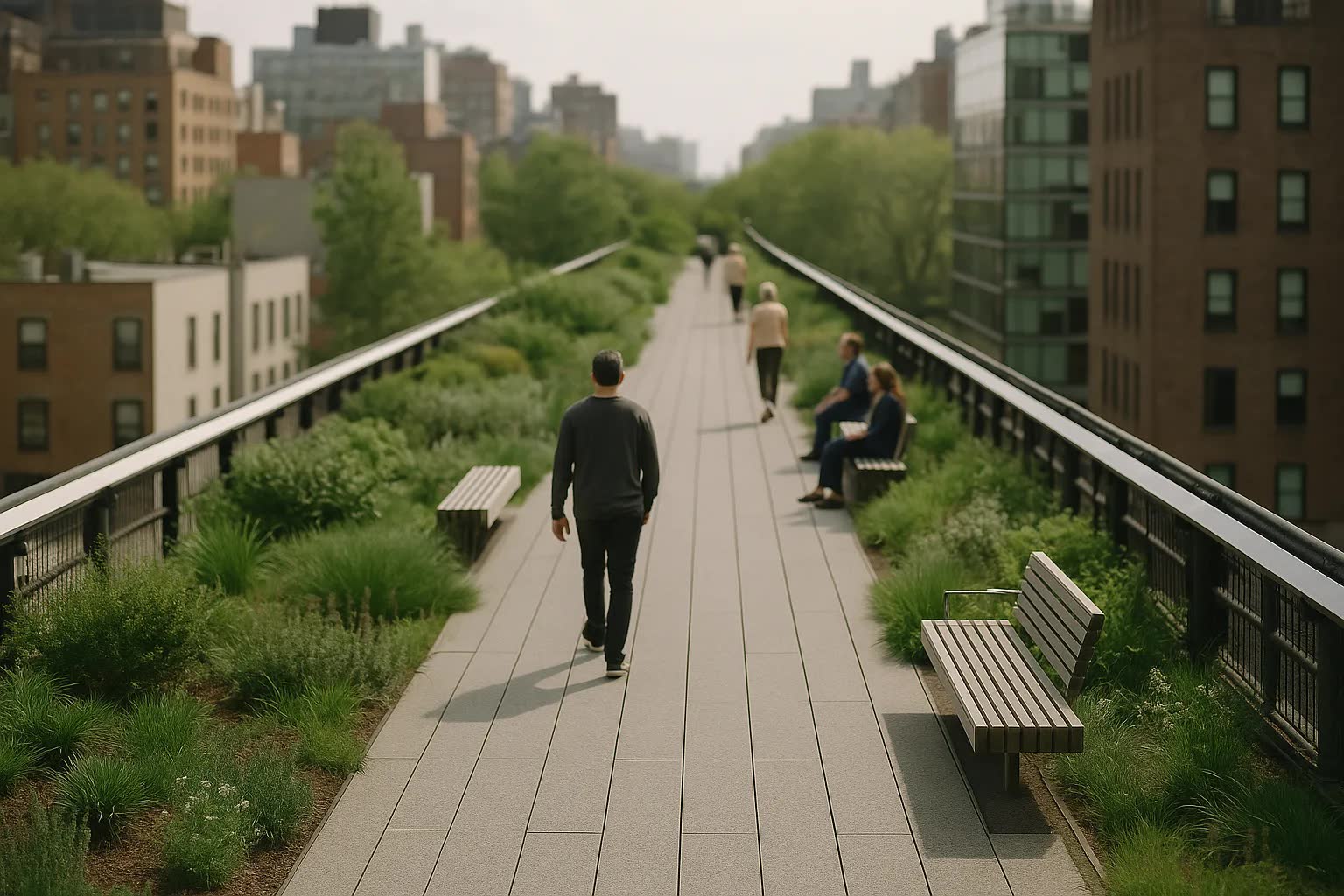
NEW YORK — The Parks Department announced Friday that it will pilot a timed-entry system on the southern stretch of the High Line on weekends this spring, a small-scale experiment aimed at easing the crush of tourists and locals that bottlenecks the elevated park between Gansevoort Street in the Meatpacking District and 14th Street in Chelsea on warm days and during festival weekends.
Under the plan unveiled by park officials, the pilot will run for eight consecutive weekends beginning March 14 and will require free reservations for visitors during peak hours — roughly 11 a.m. to 5 p.m. — while keeping off-peak access open to walk-ups. Entry will be managed in two-hour windows, with clear signage at the Gansevoort and 14th Street access points and attendants on the stairways and elevators to check QR codes. The department said some same-day walk-up passes will be available to preserve spontaneity.
"Our goal is straightforward: keep the High Line accessible while making it safer and more enjoyable for everyone who uses it," said Lena Morales, director of park programs at the Parks Department. "We tested crowd controls in other parks and this is a calibrated approach — timed entry reduces sustained congestion without closing doors to people who live nearby or can’t plan ahead," Morales said, adding that ambassadors will be trained to help visitors rather than police them.
City officials provided concrete targets for the pilot: historically, the southern High Line averages about 60,000 to 75,000 visitors on peak weekend days, with midday surges of roughly 8,000 to 10,000 people in the narrowest sections; the pilot will cap timed-entry reservations at 2,000 passes per weekend day between 11 a.m. and 5 p.m., allocated in 250-person half-hour slots, with 10 percent of capacity held for same-day walk-up distribution. Planners estimate the caps could reduce peak density by 35 to 40 percent while the Parks Department surveys visitation patterns and local business revenue during the experiment.
Local businesses in the Meatpacking District and Chelsea expressed wariness about any policy that might change foot traffic. "I worry that limiting people on the High Line will push them down into the neighborhood less often," said Marcus Davila, owner of Gansevoort Street Cafe on West 13th Street. "Our Saturday brunch depends on casual foot traffic from the park. If fewer people drift off the High Line between 1 and 4 p.m., that’s fewer customers for small places like mine."
Artists and performers who use the High Line’s edges and stair landings as unofficial stages said the timed pass scheme could alter how they find audiences. "Open, walkable space is where a lot of comedy and pop-up performance happens — impromptu shows, buskers, busier nights for small clubs on 14th Street," said Eli Rosen, artistic director of Chelsea Alley Comedy. "If the flow is controlled into couched windows, you lose that spillover that feeds micro-venues and street performers. We want the park to be safe, but also alive."
The Parks Department said it would try to blunt economic side effects by coordinating with neighborhood groups and the Meatpacking Business Alliance to advertise that parks visitors are encouraged to linger and patronize nearby shops, and by offering a limited retailer pass program that allows vendors and hospitality staff to access the park outside the general reservation windows. "We’ve been in close touch with business owners and community boards in Chelsea and the Meatpacking District," said Sanjay Patel, president of the Meatpacking Business Alliance. "This pilot includes measures to monitor any sales impacts and to be nimble in response."
Operational details submitted to the local community boards show the department will deploy 28 park ambassadors and temporary signage teams on pilot weekends, supplementing existing maintenance crews. Ambassadors will be stationed at key nodes — the Gansevoort stairs, High Line at 14th Street elevator, Chelsea Market entrance areas and the 10th Avenue crossovers — scanning QR codes and answering questions. The pilot’s performance metrics include average time spent on the park, queue wait times, dwell time near small businesses and a post-visit satisfaction survey administered to a sample of 5,000 visitors.
Not everyone opposed the idea. Longtime Chelsea resident Marta Lopez, who lives on 10th Avenue near 17th Street, said she has watched weekend crowds spill off the park and onto narrow side streets. "When the High Line is jammed, people pour down into our block and there’s nowhere for children to play or walkers to pass," Lopez said. "If a measured system keeps the park more usable for residents in the middle of the day, I’m willing to try it. But it has to be fair and easy to use for people who don’t have fast internet or flexible schedules."
The Parks Department plans to present preliminary findings to the City in late May and will host three community meetings in Chelsea and the Meatpacking District during the pilot to gather feedback, Morales said. If the timed-entry experiment reduces crowding without unduly harming neighborhood commerce, officials said they could extend the program to busy holiday weekends and consider similar pilots for other managed stretches of the High Line, but any permanent change would follow a public review and an accessibility audit to ensure the elevated park remains a resource for all New Yorkers.