Perfect Forecast, Paralyzed City: Why Two Inches of Rain Still Drowns NYC
Despite an accurate warning and rainfall totals that matched the forecast, New York City was once again crippled by flash floods because the aging, easily overwhelmed sewer system is decades away from catching up to the intensity of modern downpours.
By Aspen Yang · August 21, 2026 · 4 min read
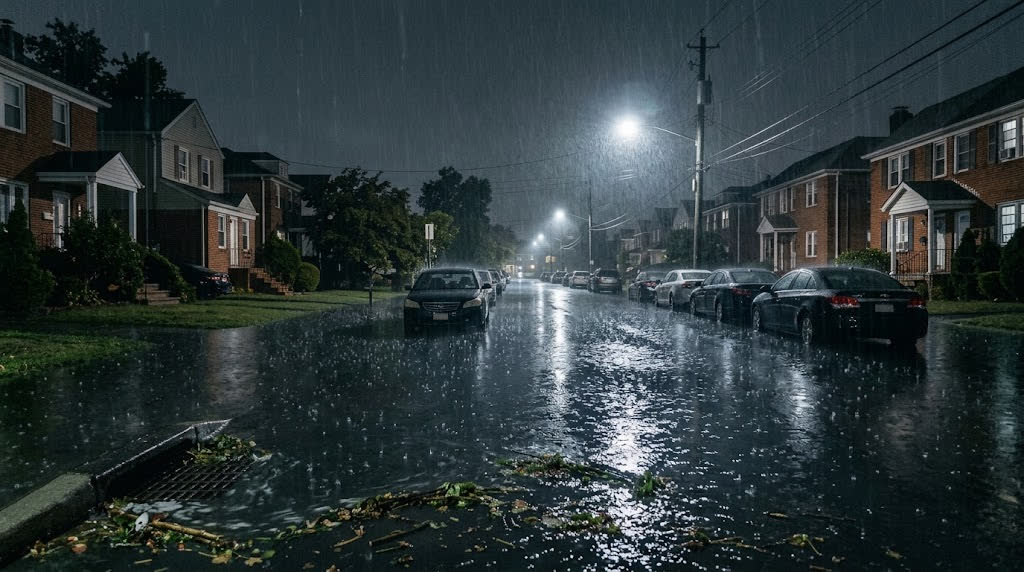
New York, August 21.—Nobody was blindsided. At 3:54 p.m. Thursday, while most of the city was still deciding whether to leave work early, the governor's office put the whole thing in writing: heavy rain across the Mid-Hudson, New York City and Long Island, 6 p.m. to 2 a.m. The Weather Service had just bumped the metro area's flash flood risk to moderate — a 40 to 70 percent chance — with 1.5 to 2.5 inches expected, local totals of 3 to 4 inches possible, and rain capable of falling at 2 to 2.5 inches an hour.
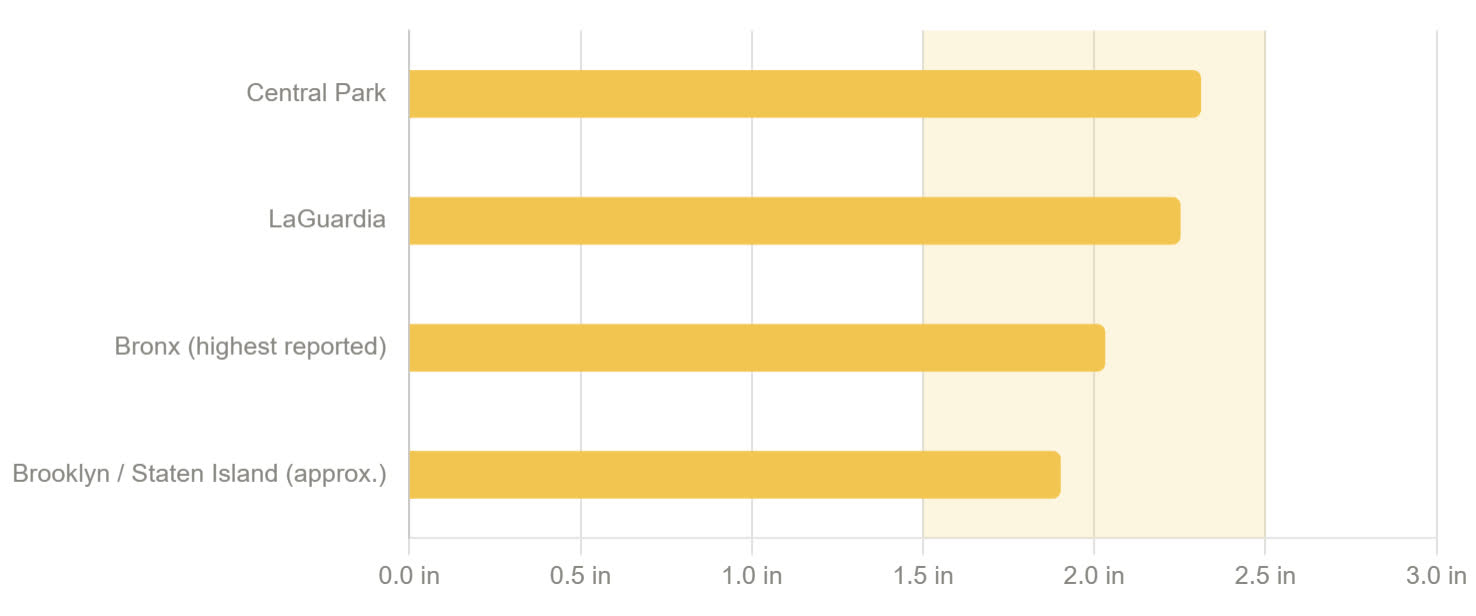
Then it rained roughly what they said it would. Central Park finished at 2.31 inches. LaGuardia, 2.25. The Bronx topped out around 2.03, and parts of Brooklyn and Staten Island came in just under 2. Not one gauge in the five boroughs hit the high end of the forecast.
It didn't matter. By a little after 7 p.m., the Brooklyn-Queens Expressway was closed in both directions at Queens Boulevard. Before 7:30, so was the Long Island Expressway at Francis Lewis Boulevard. Emergency Management was also flagging flooding on the eastbound Grand Central Parkway at 82nd Street and on the Jackie Robinson. If you were driving home through Queens, there was a stretch of the evening when the map simply ran out of options.
Above all that, the Weather Service had a tornado warning up for parts of Queens until 7:15 p.m., and a second one for Inwood, Cedarhurst and Lawrence across the Nassau line. LaGuardia stopped operating for several hours and didn't reopen until 6 a.m. Friday. By then the MTA had C service suspended while crews pumped water off the tracks near Utica Avenue. Somewhere in there, video went around of water coming down the stairs at the 137th Street station on the 1 — the ordinary, now-familiar sight of a subway entrance behaving like a storm drain.
The worst of it landed where it usually lands. Roads around 183rd Street in Hollis, Queens, went under again — the same corridor that flooded in May, and the same corridor the city has been digging up sewers beneath for years. After the May storm, the mayor's office said the administration had committed roughly $285 million to a 10-year cloudburst program and pointed flooded households to reportdamage.nyc.gov and 311 for pump-outs and sewer backups. DEP's own stormwater flood map already shades those blocks as susceptible to moderate stormwater flooding. The city knew. The map knew. The block flooded anyway.
Here's the number that explains most of it. MTA Chair Janno Lieber has put the city's storm sewer capacity at roughly an inch and a half to an inch and three-quarters per hour — past that, the system backs up and the water finds the subway. That's a rate, not a nightly total, which is why 2.31 inches spread over eight hours is a wet commute and the same 2.31 inches in forty minutes is a flooded basement. Hourly rates for Thursday's storm, borough by borough, haven't been published.
The money is moving, just not at the speed of the weather. In March the city put $108 million toward replacing more than 6,700 catch basins over the next decade. In April came a $95 million cloudburst project in Homecrest, Brooklyn. In July, $43 million and 69 new staff went to the Bureau of Coastal Resilience — which is coastal work, a different problem from the water that comes down. The MTA is rebuilding 21 pump rooms inside its $68 billion capital program and says raised vents are in at 21 stations. Rebuild by Design and the Waterfront Alliance ran the arithmetic last month: at DEP's pace of about $1 billion a year, the 80-plus stormwater priority areas the agency has already identified would take some 30 years, and a full rebuild would run past $250 billion.
DEP hasn't said whether it found the Hollis sewers clear Thursday night. The agency hasn't released a borough breakdown of basement flooding and sewer backup complaints, or a completion date for the southeast Queens drainage contracts still under construction. City Hall has extended buyouts to coastal blocks and has not extended them inland. The forecast showed up on time, to the inch. The drainage didn't.