Phone-Based Building Keys Spread as Renters Ask for a Reliable Backup
More New York apartment buildings are replacing or supplementing fobs with mobile entry systems. Residents and security specialists say convenience depends on strong privacy rules and a way inside when batteries die.
By Evan Liu · August 24, 2026 · 5 min read
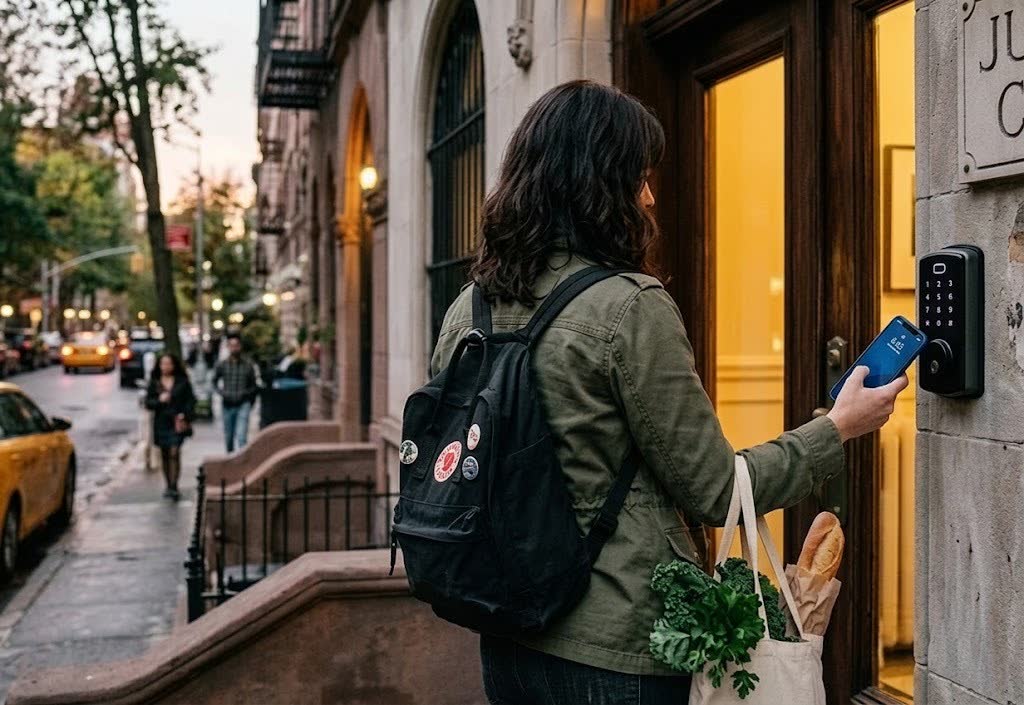
NEW YORK — The familiar apartment key is getting a digital companion in a growing number of New York buildings, where residents can now unlock lobby doors, elevators and package rooms with a phone. Property managers describe mobile credentials as easier to issue and cancel than plastic fobs, while renters appreciate being able to send a temporary pass to a caregiver or visiting relative. Yet the shift has brought a basic concern to the front desk: What happens when a phone is lost, drained or disconnected?
At Juniper Court, a fictional 112-unit rental building in Crown Heights, tenants began using an app-based entry system this month after a summer renovation. The building kept its metal apartment keys and installed a keypad at the main entrance as a backup. Resident Amara Velez said the phone option is useful when she is carrying groceries, but she has memorized the keypad code because her older device sometimes shuts down unexpectedly. "Convenience only counts if I can still get home at midnight," she said.
Mobile access systems generally use a short-range wireless signal rather than a live internet connection at the moment a door opens. A building administrator sends an encrypted credential to a resident's device, and a reader checks whether that credential is valid. Some systems can place the pass in a phone's digital wallet, while others require a dedicated app. The differences matter when evaluating whether a pass works in airplane mode, after a software update or when a device has very little power.
The fictional New York Housing Technology Collaborative surveyed 74 rental and condominium properties this summer and found that 29 offered some form of phone entry, up from 18 in a similar review last year. The sample was not designed to represent every city building, but director Priya Sen said it captures a clear direction among properties replacing aging intercoms. New construction is adopting the systems fastest, she said, while older walk-ups face greater costs because wiring, locks and fire-safety hardware may need to be upgraded together.
Residents should not be required to own a recent smartphone to enter their homes, tenant advocates say. A well-designed installation should include at least one no-cost alternative, such as a fob, physical key or personal keypad code, and a round-the-clock process for restoring access. Juniper Court manager Daniel Ko said tenants there may request two free fobs per household. He said the building also keeps a battery-powered reader and a conventional keyed cylinder available if the main system loses power.
Privacy is another consideration because access logs can reveal when a credential opened a common door. Doorway Labs, the fictional vendor at Juniper Court, said its standard contract limits logs to security and maintenance uses, deletes routine records after 30 days and prevents property staff from tracking a phone's location. Digital security consultant Renée Okafor said residents should receive those rules before enrollment, along with an explanation of who can review records and how they can challenge an incorrect entry.
The systems can make legitimate temporary access simpler. Parents can schedule a pass for a babysitter, and residents can create a short window for a home health aide without leaving a key under a mat. Delivery access is more complicated: Security specialists recommend passes tied to a specific entrance and brief time period rather than broad codes shared among multiple couriers. They also advise residents to revoke a guest credential instead of assuming it has expired.
For renters considering a phone key, the most useful questions are practical ones. Does the credential work without cellular service? Is there a charge for a fob? Can household members use different types of phones? How quickly can access be restored after a device is replaced? A demonstration at the actual building entrance can expose problems that are not apparent in a brochure, particularly in basements, vestibules and elevator banks where wireless reception can be inconsistent.
Juniper Court plans to evaluate its system after 90 days by reviewing lockouts, help-desk requests and the number of residents choosing fobs over phones. Ko said no resident will lose the physical alternatives during that review. For Velez, that promise is the line between an optional gadget and a mandatory obstacle. She uses the app most days, keeps a key in her bag and views the combination as a sensible New York compromise: one new way through the door, without removing the old one.