Pierogi Renaissance: Sunset Park's Eastern European Revival
New bakeries and revived family recipes are positioning pierogi as both a comfort staple and a crossover street-food item.
By Sofia Martell · March 15, 2026 · 4 min read
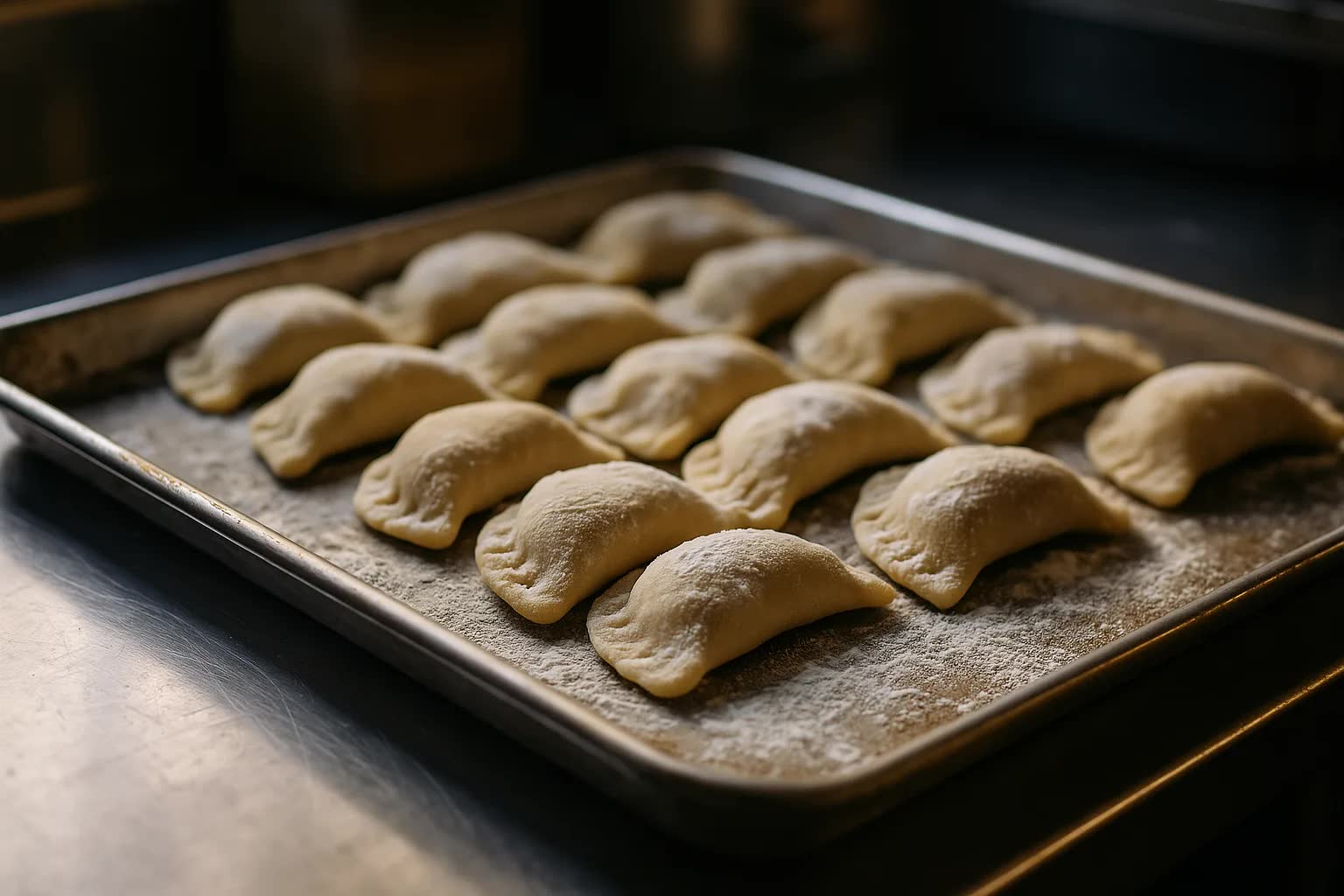
NEW YORK — On a stretch of Fifth Avenue that hums with the neighborhood's multilingual bustle, a pierogi renaissance is underway in Sunset Park, Brooklyn, where new bakeries and pop-up stands are turning a quietly enduring immigrant comfort food into a citywide culinary conversation; what was long consigned to church basements and family kitchens is now both a late-night solace for shift workers and a crossover street-food item sampled by tech workers and tourists at nearby Industry City.
For decades the Polish and Eastern European communities that clustered along Fifth and Sixth avenues between 36th and 50th streets maintained their culinary traditions in small storefronts — delicatessens with hand-lettered windows, parish halls with pierogi-making nights — even as neighborhoods around them changed. Many of those establishments thinned during the 2000s and 2010s, but a new wave of second- and third-generation cooks, along with migrants from Ukraine, Romania and Bulgaria, have started reviving family recipes and reimagining fillings to match modern palates.
One of the most visible examples sits on the corner of Fifth Avenue and 43rd Street. Zosia's Pierogi, opened last spring by Elena Kowalczyk, is a compact bakery with a steam window where customers can watch rounds of dough being pinched and scored. Kowalczyk, whose grandparents ran a bakery in the neighborhood for decades, said the new business is about more than nostalgia. "We wanted to make what my grandmother made but also make it easy to eat on the go," she said. "Pierogi are comfort, but they can be city food, too."
Across the avenue, at a converted warehouse near Industry City, chefs are taking those pinched pockets in unexpected directions. Lukas Marek, culinary director at the Pierogi Lab, a small test kitchen inside the food hall, describes an evolving menu that moves from sour-cream-and-potato basics to smoked salmon-and-dill, kimchi-and-pork and even dessert pierogi filled with ricotta and lemon curd. "People come for the familiar texture and stay for the flavor surprises," Marek said. "If you can fold a good dough, you can fold any idea into it."
The shift is measurable. Between January 2024 and February 2026, at least eight new Eastern European bakeries and six pierogi-focused pop-ups opened within a two-mile radius of the Fifth Avenue corridor in Sunset Park and adjacent Bay Ridge and Greenwood Heights; average monthly pierogi sales per shop rose from about 350 pieces in 2023 to roughly 1,400 in 2025, and foot traffic along the block between 41st and 45th streets increased an estimated 22 percent year over year, according to a count provided by an independent local market researcher hired by a neighborhood business alliance.
Community rituals remain central. On Sundays the stretch by Sunset Park's greenest block becomes an informal marketplace where churches, social clubs and new vendors set up folding tables. St. Stanislaus Parish, which holds a pierogi festival in September, reports waiting lists for booth space this year. At a recent block party near 46th Street, long tables were piled with both traditional fillings — sauerkraut and mushroom, farmer's cheese — and hybrid versions that drew lines into the evening, a sign that the food is serving as a bridge across generations.
Part of the revival is logistical: better supply chains and local sourcing make it viable for small producers to scale. "We buy quark and smetana from a co-op that works with farms in the Hudson Valley," said Marta Nowak, procurement manager at Nowa Pirogi, a wholesale supplier that delivers to restaurants and pop-ups across Brooklyn. "Using local dairy and seasonal produce lets us keep costs down and quality up, while supporting regional agriculture." Nowak said that switching to regional suppliers saved the company about 12 percent on ingredient costs last year while shortening delivery times.
The commercial success has drawn attention — and some friction. Industry City’s food hall director, Diego Alvarez, said the complex has worked to incorporate pierogi vendors without displacing long-standing neighborhood businesses. "Our goal is to amplify local entrepreneurs, not replace them," Alvarez said. "We offer subsidized stall rates for first-time restaurateurs and mentorship on retail and licensing, because a sustainably growing food scene needs roots in the community." Despite that, some small business owners worry about rising rents and the visibility gap between polished food halls and older, modest storefronts.
Preservationists and cultural organizers caution against losing the social fabrics that gave rise to the dishes. "Pierogi are not just a product to be branded; they are a way families mark time together," said Aneta Bogdan, president of the Sunset Park Cultural Conservancy. "When food becomes a trend, the risk is that the people who carried it through hard years are sidelined. We want innovation, but we also want respect for history — for the elders who taught those recipes, for the parish kitchens and the mutual-aid networks." Bogdan's group is compiling an oral-culinary archive and advocating for affordable kitchen space for legacy cooks.
The next year will be telling. Organizers are planning a boroughwide pierogi festival for late summer that aims to pair elder cooks with new vendors for collaborative booths, and several Sunset Park businesses say they are preparing cookbooks and apprenticeship programs to pass down techniques. Whether the city's appetite turns the trend into a permanent strand of local food culture or a passing craze, Sunset Park's pierogi revival has already widened the definition of who gets to claim comfort food in New York, and the neighborhood's tables look set to continue evolving in ways that keep old recipes alive while adding new ones to the canon.