Podcast Studios Are Booming in Brooklyn — Local Hosts Turn Pro
Affordable studio clusters and production services have transformed independent audio creators into small businesses.
By Malik Johnson · March 21, 2026 · 4 min read
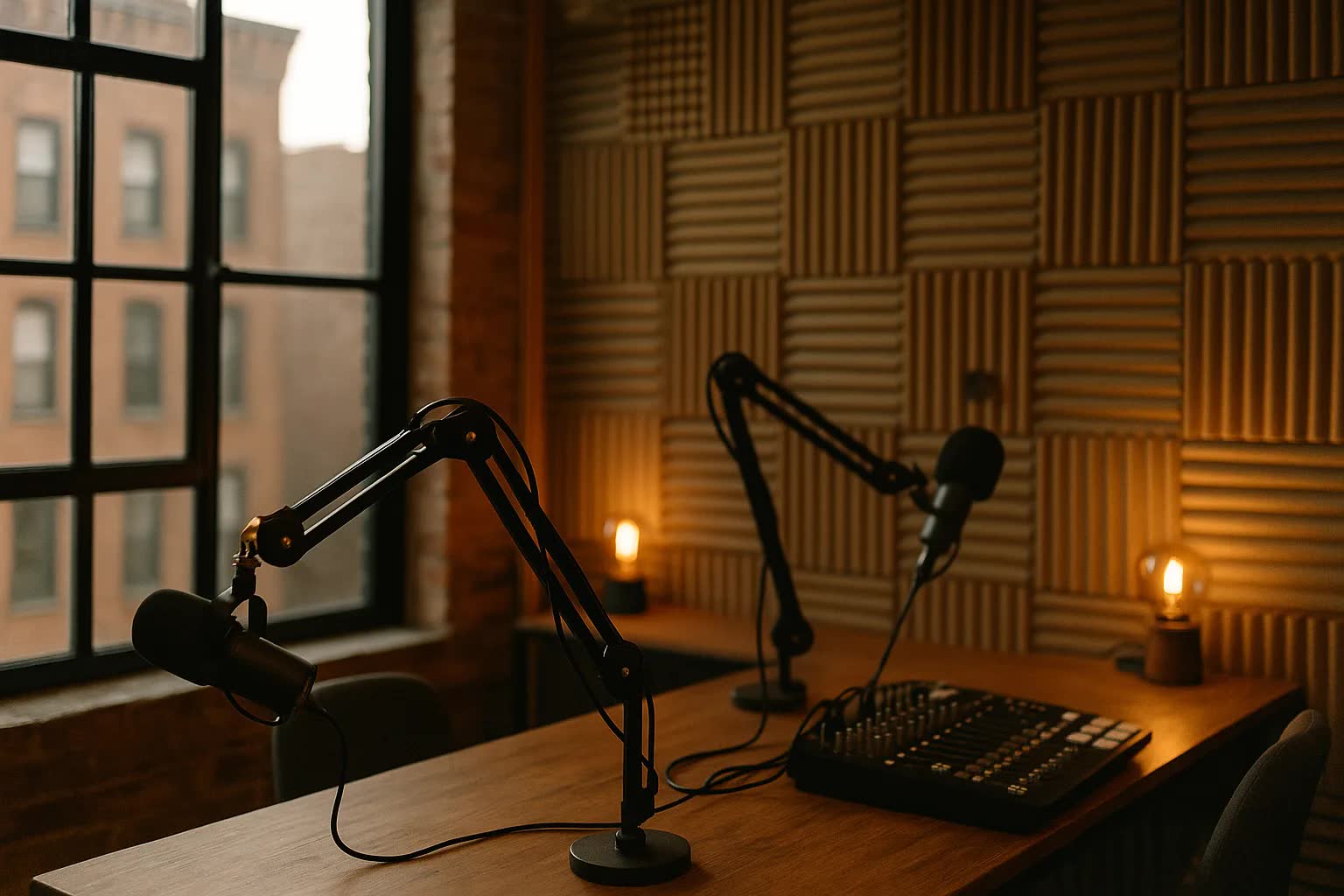
NEW YORK — In Brooklyn, a new kind of small business is multiplying along former factory corridors and commercial strips from Bushwick to Greenpoint: affordable podcast studios and production clusters that have turned independent audio creators into full-time entrepreneurs, drawing hosts, advertisers and tech talent into converted storefronts and low-rise warehouses near the Brooklyn-Queens Expressway and the L train corridor.
Two decades of cheaper, compact professional audio gear, the normalization of remote work and growing advertiser interest have made it practical for hobbyists to upgrade to paid facilities. Studio operators say they are meeting demand with turnkey packages — hourly rooms, editing and ad sales — and a culture of mentorship that accelerates amateur shows into monetized brands. “We noticed podcasters were getting blocked by post-production,” said Ana Duarte, founder and chief engineer of Cinder Sound Labs in Bushwick. “So we built a pipeline: record, edit, sell ads, launch.”
Hosts in neighborhoods as varied as Bedford-Stuyvesant, Williamsburg and Red Hook say the change has been transformational. Jamal Reed, host of Borough Beats and a former subway busker turned entrepreneur, recalled recording his first episodes on a laptop in a Prospect Heights apartment. “I went from recording in my bedroom to booking four studio days a month and hiring an editor,” said Reed, who now also rents out studio time to three other creators. “Those margins let me hire help, tour and actually pay my rent.”
The numbers underscore the rapid expansion. In 2021 Brooklyn had an estimated 14 dedicated podcast studios; by 2025 that number had grown to about 58, clustered in roughly a dozen neighborhoods, according to a survey of listings and studio operators compiled by industry consultant Liza Morrow. Hourly room rates in 2026 range commonly from $45 to $140 depending on equipment and included services; full-service production packages sell for between $1,200 and $4,500 per season of eight to 12 episodes. Operators estimate the cluster supports roughly 320 jobs — engineers, producers, sales staff and freelancers — and local ancillary spending that tops $3.6 million annually on catering, venues for live shows and printing for merchandise.
Beyond recording booths, what distinguishes the current wave is a suite of production services. Several studios have built in-house ad sales teams, distributed content partnerships and branded production units that create shows on contract for startups, nonprofits and cultural institutions. Atlantic Mic House, a two-studio facility beneath the Manhattan Bridge in DUMBO, now runs a weekday ad network that bundles thirty small shows for regional sponsors and coordinates live tapings at nearby event spaces on Washington Street.
The concentration of studios is reshaping block-level economies. On Bedford Avenue in Williamsburg, a stretch of shuttered garment storefronts has been repurposed as micro-studio suites; in Gowanus, former industrial units on Nevins Street host evening tapings that spill into bars on Third Avenue. Owners of recording spaces credit the proximity to cafes and music venues — and to subway lines like the L and G — with making their operations viable. “Being two blocks from McCarren Park means we catch foot traffic on weekends; people come for a live taping and stay for dinner,” said Malik Farooqi, who runs Greenpoint PodWorks on India Street.
But the growth is not without friction. Some community groups worry about nighttime noise and the steady escalation of rents as landlords see higher yields from commercially zoned media tenants. City regulations around soundproofing, occupancy and parking are unevenly enforced across community boards; a municipal liaison for Brooklyn who asked to speak off the record described a patchwork of policy that leaves small operators navigating expensive retrofits. “We’re helping a lot of folks who have the talent but not the capital,” said Rita Colson, director of the Brooklyn Small Business Alliance. “The risk is that if rents double, studios will be the first to go.”
Studios have adapted by diversifying revenue and embedding themselves in local ecosystems. Cinder Sound Labs, located on Norman Avenue near McGolrick Park, operates a daytime coworking space and an equipment rental business; Atlantic Mic House offers bespoke corporate podcasts to Brooklyn tech incubators and charges premium rates for multi-guest remote sessions. A handful of enterprising operators have started cooperative ad pools to give smaller shows access to national sponsors, while others contract with merch printers in Sunset Park and event bookers in Park Slope, feeding a small but visible creative economy.
Looking ahead, studio owners and hosts expect the cluster to keep evolving as technology and policy change. Several operators are scouting sites in East New York and Sunset Park where rents remain lower, while a nascent group of studio founders is lobbying local economic development offices for grant programs to underwrite soundproofing and shared equipment. “We’re building something that’s about cultural ownership,” said Ana Duarte. “If we can keep the costs manageable and train the next generation of producers, Brooklyn’s audio scene won’t just survive — it will export its sound.”