Polysilicon: The Hidden Link Between America’s Solar and Chip Industries
New White House trade measures targeting polysilicon — the ultra-pure material behind both solar panels and semiconductor chips — expose a difficult tension at the heart of America's industrial strategy.
By Iris Ye · August 12, 2026 · 4 min read
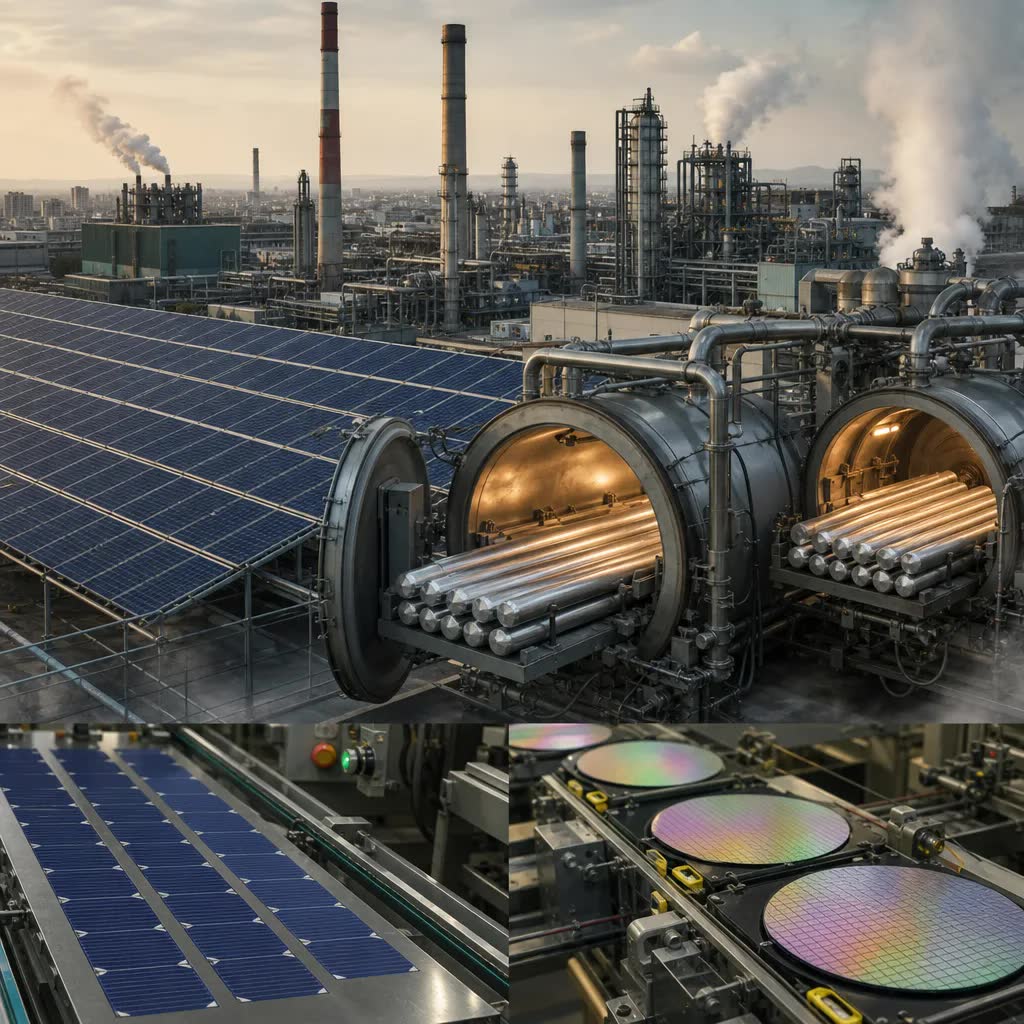
NEW YORK, Aug. 11, 2026 — A rooftop solar panel and a semiconductor chip inside a smartphone appear to belong to two very different industries. One produces electricity. The other powers digital devices. Yet trace both supply chains far enough upstream, and they begin with the same material: polysilicon.
Before there is a solar panel or a semiconductor chip, there is silicon.
Polysilicon is an ultra-pure form of silicon that can be melted into monocrystalline ingots and sliced into wafers. In solar manufacturing, those wafers become photovoltaic cells and eventually solar panels. Semiconductor manufacturing follows a similar path, although advanced chips require material produced to far more demanding purity standards. The U.S. Department of Energy defines solar polysilicon as at least 99.999999 percent pure.
On Aug. 6, the White House announced new trade measures covering polysilicon and several downstream products under Section 232 of the Trade Expansion Act. The measures set a minimum import price of $21 per kilogram for polysilicon, add a 15 percent tariff on certain downstream products and offer incentives for new U.S. production across the solar supply chain. They are scheduled to take effect Dec. 4.
The administration describes polysilicon as a foundational material for both America's semiconductor and solar supply chains. According to the White House, the United States accounted for about half of global polysilicon production capacity in 2005. By 2024, its share had fallen below 2 percent. Much of the production scale, downstream demand and manufacturing ecosystem has shifted elsewhere.
The most revealing figure in the new policy, however, is 2.4 percent.
Semiconductor-grade polysilicon now represents only about 2.4 percent of global polysilicon production, according to Commerce Department findings cited by the White House. Solar-grade polysilicon accounts for the overwhelming majority of demand. Polysilicon manufacturing is capital- and energy-intensive, making scale essential to keeping unit costs competitive.
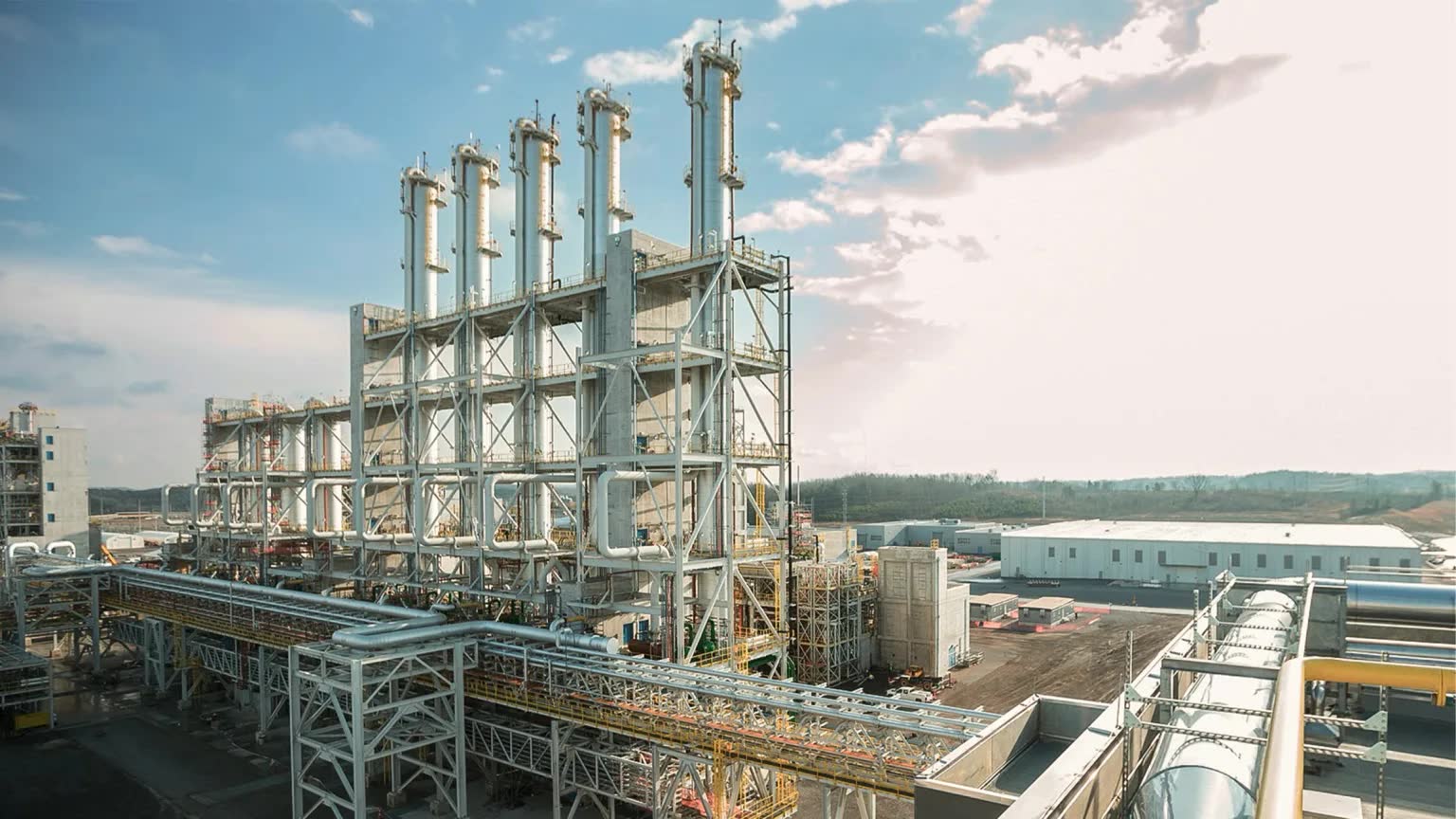
The result is a counterintuitive relationship: the economics of semiconductor materials partly depend on an industry that appears unrelated — solar energy. Chipmakers require the highest-purity material, but their demand alone represents a relatively small market. Solar manufacturing provides the scale. The White House argues that without a financially viable U.S. market for solar-grade polysilicon, domestic producers would struggle to sustain competitive production of both solar- and semiconductor-grade material.
The United States still has the technical capability to produce some of the world's most advanced polysilicon. Hemlock Semiconductor in Michigan is the only U.S.-owned producer of hyper-pure polysilicon and one of five companies globally able to supply leading-edge semiconductor markets, according to the Commerce Department. It received up to $325 million in CHIPS Act funding in 2025, while WACKER's Tennessee facility also supplies high-purity polysilicon to photovoltaic and semiconductor customers.
The larger problem is the ecosystem around those plants. Technical capability at the top of the value chain does not automatically create an economically complete supply chain below it. Producers still need downstream buyers, equipment suppliers, skilled workers and enough demand to justify investment. The bigger challenge is building a market large enough to sustain the industries around that production.
China illustrates why scale matters beyond production volume. It has built manufacturing capacity across multiple stages of the silicon supply chain, from polysilicon through ingots, wafers, cells and finished solar modules.

Once that network is in place, scale can reinforce itself. Suppliers, equipment makers, skilled workers, downstream manufacturers and buyers cluster in the same market. Larger volumes lower costs, deepen supplier networks and attract further investment. That helps explain why rebuilding a supply chain is more difficult than reopening a factory. For the United States, competing over polysilicon therefore means recreating enough of the surrounding industrial network — and enough downstream demand — to keep domestic production commercially viable over time.
The new U.S. measures are meant to give domestic producers more room to compete through minimum import prices, tariffs and incentives for onshoring. But they also expose a difficult trade-off. Washington wants to expand affordable solar energy while making the supply chain behind it more domestic and secure. Higher import prices may improve conditions for U.S. manufacturers, yet they can also raise costs for solar developers and downstream producers.
That tension reaches back into the semiconductor industry. Solar demand provides the volume that helps make polysilicon production economical in the first place. To protect chip supply chains, the United States may need a healthy domestic solar manufacturing base. If protecting that base makes solar significantly more expensive, however, the demand that gives the polysilicon industry its scale could weaken.
The challenge reaches beyond polysilicon. Industrial capacity is an ecosystem, not a collection of factories: it depends on raw materials, processing, equipment, manufacturers, workers and buyers that reinforce one another over time. Polysilicon shows why industrial scale can matter as much as technological sophistication — and why competition in strategic technologies may increasingly be decided long before a chip enters a computer or a solar panel reaches a rooftop.