Port of NY/NJ Extends Overnight Operations to Clear Container Backlogs
Round-the-clock gate hours aim to speed throughput but face logistical and labor challenges from trucking companies and unions.
By Aisha Bello · March 7, 2026 · 5 min read
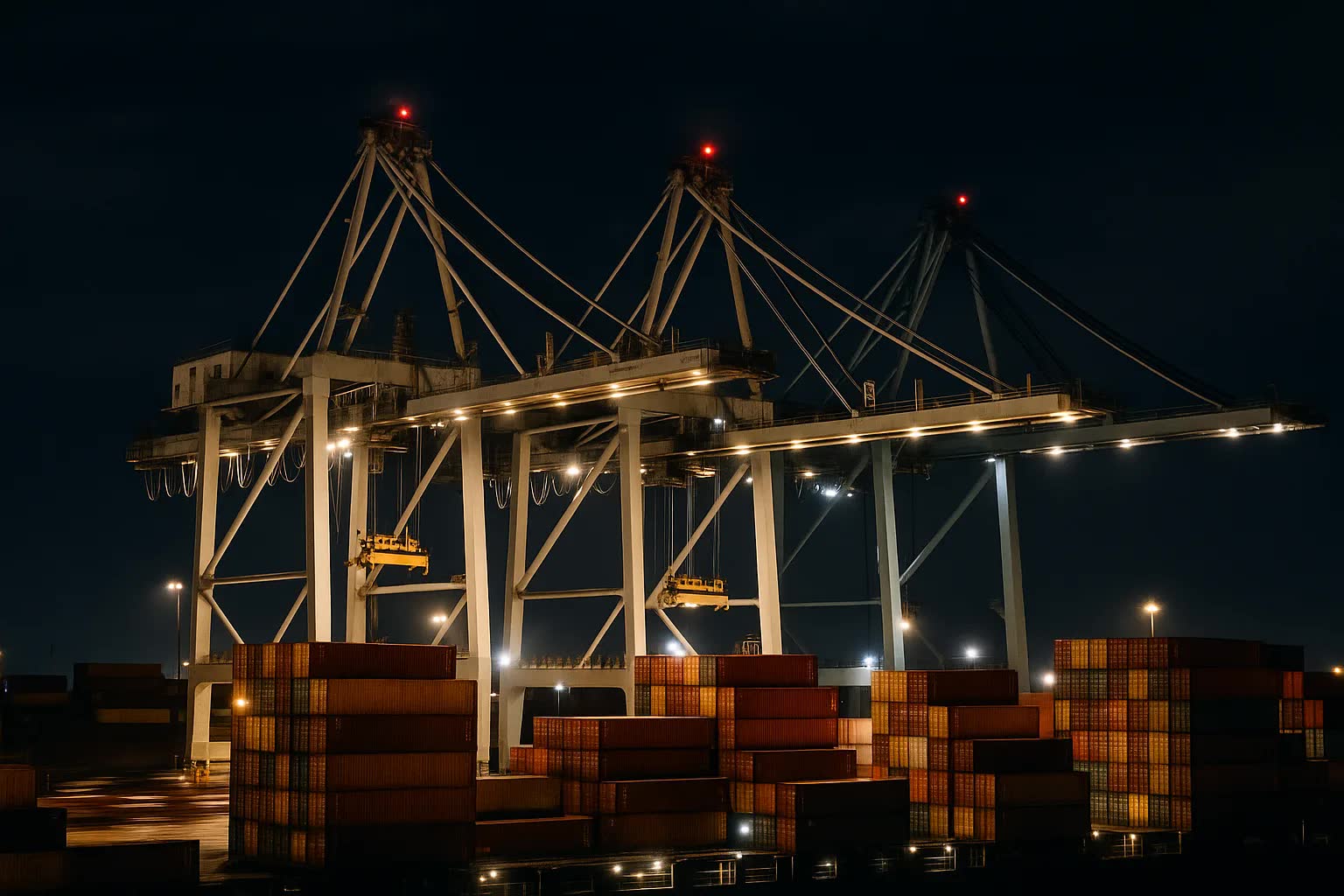
NEW YORK — The Port of New York and New Jersey announced a major overnight expansion this week, moving to round-the-clock gate operations at several container terminals in a bid to chip away at a months-long backlog that has snarled deliveries to neighborhoods from Sunset Park to Tribeca and emptied warehouse staging areas along the Gowanus and Red Hook waterfronts. Port officials say extended hours aim to spread truck traffic out of peak daytime lanes on the New Jersey Turnpike and through the Lincoln Tunnel approaches, a change they argue will speed cargo to Manhattan retailers, restaurants and bodegas across the five boroughs.
The expansion follows a winter of delays that compounded supply-chain congestion from overseas: earlier vessel bunching at anchor in the harbor, reduced berth productivity during icy weather, and a shortfall of chassis and drivers. For retailers on Manhattan’s West Side and wholesalers in the Hunts Point Market, longer gate hours promise faster turnaround. For local residents in Sunset Park and Red Hook, though, the prospect of more overnight truck runs has prompted concerns about noise and street safety, forcing port managers into a delicate balancing act between throughput and neighborhood impacts.
Under the new plan the port has launched a 90-day pilot that makes 24-hour gate access available at four major container terminals — two on the Port Newark complex and two in Bayonne — while expanding overnight windows at two Brooklyn-facing terminals that handle produce and refrigerated cargo bound for the city. The Port Authority of New York and New Jersey will coordinate shifts with terminal operators, chassis pools and the state Department of Transportation to manage routing and staging. Officials said evening-to-morning operations will prioritize perishable and time-sensitive loads and create a separate lane for empty container returns to reduce dwell times at container yards fronting Atlantic Avenue and the Brooklyn-Queens Expressway.
"We can move more containers in the quiet hours without clogging daytime streets, but drivers need guaranteed access and proper pay structures for late shifts," said Linda Park, president of Maritime Drivers Union Local 189, who has been negotiating shift differentials with terminal operators. "If we don’t address parking, restroom access and adequate lighting at staging lots in Bay Ridge and Red Hook, the promise of speed will fall flat and safety will suffer." Park’s union represents hundreds of drivers who run daily loops between the ports and Manhattan distribution centers.
Trucking company executives said they welcome the added hours but warned that logistics beyond the gates will determine whether expansion actually shortens delivery timelines. "During a three-week pilot with HarborLink Logistics we saw a 28% decline in average dwell time for loaded containers during overnight hours, but late-night pickups through Canal Street and Tenth Avenue still face bottlenecks because municipal idling rules and local curfews limit where drivers can stage," said Carlos Mendez, operations director at HarborLink Logistics, a regional carrier based in Jersey City. "We need synchronized municipal policies and temporary staging that respects neighborhoods."
Port data released with the announcement painted a granular picture of the challenge: in the fourth quarter of 2025 the port handled an estimated 7.6 million twenty-foot equivalent units, while container stacks awaiting pickup peaked at 18,700 laden units in mid-December. The pilot will open 24/7 gates at four terminals that together account for about 42% of the port’s average daily container throughput; current daytime truck volume averages 9,800 moves per day, and port managers project night capacity could absorb an additional 3,500 moves per night if chassis and driver availability are sustained.
Neighborhood groups and elected officials have pressed for tighter rules on truck routing, citing noise and safety issues where haul routes cross residential blocks in Sunset Park, Bay Ridge and parts of Williamsburg. Community Board 7 in Brooklyn asked for limits on heavy-vehicle use of Third Avenue and a promise of sound mitigation near PS 172, while local small-business owners in Tribeca and Chelsea welcomed the potential for more reliable morning deliveries. The Port Authority said it will map truck routes to keep heavy traffic away from narrow residential streets, use acoustic barriers where feasible and install directional lighting at staging lots to reduce spillover impacts.
Labor advocates say the success of the overnight push depends on incentives and protections for drivers. The Maritime Drivers Union and the Gotham Truckers Association are pushing for guaranteed minimums and night-premium rates to avoid unpredictability that leaves owner-operators undercompensated during slow overnight windows. "Night work is not just an operational shift; it is a labor contract issue," said Dr. Anya Sokolov, a transportation economist at the Gotham Policy Institute. "If port throughput increases but driver retention falters because of low pay or poor working conditions, any short-term gains will be erased by turnover and longer-term inefficiencies."
Terminal operators are already adjusting schedules and investing in staff and equipment for the overnight cadence: several firms said they will add lighting, hire additional gate clerks and bring in extra top-picks for container handling; one terminal operator has contracted with a private security firm to monitor late-night staging areas near the Red Hook pier. Yet questions remain about the availability of chassis pools and refrigerated plug-in capacity at night. Some small importers in Staten Island and the East Village worry that storage and demurrage fees could rise if containers are rerouted or held longer as the system rebalances.
Port Authority officials emphasized that they will monitor throughput, dwell time and neighborhood impacts throughout the 90-day pilot and promised to publish weekly updates. If the pilot produces sustained reductions in congestion without disproportionate community costs, the port could broaden round-the-clock operations beyond the initial terminals before the summer peak shipping season. Officials also signaled talks with the city and state about fast-tracking investments in truck parking, public-restroom access and night-shift labor incentives — items they say will determine whether the overnight experiment advances from short-term relief to a durable reworking of how the region’s busiest port moves goods into New York City.